Chapter 51:
German Civil War – Shadow of Versailles (1)
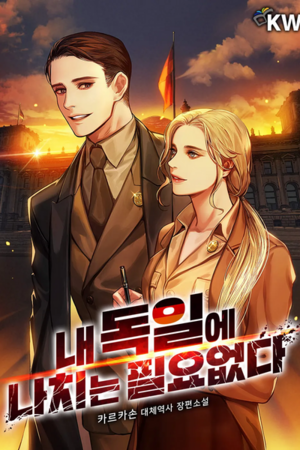
I Don’t Need Nazis in my Germany
September 25, 1939 — London, Capital of Great Britain
Entering Whitehall, I saw someone in the meeting room whom I hadn't expected.
British Foreign Secretary Edward Wood, 1st Earl of Halifax—well, his presence was natural.
British Prime Minister Neville Chamberlain, Mr. "Peace in Our Time," had come because of the matter's importance.
But the French Prime Minister, Édouard Daladier, had come as the French representative?
I'd been expecting French Foreign Minister Georges Bonnet, who was at heart anti-war. It seemed that the French Radical Party was currently in jeopardy.
The fact that the Prime Minister would come here personally showed France's willingness to pressure the new government to obtain anything was so evident that Weizsäcker and I looked at each other and smiled bitterly.
"Welcome to both of you—the weather here in London is nice, Foreign Minister Weizsäcker and Deputy Finance Minister Schacht. Speaking of Finance Minister Scacht... hmm. Can I understand that puts you on the same level as a Vice-Chancellor?"
"Yes, Prime Minister Chamberlain."
I answered Chamberlain with a smile. It was definitely a weird feeling, but hey—Wilhelm III's obsession with having a Chancellor had to be acknowledged.
However, since a Prime Minister and a Vice-Chancellor were nearly equal in rank, the Vice-Chancellor title at my age was too much, so I'd lowered the rank slightly by going with Deputy Finance Minister.
At first glance, it sounded like the "deputy minister" of the Prime Minister, or Deputy Minister could sound like a minister or deputy minister of other departments. Politicians who knew everything anyway wouldn't fall for such wordplay, but the public was different.
Chamberlain had a slightly pale complexion. Did he have a disease?
"We know each other by reputation, but it's our first meeting, Herr Schacht. Everyone is very interested in Chancellor Schacht's son, who became a high-ranking member of the new German government at such a young age."
I just smiled at Daladier's remarks, filled with hidden thorns.
There must be much talk about the 28-year-old unknown Major who'd suddenly become spokesperson for the new German government and then the Vice-Chancellor, both in good and bad senses.
"We view the new German government's announcement of establishing democratic government through an emergency wartime cabinet as transitional, but we're uncertain whether it will truly establish a 'normal' democratic government."
Nice wording—Chancellor and Vice-Chancellor. In effect, the Chancellor appointed by the emperor was my father, and the Vice-Chancellor was his son.
Even if they had doubts, there was nothing to say—we had plans to create a proper democracy.
"Now, let's get into this meeting's main agenda."
It was British Foreign Secretary Halifax who broke the tension. Daladier secretly narrowed his eyebrows, but again, Britain was famous for being business-focused, only their affairs mattered.
Anyway, we weren't bad either, so Foreign Minister Weizsäcker spoke up.
"The new German government's position is as follows. First, the ultimatums issued by both Britain and France concerned the revival of absolute monarchy by the House of Hohenzollern—that is, dictatorship by war criminals."
For us, this made our mouths water.
"Second, the current German government has made clear it's a constitutional monarchy, and the current emergency wartime cabinet is a transitional government—democratic government will be formed when referendums are normally possible after the civil war in Germany ends."
Naturally, the meeting parties looked annoyed.
"Based on this, the ultimatum issued by Britain and France is based on the revival of dictatorship by a convicted war criminal, which is not actually the case. Furthermore, demands for the abolition of the House of Hohenzollern are difficult to accept given the current domestic sentiment, so we request the withdrawal of this ultimatum. That's all."
Halifax reacted first.
"Then the new German government aims for peace and democracy, not war and dictatorship?"
"That's correct."
"We view positively the new government trying to achieve democracy in Germany against fascist dictators. Regarding the imperial revival, we do not find it unacceptable considering the unnatural degree of royalist military influence possesed by the House of Hohenzollern in Germany."
The new government couldn't realistically control the German military without an emperor. Even nominally, there was a big difference between having the military commander-in-chief respected by the military or not.
Even Hitler, who'd gained absolute power through the Enabling Act, could control it only with difficulty until he'd purged the Wehrmacht several times.
Halifax, pretending to express sympathy for our situation, looked at Weizsäcker and me with a smile and continued.
"If Germany achieves truly normal democracy and isn't willing to wage war, would you liberate Czechoslovakia, which Hitler had illegally annexed?"
There it was. In fact, Czechoslovakia's annexation wasn't without Hitler's responsibility.
We could claim very little on this point. The problem was—
"Unfortunately, the Czechoslovak issue is currently amid civil war, so it's not an issue that we can currently discuss. Czechoslovakia is also a territory currently occupied by the Nazi—discussing its liberation prematurely could weight to Hitler."
There was no way these people didn't know this, so what I was bringing out was that one day I'd risk falling over this thing.
It was never easy.
The next hitter was Daladier.
"Ah, of course, we're well aware of Germany's civil war situation. It is fruitless to discuss it further without first securing Czechoslovakia."
Daladier said with a friendly smile, then brought up his point.
"Instead, I think there should be no problem re-implementing the Treaty of Versailles, concluded to prevent recurrence and maintain peace, for damage Germany inflicted during the Great War."
Well, this part was predictable from the moment we'd come here, but they wanted something really big.
They'd shift all World War I responsibility to Germany and revive the treaty that sucked Germany's blood to recover the damage that France had suffered.
I asked, looking toward Chamberlain.
"Is the British position the same?"
"Cough, cough."
But Chamberlain covered his mouth with a handkerchief and coughed. Really, he looked genuinely in pain. Wasn't this gentleman's condition serious?
"Cough, I'm sorry. The Foreign Secretary will lead the meeting."
"Understood, Prime Minister."
Having said that, I wondered if Chamberlain's death soon after resigning as Prime Minister was simply psychological frustration.
I turned to Halifax.
"Well, the Treaty of Versailles is just one means, but wouldn't something be necessary to show Germany's sincerity?"
Halifax's response was within expected range.
Britain didn't have major problems without relying on the Treaty of Versailles, but France was now in jeopardy both politically and economically.
But the moment we accepted this, Weizsäcker and I agreed, without exception, the new government would collapse.
The military government that brought Wilhelm II and threw out irrational demands to revive absolute imperial monarchy was problematic, but these two were not much better.
They said they'd help us form a democratic government under constitutional monarchy, but began to make outrageous demands without hesitation simply because they had numbers.
"Unfortunately, the new German government is currently in civil war, so we're not positioned to discuss the re-implementation of the Treaty of Versailles right now."
At Foreign Minister Weizsäcker's words, Daladier spoke as if waiting.
"Oh, of course we understand the situation. After civil war ends, the Treaty of Versailles can be re-implemented. Instead, France and Britain are willing to support your government and provide the equipment necessary to win this civil war."
"What equipment?"
"We can provide Lebel and Berthier rifles from France and Lee-Enfield rifles from England."
The most comfortable infantry rifles—surplus old-fashioned bolt-action. Our standard rifle, the Kar98k, was also high-quality bolt-action, but ammunition wasn't compatible.
Of course, we'd bought surplus guns in Spain in bulk at bargain prices for Free Corps use, so there was nothing unusable if we wanted to use them.
But paying Treaty of Versailles costs for old-fashioned rifles? Were they kidding?
In short, this was blackmail.
Everyone here knew Germany couldn't dethrone Wilhelm III. In fact, now that Wilhelm II was abandoned and constitutional monarchy declared, the House of Hohenzollern would hardly prove problematic any longer.
Facing electoral defeat, France was trying to bomb Germany because it didn't want to explode, and Britain was fine, but also wanted the other side to explode rather than themselves
They said they'd join and handle anything. Unlike truly desperate France, I hated seeing the British side—proper pigs saying we were underdogs, so we had to peel and eat anything while already wearing it.
There was no better story in international diplomacy than anything else for us who'd shed blood against their enemy, fascist Germany.
Unlike Spain, Germany was dangerous enough by their standards.
Rather, they probably don't like our approach—fighting civil war through public opinion wars rather than actual civil war, leading to loss of life and property.
"Your countries' request..."
"I'm sorry for interrupting the meeting—this is urgent."
I was about to reply to the shameless demand that they'd pulled out, but was suddenly interrupted by someone with a telegram.
And Weizsäcker, receiving the telegram, gave it to me with his face turned white.
"This..."
The telegram's content was simple.
Italy's Mussolini, ally of Nazi Germany, had declared war on the German rebels—as they called us—the new German government.
Likewise, Allied Powers personnel who'd received telegrams had very subtle expressions.
How did it feel being declared war upon in the middle of diplomatic negotiations?
September 26, 1939 — German Embassy, London
Ultimately, our meeting was postponed because "the situation had changed."
Mussolini had sent many overtures to Britain and France to revive the Stresa Front, but was completely ignored.
Meanwhile, the military government coup collapsed in three days, and new government tripartite talks with them were underway.
Because of the military government, the new government and Britain-France were uncomfortable with the restoration of the House of Hohenzollern. Was Mussolini's plan to move quickly before we could reach a reconciliation?
It was mad.
"I don't know what Mussolini thought he'd gain by starting war, but our military should respond appropriately."
All new government main forces were on the northern front, poised against the Nazi. Italy would have to go through Austria—could they make it in time?
But we were in England with nothing we could do. Here, I had no choice but to trust my father and Ludwig Beck.
I'd call it luck from misfortune.
Even in original history, Mussolini couldn't understand his position once or twice—it was a feeling I could neither cry nor laugh about.
"When I think of soldiers who'll die on front lines because of Mussolini's greed, my blood boils, but at least at the negotiating table, Mussolini saved us."
Before Mussolini's declaration, Britain and France were full of thoughts of squeezing us and stripping anything away.
However, as Italy joined the Nazi side, Britain—which had hoped German civil war would last long with no winners or only wounded victors—could no longer continue to take it easy.
Britain would hate German civil war ending with our victory without much damage, but would hate even more Hitler joining Italy to regain control over Germany.
"But France won't easily quell. If we don't give them good conditions, they might side with Italy."
Director Erich Kordt, whom I'd met after a long time—no, the new government's Deputy Foreign Minister—had been busy going between England and France, trying to improve the new government's position.
The light had faded considerably because the military government had thrown things away...
"They could... They're desperate."
There was no way to satisfy France right now anyway. Treaty of Versailles? The moment we promised re-implementation, we'd lose both popular and military support.
But did we have anything to give France? Nothing. We were in the middle of a civil war—what could a government with only half Germany give?
"But as long as Italy has joined with Hitler, it'll be difficult for them to work with France as well."
If Mussolini had worked with France first and attacked Germany, he could offer France conditions to hand over part of German territory.
But being involved in war as Hitler's ally made that impossible. The Nazi regime's relationship with France was atrocious. They'd rather support our new government.
"As planned, we completely ignore France and move towards lobbying Britain."
After all, what we were trying to do was isolate France.
It was useless trying to appease a nation that showed through their actions that they planned to cut a pound of flesh from us to survive themselves.
"In that case, Vice-Chancellor Schacht, your role will be very important. Do you understand?"
Foreign Minister Weizsäcker spoke with some apprehension.
Most gazes on me now were mixed with concern. Thankfully, the Foreign Ministry had relatively high trust thanks to what I'd shown so far.
A man in his late twenties being sent to diplomatic negotiations with great powers like Britain and France in such a crisis as the government's second-in-command.
Even I couldn't say that I wasn't worried. Because of my achievements, contributing greatly to suppressing the military government coup, and the emperor directly appointing me, the Vice-Chancellor appointment could barely be justified...
However, if I made even a single mistake, there were many people in the new government who would use it as an excuse to remove me, claiming I was too young or immature for this role.
Even my father, Hjalmar Schacht, who'd sent me knowing he had to control state affairs, was quite calculating.
"We have to try to truly be certain, but I think there's a chance."
Sorry Daladier, but as captain or major among great men of history, areas where I could be involved were extremely limited, so I would continue to struggle until I achieved my goals.
Even if it was a badge of honor given by an unlucky emperor, I should make the most of what I'd obtained and actively use it to overcome this crisis.
To do that, I had to somehow succeed in this mission, which was extremely difficult from the start.
"I'm being friendly on my own, and the cards I'm presenting are useful."
Still, it was quite fortunate that my father, Hjalmar Schacht, had become the government head.
Before Germany's diplomacy took off, he'd made quite a few contacts with businesspeople worldwide, most importantly here in England.
Anyway, there were very few cards in our hands right now. So if there was something usable now, wouldn't it be investment promising the future?
When it came to diplomacy with a democracy, or even capitalist countries, it was possible to negotiate without unreasonable demands in meeting rooms. Because there was a good lobbying tradition.
Dietrich Schacht would meet his sister and his nephew's godfather for the first time in a long time and I would for the very first time.
Bank of England Governor Montagu Norman. He was my father's long-time collaborator, both personally and publicly, and my nephew's godfather.
We were planning to lobby him and businessmen of the Anglo-German cooperation organization to influence Britain in a situation where we had nothing to give right now.
While I was thinking of my plan, someone came to us with a letter.
"Captain Schacht—ah, no, Major. No! I'm sorry, Vice-Chancellor."
Since my rank had changed so quickly, Director Erich Kordt—no, he was now also Deputy Minister.
Anyway, Erich Kordt, who'd made several mistakes, handed me the letter received from staff.
"It's fine, but is it a letter for me?"
No, I was in England and got a letter? Who was it from?
"Yes, indeed."
Let's see who'd sent me a letter.
When I saw the sender, I had to stop.
Sir Winston Churchill.
An indomitable hero, a brutal imperialist—Hitler's adversary had invited me.


Please sign in to leave a comment.