Chapter 7:
Chapter 7: Fall of the Stone City
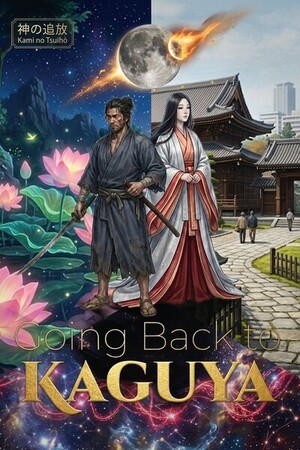
Going Back to Kaguya
Interlude: The Wrong Kind of Company
I sat with that laugh longer than I meant to, after. It bothered me in a way none of the actual cruelty had managed to, and it took me a century of turning it over to understand why.
Hating Lune had never been hard. Hating something is simple work — asks nothing of you but to keep your grip tight and your attention on the wound. What unsettled me was that for one unguarded second in that throne room, holding a cannon under a god's chin, I'd laughed along with the thing I was supposed to be punishing. Not at the same joke. At the same absurdity. Two immortal things, one of them chained, trading insults across eleven hundred years like we'd known each other longer than either of us had known anyone. Which — I realized, sitting with it — we had.
I didn't like what that meant about the shape of my own hatred. A person can spend a very long time hating someone and never once notice that hatred has turned into its own kind of intimacy. That after enough centuries, the thing you're punishing is also, inconveniently, the only company you've got.
I told myself it changed nothing about the cannon. It didn't. I kept the muzzle exactly where it was. But I noticed, moving into the next loop, that I was watching Lune's face for something other than cruelty now. The way you start checking a locked door twice — not because you expect it to be open, but because some part of you has started hoping it might be.
A hundred and fifty years passed, mortal-side, before the wheel found its next opening. Lune didn't wait for me to ask this time.
Fall of the Stone City, c. 1150–1200
Lune didn't wait for me to prompt it this time. It exhaled — an actual exhale, air it didn't need, a habit left over from centuries of pretending to breathe for an audience — and started before I'd finished repositioning the cannon.
"The stonemason's boy, now. That one I did plan, a little. Not the ending. Just the timing of the drought."
Growing up with his hands in the same trade as his father, Doran, Kami no Tsuihou set basalt columns for a capital that had already, by the time he was old enough to understand what was happening around him, started dying by inches. He knew the weight of stone the way other boys knew the weight of a spear. Knew which block would settle true on the first try and which would need shimming. Knew the deep, low ache that settled into a forearm after a full day guiding a column upright by rope and patience alone — the kind that made him flex his fingers half the night before he could fall asleep. His father taught him the way his own father had taught him — not with words so much as with his own hands laid over the boy's on the rope, correcting the angle before he'd even finished getting it wrong, and the single word he allowed himself when a column finally settled the way it was supposed to: true. Only praise Doran gave freely. Worth more to his son, because of that, than any other word in either of their mouths.
He remembered the granaries from when he was small enough to be carried through the doorway on his father's shoulders — the smell of dried maize stacked wall to wall, the fine dust that got into your lungs if you breathed too deep near the sacks. His father took him there every festival day, just to let him see it: a whole city's food, stored up against the lean months, more of it than a boy could count in one sitting. "This is what keeps us alive," Doran told him once, resting a flat hand against a sack taller than either of them. "Not the gods' word on it. Just this." Kami no Tsuihou believed him completely, the way a boy believes anything his father says standing in a room that full. It was years before he understood his father hadn't really been teaching him about grain.
Senna was six years younger and had never once, in her whole life, lost an argument with her brother that she actually cared about winning. She traded woven mats at the edge of the market with a directness that scandalized the older women and delighted the merchants — who'd learned, within a season, that a girl who quoted a fair price and refused to move off it was faster to deal with than a man who wanted to haggle for the sport of it. Laughed too loud for a girl her age, according to their mother. Not loud enough according to her brother, who liked nothing better than provoking the real laugh out of her — the one that came out in a bark before she could stop it and always made her clap a hand over her own mouth after, like she'd been caught at something. He'd promised her, more than once, that once she was old enough he'd teach her the weight of stone the way their father had taught him. Not because a girl in that city was likely to ever set a column herself. Because he liked the way she lit up being told she'd be allowed to learn something official.
When she was eight and had finally worn her mother's resistance down, Senna was allowed to go as far as the reed marshes with the other children her age — theirs was a city that let its children run loose in a way that would have scandalized more guarded households elsewhere, on the understanding that a child alone was a child one bad afternoon away from disappearing into a rival village's slave lines, or a jaguar's territory, or simply a ravine nobody thought to check until it was too late. Kami no Tsuihou took the job of walking that line seriously enough that half the parents on their street started sending their own children along whenever he went, not because anyone had asked him to, but because he was the kind of older brother who counted heads without seeming to.
He taught them the way his father had taught him — not lecturing, showing. Which reeds to avoid, because the mud beneath them never held weight the way it looked like it should. The three-note whistle that meant found something, come look, and the different one that meant I'm lost, so a search party would know within a breath which kind of afternoon it was about to become. That the fastest runner in a group didn't get to leave a slower friend behind — the fastest runner's whole job was doubling back. Nobody survives a bad afternoon alone, he told them, more than once, in the flat voice of a rule drilled into him rather than one he'd worked out himself. You survive it because somebody noticed you were gone and already knew which direction to start looking.
Senna complained about being herded exactly as often as any eight-year-old does, and followed every rule anyway — the way children do when the person setting it has never once given them a reason to doubt he means it kindly. He told her, and told the others, more than once, why he bothered: someday one of them would be the oldest child on that reed path, walking some other family's eight-year-old the same way he was walking her, and the habit needed to already live in their hands by then, the way it lived in his.
One evening, walking back alone after the others had peeled off toward their own doors, he stopped her at the edge of the reeds and made her look at him instead of at whatever she'd been about to say. "You know you've got the kind of eyes that'll put down an ox someday. Or a deer, if you'd rather aim at something that doesn't outweigh you five times over." She rolled them at him, which was answer enough, and he let himself laugh before he got to the rest of it.
"I mean it, though. I want you growing old enough that some other fool gets to love those eyes the way I do — some boy who has to earn it, the way I never had to, because you were mine before you could walk." He didn't dress it up past that. Wasn't the kind of thing that needed dressing up. "Promise me that much, Senna. Live long enough to see it come."
She promised, the way an eleven-year-old promises anything an older brother says with that particular weight in his voice — half humoring him, half already believing it mattered more than he was letting on.
Word of the first real inquiry came not long after: a family testing the ground, nothing formal, the way these things always started. Senna was old enough by then that her mother stopped correcting her posture in front of guests and started watching, instead, how she held herself when a stranger's name came up over the evening meal. Kami no Tsuihou noticed his sister go carefully, deliberately unreadable, the first time it happened, and understood, without either of them saying so, that his promise at the reed marsh had an actual clock on it now.
It was good work, honest work. Fed his family. None of that changed when the rains failed for the third year running the same season the thread woke in his chest.
Half the city already knew, the way people always know before anyone official says it out loud, that this was the year the whole thing came apart. The granaries that had held out through two dry years ran visibly low by midsummer of the third. Lines outside them grew long enough that fights broke out over places in them — sharp, ugly shoving matches between neighbors who'd shared meals a year before. But he watched one such fight spill into the plaza below the scaffolding one afternoon: two men who'd apprenticed together as boys, throwing punches over a half- empty basket of maize, while a third man stood apart from it shouting that the gods had turned their faces from the city, and nobody up on the columns thought he was wrong enough to argue with him. Doran kept working through all of it, hands steady on the rope, the way a man keeps working when stopping feels like admitting something he isn't ready to admit yet.
That year's second inquiry came from a family whose eldest son had reached marrying age. Doran sat with the men who came to test the ground and spoke the way someone speaks who's done this arithmetic in his head longer than he's ever let on out loud: how many working hands a match would bring into their line, how many mouths already gray and past working it would also bring, whether the alliance actually gained them ground in the parts of the city that still had grain to spare, or just more people to feed while the granaries emptied. A marriage was supposed to make a family grow the way a good harvest did — doubled, not merely added to. He turned that family away before the season was out, on exactly that math, the same way he'd turn away a block of stone that looked sound but rang wrong when you struck it. Not cruelty. Just the calculus.
He noticed something the first time Baran came to the scaffolding — ostensibly about a load of stone for a roof repair, though he lingered past what the errand needed and left without ever mentioning the roof again. A warmth sat low behind Kami no Tsuihou's ribs the whole conversation, unfamiliar and not his own; he knew his own well enough by then, dull and westward and easy to ignore most days. This one pointed a different direction, toward wherever Senna happened to be standing that afternoon, and it took him weeks to admit he wasn't imagining it, and longer still to understand why it only ever showed up when this one man was near.
Somewhere in that second year of dry granaries, Kami no Tsuihou started noticing something in his sister that had nothing to do with rain. She still traded her mats with the same sharp, unmovable prices. Still laughed the same bark of a laugh, on the rare afternoons that still gave her something to laugh at. But there were evenings now when he'd catch her staring at nothing with an expression he didn't have a name for — not the drought-fear everyone wore that year, something narrower, something aimed. Wanting two things at once and only ever allowed to look like she wanted one of them.
He asked her about it plainly, the way he asked about everything, one evening at the reed marsh, the two of them alone the way they used to be when she was small enough to need walking home. "Senna. Tell me what it is that's tearing the tears out of your heart before they even get the chance to fall."
She didn't answer at first, which told him more than an answer would have. When she did, it came out smaller than her market-voice, the voice she used for people she didn't need to win an argument with. Baran, she said. The last son left of the old warrior line — the one that used to fill half the honor guard, three generations back, now down to him and a house full of grandmothers he fed with his own two hands. She loved him the plain, uncomplicated way a person loves someone before politics gets involved. And she loved her father too much to say so where it would put him in a position to have to choose between her happiness and the family's arithmetic.
It was somewhere in that conversation, watching his sister's face do the work of loving two people who couldn't both be satisfied by the same answer, that Kami no Tsuihou saw it — a thin line of red, bright as a fresh wound and warm-looking as a coal, running out from the center of her chest into the dark past the market stalls, toward wherever in the city Baran happened to be standing that evening. He didn't gasp, didn't flinch. Some quieter part of him that had never had a name for the pull in his own chest simply recognized what it was looking at. He followed the line down with his eyes until he found where it started on himself — fainter, aimed a different direction, west and slightly south, toward a coast he'd never seen — and understood, in the same instant, that he'd been carrying one just like hers the whole time and simply never had the eyes to see it before that night.
Baran was the last living son of a line that had once put more warriors into the city's honor guard than any other clan in the stone city — three generations back, the kind of name that still opened doors on reputation alone. War, sickness, and one bad winter had taken the rest of the men in his generation before he'd finished growing into his own spear. What was left of that once-proud line was Baran himself, still young, still whole, carrying a household of grandmothers and uncles too old or too broken to work, on his shoulders alone. By Doran's own arithmetic — the one he used on every family that came asking — this was as bad a match as a father could find: one strong back, and half a dozen mouths already gray, attached to it.
The men talked about it anyway, the way men always did, over the food table and up on the scaffolding both: money, mouths, the honor of an old name against the plain math of feeding it. Doran had opinions same as anyone, and said them, loudly enough that Kami no Tsuihou heard most of them secondhand from three different men before the week was out. None of it mattered. Everyone in that city over the age of ten knew that a marriage wasn't a thing men decided, whatever they liked to think their opinions were worth at the food table — a room full of men choosing a daughter's whole life by argument was a room one bad temper away from choosing it badly, and the matrons had learned that lesson generations before Doran was born, closely enough that nobody now living remembered a version of the custom that worked any other way.
Senna went before them herself, the way any daughter did, and said what she had to say — that she loved him, and that she would give him and this city as many children as her body had years left to give, promise enough, she hoped, to outweigh the household of elders he came burdened with. Baran's own grandmothers spoke for the rest of it, the honor of a name that wasn't going to survive another generation without a wife in that house. The matrons listened to both, added nothing of their own to the talking, and ruled the way they always ruled — without a single one of them arguing it out loud in front of the other.
The verdict came down before the granaries did: Senna would wed Baran, her promise binding the day the wedding mats were laid. Kami no Tsuihou heard it the way he heard most of that year's news — secondhand, from a neighbor, hours after the women who mattered had already decided it — and felt something in his chest ease for the first time since the rains had failed, the plain relief of watching a person you love get the one thing they'd been afraid to ask for out loud.
He felt the pull the same week the granaries were declared officially empty. Due west and slightly south, toward a coast he'd only ever heard described in trade rumors from men who'd walked it once and never gone back — the same direction, he understood now, that had shown itself to him that one night at the reed marsh, threading out of his own chest the same way it had threaded out of his sister's. He'd never told anyone what he'd seen that night. But he knew now what the pull actually was, and knowing it didn't make it easier to ignore. It made it worse.
He told himself he'd go see it. Once the unrest settled. Once his father didn't need him on the scaffolding anymore. Once the matrons had ruled and he'd stood at his sister's wedding and watched her get the thing he'd made her promise to live for. He wanted that badly enough to keep choosing it, every week, over a coast that had been waiting eleven hundred years for a slower man than him. The thread could wait a little longer. His sister's wedding could not.
He was still telling himself that the morning Senna slung her mats over one shoulder and told their mother she was going to try the palace kitchens, where a steward had let slip that the staff still had grain enough to trade fairly for good weaving, unrest or no unrest. She promised to be back by dark. He watched her go from the scaffolding, called down that he'd walk her partway if she waited a minute. She told him, laughing, that she didn't need an escort to cross a market she'd been crossing alone since she was nine, and kept walking.
Dark came. She didn't.
He told himself an hour wasn't unusual. That a good trade took time. That the palace kitchens were busy and a steward's promise wasn't the same as a steward's schedule. That Senna of all people could talk her way out of any trouble a market corner was likely to hand a girl who knew how to set a fair price and hold it. And he waited that hour on the scaffolding after the rest of the crew had gone home, watching the palace quarter for smoke that wasn't there yet, telling himself every reason he could find not to go looking for her before he'd promised himself he would.
He was still telling himself that when the palace quarter caught fire.
Nobody in that city ever settled who started it. Lune did, and told me so plainly, years later — not out of cruelty this time, but because pretending not to know would have meant taking credit for something it hadn't had a hand in. It was the second family's son, the one Doran had turned away that spring over an arithmetic the boy never got to argue with, and had spent every day since turning over alone in his own head, watching the wedding date for Senna and Baran get set without him. He'd meant, near as Lune could tell, only to burn the grain the match had cost his family — take something back from the deal that had beaten him, the way something had been taken from him. He hadn't known Senna would be inside when he did it. Didn't much matter, by the time the smoke reached the stonemasons' quarter, whether he had. He went in anyway, past men running the other way, because Senna had gone to the palace kitchens that afternoon to trade woven mats and hadn't come home by dark, and some brothers don't need better math than that to decide which direction to run.
The smoke inside was thick enough to swallow torchlight whole, thick enough that a man could stand three feet from a wall and not know it was there until his hands found it. He didn't find her by sight. He found her the way he'd found her thread that one night at the reed marsh — except this time he didn't fight the seeing, didn't tell himself it was firelight and grief playing tricks. He let it lead him, past two rooms he'd never once set foot in, straight to the corner where she'd curled herself small, coughing into her sleeve, too frightened to move on her own.
Got an arm around her and turned back toward the door he'd come in through, and for one full second, with her weight against his side and the smoke thinning just enough to see the exit, it looked like it was going to be that simple.
He felt the beam give before he heard it — the same half-borrowed sense that had shown him two threads in one night now showing him, for the second and last time in his life, exactly what was about to happen and exactly how much time he had to do something about it. Not enough to save them both clean. Enough to shove her the last two steps through the doorway before it came down.
The roof beam that came down on him was one he'd helped his father set the year before. Checked twice for true. Proud of the work the way a young man is proud of anything he built with his own hands and expects to outlast him. It didn't. The fire had been eating the timber from the inside for longer than anyone in that room had time left to notice.
Less than a second. It felt, Lune told me afterward — something almost like professional pride flickering across its face before it visibly caught itself and smoothed the expression back down — like watching a building take credit for its own architect.
Doran found them both in the ash the next morning, Senna alive and half-carried out by neighbors hours before, her brother still under the beam he'd set with his own hands. He called into the wreckage anyway, before anyone could stop him, twice, the way a father does when hope hasn't caught up yet to what his eyes are already telling him —
"Kami no Tsuihou..."
"Kami no Tsuihou..."
— the same name he'd chosen the night the boy was born, and there was nothing in the sound of it now except a father's voice coming apart.
What Lune didn't say plainly — what I only got out of it after pushing, and even then only most of it — was what it had done to him afterward. Some fondness for Senna had crept into it somewhere across those months of drought and matron-talk, unbidden and, by its own account, unwelcome, the kind of small attachment it clearly hadn't planned on and didn't especially want me noticing. When I asked what became of the second family's son, it told me only that he never walked through that city as a man again. Asked what he walked through it as instead, Lune said, "That's a different legend. Ask me about the silver fox some other century," and wouldn't be moved past it, which was answer enough on its own.
Senna lived. Married Baran within the season the mourning rites allowed, and kept the promise she'd made the matrons with an appetite for the keeping of it that surprised even her own mother — twenty-one children over the years that followed, more than enough to put the honor guard's oldest name back on its feet and then some, every one of them raised, at her insistence, on the same reed-marsh rules her brother had taught her: nobody survives a bad afternoon alone. She was the oldest child on that path herself soon enough, walking some other family's eight-year-old the way she'd once been walked, the habit exactly as alive in her hands as he'd told her it would need to be.
She never told any of her children why she checked the roof beams in every new house before she'd sleep under one.
"He never left the city," I said. "Not once in his whole damn life. You didn't even need geography for that one. You just needed him loyal to people who needed him more than the thread did."
I sat with that laugh longer than I meant to, after. It bothered me in a way none of the actual cruelty had managed to, and it took me a century of turning it over to understand why.
Hating Lune had never been hard. Hating something is simple work — asks nothing of you but to keep your grip tight and your attention on the wound. What unsettled me was that for one unguarded second in that throne room, holding a cannon under a god's chin, I'd laughed along with the thing I was supposed to be punishing. Not at the same joke. At the same absurdity. Two immortal things, one of them chained, trading insults across eleven hundred years like we'd known each other longer than either of us had known anyone. Which — I realized, sitting with it — we had.
I didn't like what that meant about the shape of my own hatred. A person can spend a very long time hating someone and never once notice that hatred has turned into its own kind of intimacy. That after enough centuries, the thing you're punishing is also, inconveniently, the only company you've got.
I told myself it changed nothing about the cannon. It didn't. I kept the muzzle exactly where it was. But I noticed, moving into the next loop, that I was watching Lune's face for something other than cruelty now. The way you start checking a locked door twice — not because you expect it to be open, but because some part of you has started hoping it might be.
A hundred and fifty years passed, mortal-side, before the wheel found its next opening. Lune didn't wait for me to ask this time.
Fall of the Stone City, c. 1150–1200
Lune didn't wait for me to prompt it this time. It exhaled — an actual exhale, air it didn't need, a habit left over from centuries of pretending to breathe for an audience — and started before I'd finished repositioning the cannon.
"The stonemason's boy, now. That one I did plan, a little. Not the ending. Just the timing of the drought."
Growing up with his hands in the same trade as his father, Doran, Kami no Tsuihou set basalt columns for a capital that had already, by the time he was old enough to understand what was happening around him, started dying by inches. He knew the weight of stone the way other boys knew the weight of a spear. Knew which block would settle true on the first try and which would need shimming. Knew the deep, low ache that settled into a forearm after a full day guiding a column upright by rope and patience alone — the kind that made him flex his fingers half the night before he could fall asleep. His father taught him the way his own father had taught him — not with words so much as with his own hands laid over the boy's on the rope, correcting the angle before he'd even finished getting it wrong, and the single word he allowed himself when a column finally settled the way it was supposed to: true. Only praise Doran gave freely. Worth more to his son, because of that, than any other word in either of their mouths.
He remembered the granaries from when he was small enough to be carried through the doorway on his father's shoulders — the smell of dried maize stacked wall to wall, the fine dust that got into your lungs if you breathed too deep near the sacks. His father took him there every festival day, just to let him see it: a whole city's food, stored up against the lean months, more of it than a boy could count in one sitting. "This is what keeps us alive," Doran told him once, resting a flat hand against a sack taller than either of them. "Not the gods' word on it. Just this." Kami no Tsuihou believed him completely, the way a boy believes anything his father says standing in a room that full. It was years before he understood his father hadn't really been teaching him about grain.
Senna was six years younger and had never once, in her whole life, lost an argument with her brother that she actually cared about winning. She traded woven mats at the edge of the market with a directness that scandalized the older women and delighted the merchants — who'd learned, within a season, that a girl who quoted a fair price and refused to move off it was faster to deal with than a man who wanted to haggle for the sport of it. Laughed too loud for a girl her age, according to their mother. Not loud enough according to her brother, who liked nothing better than provoking the real laugh out of her — the one that came out in a bark before she could stop it and always made her clap a hand over her own mouth after, like she'd been caught at something. He'd promised her, more than once, that once she was old enough he'd teach her the weight of stone the way their father had taught him. Not because a girl in that city was likely to ever set a column herself. Because he liked the way she lit up being told she'd be allowed to learn something official.
When she was eight and had finally worn her mother's resistance down, Senna was allowed to go as far as the reed marshes with the other children her age — theirs was a city that let its children run loose in a way that would have scandalized more guarded households elsewhere, on the understanding that a child alone was a child one bad afternoon away from disappearing into a rival village's slave lines, or a jaguar's territory, or simply a ravine nobody thought to check until it was too late. Kami no Tsuihou took the job of walking that line seriously enough that half the parents on their street started sending their own children along whenever he went, not because anyone had asked him to, but because he was the kind of older brother who counted heads without seeming to.
He taught them the way his father had taught him — not lecturing, showing. Which reeds to avoid, because the mud beneath them never held weight the way it looked like it should. The three-note whistle that meant found something, come look, and the different one that meant I'm lost, so a search party would know within a breath which kind of afternoon it was about to become. That the fastest runner in a group didn't get to leave a slower friend behind — the fastest runner's whole job was doubling back. Nobody survives a bad afternoon alone, he told them, more than once, in the flat voice of a rule drilled into him rather than one he'd worked out himself. You survive it because somebody noticed you were gone and already knew which direction to start looking.
Senna complained about being herded exactly as often as any eight-year-old does, and followed every rule anyway — the way children do when the person setting it has never once given them a reason to doubt he means it kindly. He told her, and told the others, more than once, why he bothered: someday one of them would be the oldest child on that reed path, walking some other family's eight-year-old the same way he was walking her, and the habit needed to already live in their hands by then, the way it lived in his.
One evening, walking back alone after the others had peeled off toward their own doors, he stopped her at the edge of the reeds and made her look at him instead of at whatever she'd been about to say. "You know you've got the kind of eyes that'll put down an ox someday. Or a deer, if you'd rather aim at something that doesn't outweigh you five times over." She rolled them at him, which was answer enough, and he let himself laugh before he got to the rest of it.
"I mean it, though. I want you growing old enough that some other fool gets to love those eyes the way I do — some boy who has to earn it, the way I never had to, because you were mine before you could walk." He didn't dress it up past that. Wasn't the kind of thing that needed dressing up. "Promise me that much, Senna. Live long enough to see it come."
She promised, the way an eleven-year-old promises anything an older brother says with that particular weight in his voice — half humoring him, half already believing it mattered more than he was letting on.
Word of the first real inquiry came not long after: a family testing the ground, nothing formal, the way these things always started. Senna was old enough by then that her mother stopped correcting her posture in front of guests and started watching, instead, how she held herself when a stranger's name came up over the evening meal. Kami no Tsuihou noticed his sister go carefully, deliberately unreadable, the first time it happened, and understood, without either of them saying so, that his promise at the reed marsh had an actual clock on it now.
It was good work, honest work. Fed his family. None of that changed when the rains failed for the third year running the same season the thread woke in his chest.
Half the city already knew, the way people always know before anyone official says it out loud, that this was the year the whole thing came apart. The granaries that had held out through two dry years ran visibly low by midsummer of the third. Lines outside them grew long enough that fights broke out over places in them — sharp, ugly shoving matches between neighbors who'd shared meals a year before. But he watched one such fight spill into the plaza below the scaffolding one afternoon: two men who'd apprenticed together as boys, throwing punches over a half- empty basket of maize, while a third man stood apart from it shouting that the gods had turned their faces from the city, and nobody up on the columns thought he was wrong enough to argue with him. Doran kept working through all of it, hands steady on the rope, the way a man keeps working when stopping feels like admitting something he isn't ready to admit yet.
That year's second inquiry came from a family whose eldest son had reached marrying age. Doran sat with the men who came to test the ground and spoke the way someone speaks who's done this arithmetic in his head longer than he's ever let on out loud: how many working hands a match would bring into their line, how many mouths already gray and past working it would also bring, whether the alliance actually gained them ground in the parts of the city that still had grain to spare, or just more people to feed while the granaries emptied. A marriage was supposed to make a family grow the way a good harvest did — doubled, not merely added to. He turned that family away before the season was out, on exactly that math, the same way he'd turn away a block of stone that looked sound but rang wrong when you struck it. Not cruelty. Just the calculus.
He noticed something the first time Baran came to the scaffolding — ostensibly about a load of stone for a roof repair, though he lingered past what the errand needed and left without ever mentioning the roof again. A warmth sat low behind Kami no Tsuihou's ribs the whole conversation, unfamiliar and not his own; he knew his own well enough by then, dull and westward and easy to ignore most days. This one pointed a different direction, toward wherever Senna happened to be standing that afternoon, and it took him weeks to admit he wasn't imagining it, and longer still to understand why it only ever showed up when this one man was near.
Somewhere in that second year of dry granaries, Kami no Tsuihou started noticing something in his sister that had nothing to do with rain. She still traded her mats with the same sharp, unmovable prices. Still laughed the same bark of a laugh, on the rare afternoons that still gave her something to laugh at. But there were evenings now when he'd catch her staring at nothing with an expression he didn't have a name for — not the drought-fear everyone wore that year, something narrower, something aimed. Wanting two things at once and only ever allowed to look like she wanted one of them.
He asked her about it plainly, the way he asked about everything, one evening at the reed marsh, the two of them alone the way they used to be when she was small enough to need walking home. "Senna. Tell me what it is that's tearing the tears out of your heart before they even get the chance to fall."
She didn't answer at first, which told him more than an answer would have. When she did, it came out smaller than her market-voice, the voice she used for people she didn't need to win an argument with. Baran, she said. The last son left of the old warrior line — the one that used to fill half the honor guard, three generations back, now down to him and a house full of grandmothers he fed with his own two hands. She loved him the plain, uncomplicated way a person loves someone before politics gets involved. And she loved her father too much to say so where it would put him in a position to have to choose between her happiness and the family's arithmetic.
It was somewhere in that conversation, watching his sister's face do the work of loving two people who couldn't both be satisfied by the same answer, that Kami no Tsuihou saw it — a thin line of red, bright as a fresh wound and warm-looking as a coal, running out from the center of her chest into the dark past the market stalls, toward wherever in the city Baran happened to be standing that evening. He didn't gasp, didn't flinch. Some quieter part of him that had never had a name for the pull in his own chest simply recognized what it was looking at. He followed the line down with his eyes until he found where it started on himself — fainter, aimed a different direction, west and slightly south, toward a coast he'd never seen — and understood, in the same instant, that he'd been carrying one just like hers the whole time and simply never had the eyes to see it before that night.
Baran was the last living son of a line that had once put more warriors into the city's honor guard than any other clan in the stone city — three generations back, the kind of name that still opened doors on reputation alone. War, sickness, and one bad winter had taken the rest of the men in his generation before he'd finished growing into his own spear. What was left of that once-proud line was Baran himself, still young, still whole, carrying a household of grandmothers and uncles too old or too broken to work, on his shoulders alone. By Doran's own arithmetic — the one he used on every family that came asking — this was as bad a match as a father could find: one strong back, and half a dozen mouths already gray, attached to it.
The men talked about it anyway, the way men always did, over the food table and up on the scaffolding both: money, mouths, the honor of an old name against the plain math of feeding it. Doran had opinions same as anyone, and said them, loudly enough that Kami no Tsuihou heard most of them secondhand from three different men before the week was out. None of it mattered. Everyone in that city over the age of ten knew that a marriage wasn't a thing men decided, whatever they liked to think their opinions were worth at the food table — a room full of men choosing a daughter's whole life by argument was a room one bad temper away from choosing it badly, and the matrons had learned that lesson generations before Doran was born, closely enough that nobody now living remembered a version of the custom that worked any other way.
Senna went before them herself, the way any daughter did, and said what she had to say — that she loved him, and that she would give him and this city as many children as her body had years left to give, promise enough, she hoped, to outweigh the household of elders he came burdened with. Baran's own grandmothers spoke for the rest of it, the honor of a name that wasn't going to survive another generation without a wife in that house. The matrons listened to both, added nothing of their own to the talking, and ruled the way they always ruled — without a single one of them arguing it out loud in front of the other.
The verdict came down before the granaries did: Senna would wed Baran, her promise binding the day the wedding mats were laid. Kami no Tsuihou heard it the way he heard most of that year's news — secondhand, from a neighbor, hours after the women who mattered had already decided it — and felt something in his chest ease for the first time since the rains had failed, the plain relief of watching a person you love get the one thing they'd been afraid to ask for out loud.
He felt the pull the same week the granaries were declared officially empty. Due west and slightly south, toward a coast he'd only ever heard described in trade rumors from men who'd walked it once and never gone back — the same direction, he understood now, that had shown itself to him that one night at the reed marsh, threading out of his own chest the same way it had threaded out of his sister's. He'd never told anyone what he'd seen that night. But he knew now what the pull actually was, and knowing it didn't make it easier to ignore. It made it worse.
He told himself he'd go see it. Once the unrest settled. Once his father didn't need him on the scaffolding anymore. Once the matrons had ruled and he'd stood at his sister's wedding and watched her get the thing he'd made her promise to live for. He wanted that badly enough to keep choosing it, every week, over a coast that had been waiting eleven hundred years for a slower man than him. The thread could wait a little longer. His sister's wedding could not.
He was still telling himself that the morning Senna slung her mats over one shoulder and told their mother she was going to try the palace kitchens, where a steward had let slip that the staff still had grain enough to trade fairly for good weaving, unrest or no unrest. She promised to be back by dark. He watched her go from the scaffolding, called down that he'd walk her partway if she waited a minute. She told him, laughing, that she didn't need an escort to cross a market she'd been crossing alone since she was nine, and kept walking.
Dark came. She didn't.
He told himself an hour wasn't unusual. That a good trade took time. That the palace kitchens were busy and a steward's promise wasn't the same as a steward's schedule. That Senna of all people could talk her way out of any trouble a market corner was likely to hand a girl who knew how to set a fair price and hold it. And he waited that hour on the scaffolding after the rest of the crew had gone home, watching the palace quarter for smoke that wasn't there yet, telling himself every reason he could find not to go looking for her before he'd promised himself he would.
He was still telling himself that when the palace quarter caught fire.
Nobody in that city ever settled who started it. Lune did, and told me so plainly, years later — not out of cruelty this time, but because pretending not to know would have meant taking credit for something it hadn't had a hand in. It was the second family's son, the one Doran had turned away that spring over an arithmetic the boy never got to argue with, and had spent every day since turning over alone in his own head, watching the wedding date for Senna and Baran get set without him. He'd meant, near as Lune could tell, only to burn the grain the match had cost his family — take something back from the deal that had beaten him, the way something had been taken from him. He hadn't known Senna would be inside when he did it. Didn't much matter, by the time the smoke reached the stonemasons' quarter, whether he had. He went in anyway, past men running the other way, because Senna had gone to the palace kitchens that afternoon to trade woven mats and hadn't come home by dark, and some brothers don't need better math than that to decide which direction to run.
The smoke inside was thick enough to swallow torchlight whole, thick enough that a man could stand three feet from a wall and not know it was there until his hands found it. He didn't find her by sight. He found her the way he'd found her thread that one night at the reed marsh — except this time he didn't fight the seeing, didn't tell himself it was firelight and grief playing tricks. He let it lead him, past two rooms he'd never once set foot in, straight to the corner where she'd curled herself small, coughing into her sleeve, too frightened to move on her own.
Got an arm around her and turned back toward the door he'd come in through, and for one full second, with her weight against his side and the smoke thinning just enough to see the exit, it looked like it was going to be that simple.
He felt the beam give before he heard it — the same half-borrowed sense that had shown him two threads in one night now showing him, for the second and last time in his life, exactly what was about to happen and exactly how much time he had to do something about it. Not enough to save them both clean. Enough to shove her the last two steps through the doorway before it came down.
The roof beam that came down on him was one he'd helped his father set the year before. Checked twice for true. Proud of the work the way a young man is proud of anything he built with his own hands and expects to outlast him. It didn't. The fire had been eating the timber from the inside for longer than anyone in that room had time left to notice.
Less than a second. It felt, Lune told me afterward — something almost like professional pride flickering across its face before it visibly caught itself and smoothed the expression back down — like watching a building take credit for its own architect.
Doran found them both in the ash the next morning, Senna alive and half-carried out by neighbors hours before, her brother still under the beam he'd set with his own hands. He called into the wreckage anyway, before anyone could stop him, twice, the way a father does when hope hasn't caught up yet to what his eyes are already telling him —
"Kami no Tsuihou..."
"Kami no Tsuihou..."
— the same name he'd chosen the night the boy was born, and there was nothing in the sound of it now except a father's voice coming apart.
What Lune didn't say plainly — what I only got out of it after pushing, and even then only most of it — was what it had done to him afterward. Some fondness for Senna had crept into it somewhere across those months of drought and matron-talk, unbidden and, by its own account, unwelcome, the kind of small attachment it clearly hadn't planned on and didn't especially want me noticing. When I asked what became of the second family's son, it told me only that he never walked through that city as a man again. Asked what he walked through it as instead, Lune said, "That's a different legend. Ask me about the silver fox some other century," and wouldn't be moved past it, which was answer enough on its own.
Senna lived. Married Baran within the season the mourning rites allowed, and kept the promise she'd made the matrons with an appetite for the keeping of it that surprised even her own mother — twenty-one children over the years that followed, more than enough to put the honor guard's oldest name back on its feet and then some, every one of them raised, at her insistence, on the same reed-marsh rules her brother had taught her: nobody survives a bad afternoon alone. She was the oldest child on that path herself soon enough, walking some other family's eight-year-old the way she'd once been walked, the habit exactly as alive in her hands as he'd told her it would need to be.
She never told any of her children why she checked the roof beams in every new house before she'd sleep under one.
"He never left the city," I said. "Not once in his whole damn life. You didn't even need geography for that one. You just needed him loyal to people who needed him more than the thread did."





Please sign in to leave a comment.