Chapter 26:
Along the Waterfront
The Last Wolf of Valemont
Almost four weeks later, Marek discovered that revolutions involved manual labour.
He took the news badly.
“This is not what I agreed to.”
“You agreed to help.”
“I assumed there would be something to fight.”
I shifted my grip on the wooden crate between us. Marek kept looking at me rather than where he was going. Every few steps, his side slipped lower, and I had to keep correcting the weight on my end.
Each time, the crate seemed even more determined to reach the floor.
“You seem to be fighting the crate.”
“That is not the same thing.”
“It becomes the same thing if you drop it on my foot.”
Tessa looked up from the inventory sheet she was checking.
“Knock it off, boneheads. Watch what you’re doing.”
Marek tightened his grip immediately, which suggested self-preservation had finally reached him.
The dockyard barely resembled the place Isabelle had first brought me to.
Construction still covered the movement, but now it was impossible to ignore once you were inside it. Fresh timber stood stacked beneath canvas shelters. Iron bars and finished fittings occupied one warehouse. Crates of medical supplies filled another. Armour hung from temporary racks where workers checked straps and rivets beneath the afternoon sun.
Blue water flashed between the piers whenever somebody opened a path through the crowd. The air smelled of salt, sawdust, oil and whatever stew had been cooking near the eastern warehouse since morning.
Whatever else revolution required, food was clearly high on the list.
The Wrenford routes had done better than Gideon expected. Forest villages sent timber in smaller loads through different roads. Mining settlements moved iron beneath ordinary merchant manifests. The gold we had carried weeks ago had become deposits, agreements and, eventually, the pile of metal Marek was currently complaining about.
The resistance had changed too.
Secrecy was useful when six individuals knew something. It became less useful when the wider movement had grown to nearly six hundred people and all of them needed weapons.
Trusted mercenaries from the guild had been told first, followed by sympathetic knights, Rochefort retainers and volunteers brought in through people Alexander trusted. Small groups arrived separately, trained separately and left by different routes whenever possible.
Rafael had returned publicly from his fictional business trip and spent most of his time inside the palace pretending not to know why Imperial schedules had become so unreliable.
The rat remained exactly where Cedric expected him.
He now received information that was true yesterday, useless tomorrow and occasionally wrong in ways designed to look accidental.
I was impressed.
Gideon had told me not to sound so proud of lying. I suggested he improve his own lies before criticising others.
The argument remained unresolved.
Marek and I lowered the crate beside the weapons rack. He straightened and pressed one hand against his back.
“I also have a complaint.”
“You’ve had several.”
“A new one.”
“That’s ambitious.”
He pointed towards the stacks filling the warehouse.
“You knew.”
I looked at the crates.
“About?”
“The carriage.”
Tessa made a sound suspiciously close to a laugh, but Marek ignored her.
“That night outside the capital. The mysterious cargo you absolutely could not tell us about.”
“I remember.”
“We were carrying the money that bought half of this.”
“Not half.”
His eyes narrowed.
“That is the part you object to?”
“You said you wouldn’t ask.”
“That was before I knew I was helping a revolution.”
Tessa wound a loose strand of crimson hair around one finger whilst reading the next line on her list.
“He’s been complaining about it ever since Gideon told us.”
“I was deceived.”
“You were trusted with exactly as much information as you required,” I said, correcting him.
“Great. You’re starting to talk like Gideon too.”
I felt briefly ill.
Tessa laughed properly this time, then a group of younger mercenaries passed by carrying practice spears. One of them lifted a hand towards me.
“Leon.”
I returned the gesture before thinking about it. Marek watched me.
“You know him?”
“Elias. Joined the guild last winter.”
“I know who he is.”
“Then why did you ask?”
“Because you remembered his name.”
I looked at him.
“That is generally how names work.”
He smiled in a way I disliked.
I picked up the next crate before he could develop the thought.
The dockyard had accumulated names over the last few weeks.
Elias complained about his left wrist after long drills. One of the Rochefort men near the Western Gate had a daughter who drew wolves on every scrap of paper she found. The cook stirring the stew was called Nella, and she became personally offended if anyone returned a bowl unfinished.
None of that was useful.
But I remembered it anyway.
“Leon.”
My attention shifted towards the voice.
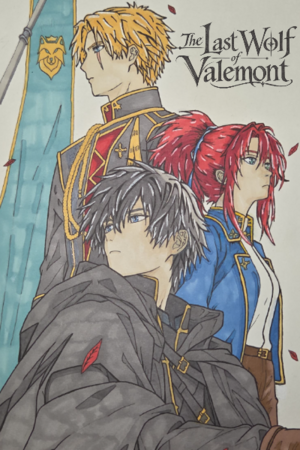
Isabelle stood at the end of the pier. The wind coming off the water pulled at her cloak and sent her crimson ponytail over one shoulder. Sunlight caught along the edges, bright enough that for a moment it looked closer to copper than red.
She gestured towards me; Marek followed my gaze.
“You’ve been summoned.”
“I can see that.”
“Should we be worried?”
“Considerably.”
Tessa looked down at the remaining crates.
“Go. We’ll survive.”
I glanced towards Marek.
“That remains unproven.”
I left before Marek could throw something at me.
Isabelle waited until I reached her, then started walking towards the far end of the dockyard.
“Where are we going?” I asked.
“Somewhere Marek cannot hear us.”
“That removes most of the capital if he’s motivated enough.”
“Then somewhere he’s too lazy to follow.”
Much easier.
She led me past an unfinished warehouse to a narrow platform overlooking one of the old piers.
Nobody worked there anymore.
The nearest voices became background noise, softened by water striking against the pilings below. Boats rocked along the waterfront, their sails shifting in the wind while gulls circled above the warehouses on the opposite bank. The capital rose beyond the river in layers of weathered walls and distant rooftops.
Isabelle leaned against the railing.
“In three days, everyone’s gathering.”
“I’m already aware.”
The separate groups were finally being brought together: mercenaries, knights, Rochefort retainers and volunteers who had trained in smaller units because several hundred armed people meeting in one place tended to attract unwanted questions.
The rally would be the first time most of them saw the force they had joined.
“They’re going to need a captain,” Isabelle said. “My father wants you to take the role.”
Huh?
“No.”
She blinked.
“That was quick.”
“I’m twenty-one.”
“I know.”
“I’ve never commanded an army.”
“I know.”
“I’ve barely commanded mercenaries.”
“You mostly insult them until they follow you.”
“That’s not the same as a command.”
“No. It isn’t.”
The immediate agreement was irritating, so I folded my arms.
“Being able to kill people does not make me qualified to decide where hundreds of them stand.”
“I know.”
“Stop agreeing with me.”
“You’re making good points.”
“No. You just keep agreeing with them.”
A small smile pulled at her mouth.
“Alexander thinks you understand the way people move in a fight better than anyone else we have. Gideon trusts your judgement. And Rafael thinks the mercenaries will listen to Carnage long enough for everyone else to decide whether or not they’ll listen to Leon.”
“That’s not reassuring.”
“It wasn’t meant to be.”
I looked back towards the dockyard.
“And what do you think?”
Isabelle gazed into the river for a few seconds, then drew a deep breath.
“I think you could do it.”
“That wasn’t the question.”
“Yes, it was.”
She pushed away from the railing.
“But I’m not going to tell you that you should.”
She took a few steps before turning back towards me.
“You have to decide that for yourself,” she added. “If you don’t want it, don’t take it.”
The answer was simple enough that it made my stomach churn.
“And if I do?”
“Then take it because you chose to. Not because someone asked you to.”
She left the rest with me.
Of course she did.
The dockyard continued behind her. Marek had apparently found somebody else to help with the crates and was now providing advice while lifting absolutely nothing. Tessa noticed and kicked the back of his boot.
Further along the yard, two knights practised with blunted swords beneath a blue afternoon sky. Workers moved timber towards the new racks. Someone near the kitchens laughed loud enough to carry across the water. None of them were waiting to see what I decided.
That mattered.
They had already chosen. Marek and Tessa had chosen, Gideon had made his choice years before I knew there was one to make, and Isabelle had been chasing the same enemy before she even knew my name. The people training below us would still be here if I said no.
For most of my life, that should have made refusing easier.
If they were going to be in danger anyway, at least it wouldn’t be because of me. Yet lately people had developed an irritating habit of refusing to let me decide what was safest for them, and somehow I had stopped wanting them to.
I looked over the dockyard again. They were moving forward with or without me, and the thought of stepping aside to watch no longer felt like relief.
If taking the position meant I could be where the decisions were made, see danger sooner and help more of them make it back, then that mattered as much as every reason I had for refusing.
They were not waiting for me to save them.
The only choice left was mine.
Isabelle had not filled the silence or tried to make the decision for me.
I looked over the dockyard one last time.
Somewhere along the way, I had already made my decision.
“I will.”










Please sign in to leave a comment.