Chapter 8:
The Land That Could Not Hunger
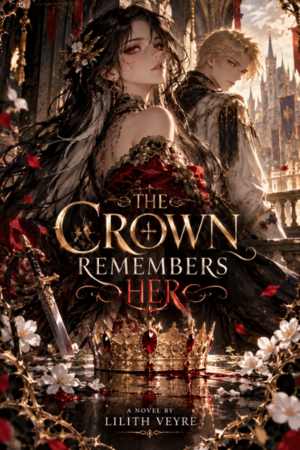
THE CROWN REMEMBERS HER
Aurelia had forgotten how much she hated riding with royalty. Not because Caelan was unpleasant company.That would have been easier.
The problem was that Crown Princes apparently could not travel anywhere without turning a road into a military operation.
They left the capital before sunrise with twelve Imperial Knights, two palace physicians, four servants, an imperial courier, enough supplies for twice their number and Captain Rowan Hale, who had spent the first hour arguing that twenty-four guards would have been more appropriate.
Caelan had reduced the number to twelve...She suggested six.
Captain Hale had looked at her as though she’d personally proposed assassinating the Crown Prince.
Which, admittedly, complicated the situation.
The capital walls had disappeared behind them hours ago. Here, the imperial road cut through rolling green country interrupted by villages, vineyards and occasional watchtowers bearing the seven-pointed sun of the Crown.
Aurelia rode near the front. She rejected the carriage which, of course, Caelan had found deeply amusing.
“You know,” he said beside her, “most noblewomen would consider an imperial carriage preferable to six hours on horseback.”
“Most noblewomen haven’t spent three years crossing mountain passes in winter.”
Caelan looked at her. Aurelia closed her eyes.
Wonderful.
She was going to need a list.
Things Not To Say Before They Happened.
“Three years?” he asked.
“Forget that.”
“No.”
“I wasn’t asking.”
“That makes two of us.”
Aurelia urged her horse forward, he followed. Since yesterday, something between them had changed.
Not trust.
Absolutely not.
But the exhausting performance of ignorance had cracked. Caelan no longer needed to pretend he hadn’t noticed her impossible knowledge, and Aurelia no longer had to invent increasingly ridiculous explanations for why she knew things.
That should have made conversations easier.
It had not...It merely gave Caelan permission to ask better questions.
“What was the East like?” he asked.
Aurelia glanced at him. “When?”
“In your memories.”
“Before or after the famine?”
“Both.”
She considered refusing.
Instead she looked toward the distant hills.
“Before, Asterholt supplied almost a third of the grain purchased by the central provinces. Wheat, barley, winter rye. The southern districts grew sunroot and medicinal flowers. The northern estates bred cavalry horses.”
“And afterward?”
“People ate the horses.”
Caelan’s expression changed.
Aurelia continued before he could ask.
“The first harvest failed. The Crown released emergency grain reserves, but distribution was slow. Prices tripled within six weeks. By winter, merchants were buying grain in the west and selling it here for five times the normal rate.”
“Why wasn’t that stopped?”
“It was.”
“Apparently not very effectively.”
“No.”
Aurelia remembered warehouses.
Riots...Children with swollen stomachs, soldiers guarding grain from the people it was meant to feed.
“The empire blamed crop blight,” she said. “Then weather. Then hoarding. By the time anyone understood that none of those explanations were sufficient, the region had already collapsed.”
Caelan looked at her. “And what caused it?”
Aurelia opened her mouth.
Nothing came out.
Crop blight.
That was what every report had said. She remembered reading hundreds of them. Fungal contamination, unseasonal moisture, poor storage, merchant speculation afterward.
She knew how the famine spread, which governors failed, which warehouses burned, which noble families profited, which roads became dangerous. She knew exactly how many soldiers had been deployed when the first riots began.
But the cause?
She frowned.
“I don’t know.”
Caelan said nothing.
That somehow made it worse.
“I thought I did.”
“What did you think caused it?”
“Blight.”
“And now?”
“The report said entire fields died within forty-eight hours.”
“Yes.”
“That isn’t how it happened before.”
Caelan waited as she searched her memories.
“The first reports came gradually. Yellowing leaves. Weak harvests. Then storage rot. It took weeks before anyone called it a crisis.”
“But this time?”
“Thousands of acres in two days.”
“So either your intervention changed something-”
“Or my memories never contained the beginning.”
Caelan nodded. Aurelia hated how reasonable he was.
“You can stop appearing pleased whenever my understanding of reality collapses.”
“I’m not pleased.”
“You have that face.”
“What face?”
“The one you make when something becomes interesting.”
“I have an interesting face.”
“You have an irritating face.”
“Yesterday you called it handsome.”
Aurelia nearly pulled her horse to a stop.
“I absolutely did not.”
“You thought it.”
“That is not how conversation works.”
“How fortunate. For a moment I worried your Witness had expanded.”
Aurelia stared at him.
Caelan smiled.
She looked forward again.
Murdering him suddenly felt considerably more understandable.
They changed horses at midday in a town called Bellgrave. Aurelia remembered it burning. That was becoming a problem too. Everywhere she looked, the future overlapped the present.
The inn beside the road still had blue shutters. In six years, rebels would barricade themselves inside it while Imperial troops surrounded the square. The stone bridge remained covered in flower boxes. Aurelia remembered cavalry bodies floating beneath it.
A little girl ran across the road carrying a loaf of bread. Aurelia watched until she disappeared.
“You do that often.”
Caelan had come up beside her.
“Do what?”
“Look at places as though you’re attending their funeral.”
She didn’t answer.
The horses were being changed nearby. Imperial Knights checked saddles while servants refilled water skins. Bellgrave looked prosperous.
Almost.
Aurelia noticed the bakery first.
Then the grain shop.
Then the market.
“Prices are up.”
Caelan followed her gaze.
A chalkboard outside the bakery listed bread at nine coppers.
“Normal is six,” Aurelia said.
“You remember that?”
“I remember logistics.”
“Of course you do.”
Aurelia crossed the road.
The baker saw her clothing, then the Imperial Knights, and immediately bowed.
“My lady.”
“How long has flour been expensive?”
The man blinked.
“Four days.”
“Why?”
“Merchants raised the price.”
“Why?”
“Supply, they say.”
“From where?”
“Asterholt.”
“How much grain normally arrives each week?”
The baker hesitated, she waited.
“Six wagons. Sometimes seven.”
“And this week?”
“Three.”
Caelan had joined her.
“Who bought the missing grain?”
The baker recognized him, his face went white.
“Your Highness.”
People nearby began bowing, Caelan sighed quietly. Aurelia almost smiled. So did he.
“Please,” he said. “The grain.”
“I don’t know, Your Highness. Truly. The merchants say shipments were cancelled.”
“Which merchants?”
The baker gave them two names. Aurelia memorized both.
By the time they left Bellgrave, Caelan had sent the imperial courier back toward the capital with orders to investigate grain purchases along the eastern road.
“You were right,” he said.
Aurelia mounted her horse. “About?”
“The famine affecting prices before stomachs.”
“It always does.”
He looked at her.
Aurelia adjusted her gloves.
“People imagine famine begins when there is no food. It doesn’t. It begins when someone realizes there might not be food tomorrow.”
Fear raised prices before hunger emptied shelves, and someone had realized very quickly.
Perhaps too quickly, they reached Asterholt Province shortly before sunset. The difference was visible before anyone needed to point it out.
Fields stretched toward the horizon in enormous golden bands, broken by irrigation channels and stone markers wrapped in faded yellow ribbons. Farmhouses were built low against the wind, their roofs painted with symbols Aurelia remembered from military campaigns.
A bowl beneath a sun. The eastern blessing.
Every household left a bowl of grain outside its door after harvest. Traditionally it was meant for travelers, though most families claimed it honored Saint Meriel.
The custom was older than the saint.
Aurelia knew that now.
She wondered how many traditions in the empire had explanations invented centuries after their true meanings were forgotten.
As their party entered the first farming village, an elderly woman stepped into the road.
Captain Hale immediately reached for his sword.
Aurelia lifted a hand.
“Wait.”
The woman carried a shallow wooden bowl. She approached Caelan’s horse, bowed and raised it toward him.
Seven grains of wheat lay inside.
Caelan looked at Aurelia.
She leaned closer.
“Take one.”
“You’re sure?”
“No.”
“That inspires confidence.”
“Take one anyway.”
He did. The woman smiled, then offered the bowl to Aurelia. Aurelia took one as well. Only five remained.
The woman bowed again and walked away.
Caelan examined the grain between his fingers.
“What did I just agree to?”
“Nothing.”
“You hesitated.”
“The custom means the house has enough to feed a stranger.”
His expression changed.
“And when they don’t offer?”
Aurelia looked at the village.
Several doorways had bowls outside.
Some were empty.
“Then they don’t have enough.”
Caelan closed his fingers around the grain. Neither spoke for a while.
Governor Asterholt’s estate stood on a hill overlooking the eastern valley.
The Governor himself met them outside.
Lord Oren Asterholt was in his late fifties, broad through the shoulders and sun-darkened in a way uncommon among high nobility. His family had governed the eastern agricultural provinces for generations, though they weren’t one of the founding houses.
In Aurelia’s memories, Oren died during the second winter of the famine.
Not from starvation but from a farmer’s knife. He bowed deeply.
“Your Highness. Lady Veyne.”
“Governor,” Caelan said. “Show us the fields.”
No banquet, no formal welcome.
Aurelia approved.
Oren looked relieved.
“This way.”
They didn’t even enter the estate.Horses carried them another two miles east until the smell reached them.
Rot.
Aurelia knew the smell of dead crops.
This wasn’t it.
Too sweet. Almost metallic. The first field appeared beyond a ridge. Everyone stopped. Golden wheat covered the valley except for an enormous circle of black.
Black.
Every stalk within the boundary had collapsed. Aurelia dismounted her horse.
“Don’t touch anything,” Governor Oren warned.
She ignored him.
Caelan dismounted behind her.
“Aurelia.”
“I heard him.”
“That generally implies compliance.”
“Not necessarily.”
She crouched at the edge of the circle.
The boundary was almost perfect.
Healthy wheat.
Then dead.
No gradual spread or scattered infection. Weird... Aurelia pulled on a glove and examined one of the stalks without touching it directly. The roots were black but the soil wasn’t.
“Disease doesn’t respect geometry,” she said.
Oren nodded grimly. “Our agricultural scholars said the same.”
“When did this appear?”
“First circle, three nights ago. Second the following morning. Five more since.”
“Seven.”
“Yes.”
Aurelia looked across the valley.
Seven circles.
Her stomach tightened.
“Has anyone dug beneath them?”
Oren hesitated.
“Who?”
“A survey team.”
“When?”
“Yesterday.”
“And?”
“Three men went down.”
Aurelia stood.
“Where are they?”
Oren’s expression answered before he did.
“Two came back.”
“And the third?”
“We don’t know.”
Caelan’s voice became colder. “You omitted this from the dispatch.”
“The dispatch left before the excavation, Your Highness.”
“Then send another.”
“We tried.”
Caelan frowned.
“Tried?”
Oren looked toward the manor.
“None of the messenger birds will fly west.”
Silence.
Aurelia turned toward him.
“What?”
“They leave the tower. Circle once. Then return.”
“Every bird?”
“Every one.”
That was new.
Aurelia’s memories contained nothing about birds refusing to leave Asterholt.
“How far does it extend?”
“We don’t know.”
A voice behind them answered.
“Twenty-three miles.”
Aurelia turned.
A man stood several paces away.
She hadn’t heard him approach. That alone irritated her.
He wore a dark riding coat without noble embroidery, leather gloves and a sword with no visible family crest. Tall. Lean rather than broad. His hair was a deep brown, almost black in the fading light, tied loosely at the nape.
His eyes moved from Caelan to Aurelia and lingered on her for half a second too long.
Governor Oren looked unhappy.
“You were told to remain at the excavation.”
“And yet here I am.”
“Who are you?” Caelan asked.
The man bowed. Not deeply enough for a Crown Prince.
“Dorian Valehart.”
Aurelia knew the name.
Her body went cold.
Dorian Valehart.
Second son of a minor northern marquess. Royal investigator. Diplomatic problem. Occasional smuggler, depending on which government report one believed.
In six years, he would command no army and hold no major office. He would still somehow become one of the most dangerous men in the empire.Then, two weeks before the capital burned, Dorian Valehart would disappear.
Aurelia had never discovered where.
His gaze shifted to her. Interesting. He was younger now, perhaps twenty-two, but the expression was the same.
Calm, assessing and far too observant.
“Lady Veyne,” he said.
“Lord Valehart.”
One eyebrow rose.
“We haven’t met.”
Damn.
Caelan looked between them. Aurelia didn’t blink.
“I know your family.”
“Do you?”
“Yes.”
“My family finds that surprising.”
“They would.”
Dorian’s mouth curved slightly. Caelan looked delighted. Aurelia disliked both of them.
“You said twenty-three miles,” she said. “Explain.”
Dorian looked toward the valley.
“Birds won’t cross it. Neither will deer. Dogs become agitated near the boundary. Horses can cross, but they resist.”
“A magical perimeter?”
“Possibly.”
“Centered where?”
“The circles.”
“No.”
He looked at her.
“The circles are symptoms.”
Governor Oren frowned. “And you know that how?”
Aurelia pointed toward the dead field.
“If the circles created the perimeter, its radius should expand as new circles appear. You said birds won’t cross twenty-three miles.”
Dorian’s eyes sharpened.
“Yes.”
“How long has the boundary been that size?”
“Since I started measuring it.”
“When?”
“Before the second circle appeared.”
“Then the perimeter existed first.”
Silence.
Dorian smiled, it was obvious she piqued his interest. Aurelia knew that look. Someone had just found a puzzle. Unfortunately, the puzzle was her.
“Exactly,” he said.
Caelan glanced at Aurelia but she ignored him.
“Why are you here?” she asked Dorian.
“Same reason as you.”
“You don’t know my reason.”
“I know you’re not here to inspect crops.”
“And what am I here to do?”
“Find whatever everyone else failed to notice.”
Aurelia’s expression didn’t change.
Dorian continued.
“You looked at the field for approximately eight seconds before deciding the rot wasn’t the problem. You asked about digging before anyone mentioned anything underground. And when the Governor said seven circles, you looked worried rather than surprised.”
Caelan was visibly enjoying this now.
*sigh* Traitor.
Aurelia regarded Dorian more carefully.
“What did you find underground?”
His smile disappeared.
“Come see.”
The excavation had been dug inside the first dead circle. A temporary wooden structure covered the entrance, surrounded by lanterns and six armed guards. Aurelia smelled blood before reaching it.
She stopped. Dorian noticed.
“Something wrong?”
“No.”
A lie.
Her Witness stirred faintly beneath her skin. Someone had bled here.
Recently.
They descended by ladder into the earth.
Caelan came behind Aurelia, Dorian ahead. Captain Hale objected until Caelan ordered him to remain above with the guards.
The shaft was approximately thirty feet deep. At the bottom, packed soil gave way to stone. Not natural stone, it was a wall.
Aurelia lifted her lantern.
Old blocks stretched in both directions beneath the field, roots threaded through cracks between them.
“What is this?” Caelan asked.
“We thought irrigation,” Dorian said. “Then we found the inscription.”
He led them farther.
One of the surveyors sat against the wall with a bandage around his head. Another man slept nearby.
“Where’s the missing one?” Aurelia asked.
Dorian pointed toward a narrow opening in the wall.
“He went through there.”
“And you didn’t follow?”
“I did.”
Governor Oren had neglected to mention that.
“What happened?”
“I came back.”
Aurelia looked at him.
“That wasn’t the question.”
“No. It was the relevant answer.”
She disliked him already. Excellent. Dorian raised his lantern toward the wall.
Words had been carved into the stone. The script was ancient. Older than modern imperial. Aurelia recognized it anyway.
WE SWORE THEY WOULD NEVER HUNGER.
Caelan read it quietly. Aurelia felt something twist in her chest.
An oath.
Of course.
“What house?” she asked.
Dorian looked at her.
“You think this is an Inheritance.”
“Yes.”
“Cast into land?”
“Maybe.”
Caelan crouched near the inscription. “House Asterholt doesn’t possess agricultural magic.”
“No,” Aurelia said.
“But someone did.”
She moved the lantern across the wall.
There. A crest.
Most of it had been worn away, but enough remained to make out wheat wrapped around an open hand. Aurelia knew almost every noble crest in the empire. She had never seen this one.
“Governor?”
Oren shook his head.
“Not ours.”
Dorian leaned against the wall. “It doesn’t appear in the eastern heraldic registry either.”
Aurelia looked at the inscription again.
We swore they would never hunger.
“What happens when an oath succeeds for six hundred years?” she asked.
Nobody answered.Caelan looked at her. Aurelia continued.
“House Mareth’s barrier prevents enemies crossing declared borders, but descendants cannot cross land formally declared hostile. House Arcel heals by taking suffering into themselves.”
“Every Inheritance has a cost,” Caelan said.
“Yes.”
Dorian’s attention moved between them.
“And you think this land has been paying one.”
“No.”
Aurelia looked toward the black roots.
“I think it hasn’t.”
That was worse. An oath could endure for generations. A promise repeated through blood. A blessing passed from parent to child.
But nothing was free.
If the East had been protected from famine for centuries, what had paid for it? And what happened when payment came due? A sound echoed through the tunnel.
Aurelia stopped.
Scratching.
From beyond the opening.
The sleeping surveyor woke immediately.
“No.”
Fear filled his voice. Dorian drew his sword and Caelan did the same. The scratching came again.
Closer.
The injured surveyor began shaking.
“He came back.”
Aurelia looked at him. “Who?”
“Joren.”
The missing man. The lantern flame flickered. A figure appeared beyond the opening. A man stumbled into the light. Barefoot and covered in dirt. His hands were bloody from clawing through stone.
“Joren!” the Governor shouted.
The surveyor lifted his head. His eyes were open. But he didn’t seem to see any of them. He walked directly toward the inscription. Dorian stepped into his path.
“Joren.”
The man kept walking.
“Stop.”
Nothing.
Dorian caught his shoulder.
Joren screamed. Not in pain but in terror. He struck Dorian with enough force to send him into the wall.
Caelan moved but Aurelia was faster.
She caught Joren’s wrist, turned beneath his arm and used his momentum to force him to his knees. Or tried to.
Her younger body reminded her, rather violently, that men twice her size remained men twice her size.
Her shoulder screamed.
“Damn it.”
Caelan caught Joren from the other side. Together they brought him down. Blood smeared across Aurelia’s glove. Witness opened. Ruby flooded her vision.
One intention struck her.
Not KILL. Not FLEE. Not PROTECT.
Aurelia froze
FEED.
Hunger tore through her, it wasn't Joren’s hunger. It was something larger.
Ancient and bottomless.
Fields harvested for centuries. Grain carried away by wagons. Children fed. Cities built. Armies supplied. Kings feasted.
Six hundred years of abundance.
And beneath all of it-
a debt.
Aurelia ripped her hand away. The vision broke. She staggered. Caelan caught Joren’s weight.
“Aurelia?”
She couldn’t answer. Joren stopped struggling. His head turned toward the wall. Then he spoke. His voice was not his own.
“The field remembers.”
Every lantern went out. Darkness swallowed them.Someone swore.Steel scraped stone. Aurelia reached for her dagger. Then the wall began to glow.
Not the inscription. Lines beneath it.
One.
Two.
Three.
A map emerged across the ancient stone.
The eastern provinces, rivers, mountains, old roads. Seven circles appeared across the farmland.
Then an eighth.
Far larger than the others. Aurelia stared. It wasn’t centered on Asterholt. It stretched beneath the imperial road and the way toward the capital. Dorian’s voice came quietly beside her.
“That wasn’t there before.”
Aurelia looked closer. Something had been carved at the center of the eighth circle.
A symbol...A crown.
Not seven-pointed.
Eight.
Caelan went still. Joren began laughing. The sound echoed through the underground chamber.
“The debt is hungry.”
They restrained Joren and carried him above ground.
He remembered nothing- not entering the tunnel, not disappearing or attacking Dorian or speaking whatsoever.
Aurelia stood at the edge of the dead field while physicians examined him. Night had settled over Asterholt. Seven black circles scarred the valley beneath the moon. Somewhere beneath them was an eighth.
Waiting.
“You haven’t told him.”
Dorian’s voice came from behind her. Aurelia didn’t turn.
“Told who what?”
“The Prince.”
“Be more specific.”
“What happened when you touched Joren’s blood.”
That made her look at him. Dorian stood several feet away, a shallow cut along his jaw from the struggle underground.
“How do you know something happened?”
“Your eyes turned red.”
Aurelia said nothing.
“Then you looked terrified.”
“I wasn’t terrified.”
“Of course.”
She disliked his tone.
“What do you want?”
“Nothing.”
“Nobody wants nothing.”
His expression changed slightly.
“Good.”
Aurelia waited.
Dorian looked toward Caelan, who was speaking with Governor Oren near the excavation.
“I’ve been investigating failures in old Inheritances for eight months.”
That caught her.
“Failures?”
“A border ward in the north killed the family maintaining it. A coastal beacon that had burned for three hundred years went dark. A healing spring in Solvair began making people ill.”
Aurelia’s attention sharpened.
Those events weren’t in her memories.
Or...
She searched.
No.
She had heard about some of them. Minor incidents. Unconnected. At least, that was how she’d remembered them.
“When?”
“The first was eleven months ago.”
Before Aurelia returned. Before Vale. Before she changed anything. Her entire theory shifted. This changes everything.
“The failures started before me.”
Dorian watched her carefully.
“Before you did what?”
Aurelia said nothing. He smiled faintly.
A mistake.
She had made a mistake.
But the realization mattered more.
If the Inheritances had begun failing before her return, then saving Vale hadn’t caused the famine to move early.
The process was already underway. Her memories hadn’t changed the future. Her memories had failed to show her when the future truly began. Dorian studied her expression.
“There,” he said.
“What?”
“That.”
“What?”
“You just learned something important.”
Aurelia stared at him.
“And?”
“I enjoy watching people discover they’ve been asking the wrong question.”
Annoying. Very annoying.
“You seem remarkably comfortable irritating people who carry knives.”
“I know what you’re capable of, Lady Veyne.”
Her hand stopped near her dagger. Dorian’s gaze dropped to it, then returned to her face.
“I simply enjoy watching everyone else discover it.”
Aurelia went still. He bowed slightly and walked away. She watched him go.
He's dangerous.
“Aurelia.”
Caelan approached from the field. His gaze followed Dorian.
“What did he want?”
“To be irritating.”
“I’m beginning to like him.”
“Of course you are.”
Caelan stopped beside her.
For a moment they watched the dead fields together. Then Aurelia spoke.
“The rot didn’t start because I changed Vale’s death.”
“No?”
“Vale died two days ago. Dorian has records of Inheritances failing for almost a year.”
Caelan’s expression sharpened.
“So this began before you returned.”
“Yes.”
The word settled between them.
Aurelia looked across Asterholt.Her future memories had shown her disasters.
Assassinations, famine, rebellion...war.
She had assumed those disasters were the beginning of the empire’s collapse.
But...What if they weren’t?
What if they were merely when ordinary people finally noticed?
Caelan seemed to reach the same conclusion.
“How far back?”
“I don’t know.”
“Your favorite phrase lately.”
She gave him a look.He smiled faintly. Then Aurelia noticed movement in the field. One of the black circles was expanding.
Slowly.
Wheat collapsed along its edge. One stalk. Then another. Then hundreds. Governor Oren shouted for everyone to move back. The rot spread toward them. Aurelia watched the boundary advance.
Then stop. Directly at her boots.
Silence.
The dead field lay inches away. Aurelia looked down. Something beneath the soil glowed red.
A line. No...A word.
She crouched.
The earth cracked. Ancient stone appeared beneath it. Only a small piece. Enough for one carved sentence. Aurelia brushed away the dirt, Caelan read over her shoulder, Dorian had returned without either of them noticing.
Three people stared at the words.
THE FIRST DEBT HAS COME DUE.
Below it sat seven small crown symbols.
The first had been crossed out, Aurelia’s stomach dropped, Caelan’s voice was quiet.
“First?”
The ground trembled.
Far beyond Asterholt, somewhere too distant for any of them to hear, an ancient barrier along the empire’s northern frontier cracked from top to bottom.
And on a forgotten monument beside the sea, the second crown began to bleed.





Please sign in to leave a comment.