Chapter 5:
Four Meatballs and One Uninvited Guest
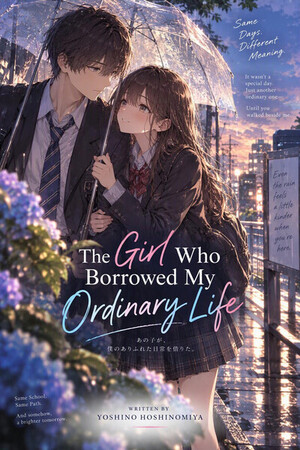
The Girl Who Borrowed My Ordinary Life
Wednesday morning began with a meatball.
More specifically, it began with my mother staring at one through the open refrigerator door.
“Ren.”
I continued putting on my shoes.
“Yes?”
“Why are there meatballs?”
“Because someone made them.”
“I understand the basic process.”
“Then why did you ask?”
She closed the refrigerator and appeared in the entryway, still wearing her apron.
“I made chicken for your lunch.”
“I know.”
“You asked me to make extra.”
“I was hungry on Monday.”
“And today?”
“I may be hungry again.”
She folded her arms.
This had become her preferred position whenever discussing my lunch.
“Is this for the same classmate?”
I tightened one shoelace.
“No.”
The answer came too quickly.
My mother smiled.
“So it is.”
“That logic makes no sense.”
“You were much better at lying when you were younger.”
“When did I lie to you as a child?”
“You once blamed a broken plate on an earthquake.”
“There had been an earthquake that month.”
“It happened two weeks earlier.”
“Structural damage can take time to develop.”
Her smile widened.
For one horrifying moment, I realized I had begun sounding like Daichi.
I stood.
“The food is for me.”
“All of it?”
“Yes.”
“You packed two servings.”
“I need energy.”
“You avoid physical activity.”
“Thinking requires calories.”
“Then you should have been eating more for years.”
I opened the front door.
“Goodbye.”
“Tell her the chicken tastes better warm!”
“I’m not telling anyone anything.”
“And bring the lunch box home!”
I stepped outside.
The door closed behind me.
Then it opened again.
“Ren?”
I turned.
My mother leaned out.
“Your hair looks fine today.”
I stared at her.
She gave me a thumbs-up.
I walked away without responding.
------------<>------------
By the time I reached school, I had decided on a strategy.
I would treat Wednesday’s lunch exactly like Monday’s.
There was no reason for it to feel different merely because we had planned it in advance.
We would meet after the bell.
We would go to the stairwell.
We would eat.
Mizuki would give me one of her four unnecessarily ambitious meatballs. I would offer her some chicken. We would discuss something ordinary.
Then we would return to class.
The plan was simple.
Which meant it lasted until I opened the classroom door.
Mizuki was already there.
She was standing beside my desk.
Daichi sat behind it, looking between her and my empty chair with the focused expression of someone waiting for a performance to begin.
Mizuki turned when I entered.
“Good morning.”
“Good morning.”
Her eyes dropped briefly toward my school bag.
She knew the lunch box was inside.
I knew she knew.
Neither of us mentioned it.
Daichi looked disappointed.
Mizuki held out my notebook.
“You left this yesterday.”
I stopped walking.
The blue notebook rested in both her hands.
For a second, the classroom disappeared.
“What?”
“You left it beneath your desk.”
She extended it toward me.
I took it immediately.
The cover looked unchanged. The same bent corners. The same black letters spelling my name.
“You had it overnight?”
“Yes.”
“Did you…”
I stopped.
Mizuki’s expression became serious.
“I didn’t open it.”
“You didn’t?”
“No.”
“How do you know it was mine?”
“Your name is on the cover.”
“That happened before.”
“I remembered this time.”
She smiled slightly, but it disappeared when she saw I was still examining the notebook.
“I promise,” she said. “I didn’t read anything.”
Daichi leaned forward.
“I would have.”
“No one asked you,” we said together.
He leaned back.
Mizuki continued holding my gaze.
I believed her.
That should have been enough.
Still, I opened the notebook.
The first page was normal.
So were the next two.
I flipped toward the recent entries.
Nothing appeared disturbed. There was no obvious way to tell whether pages had been read, but Mizuki didn’t look offended by my suspicion.
If anything, she looked as though she understood it.
Then something fell from between the pages.
A small piece of paper landed on my desk.
I picked it up.
It was a yellow sticky note folded in half.
On the outside, Mizuki had written:
I did not read this notebook.
I opened it.
Inside was a second message.
But I was curious. Very curious.
Beneath that, in smaller writing:
Returning it without reading should count as significant personal growth.
I looked at her.
She pressed her lips together, trying not to smile.
“You put a note inside without opening it?”
“I lifted the cover approximately two centimeters.”
“That counts as opening it.”
“It was necessary for note placement.”
“You could have attached it to the front.”
“Then it might have fallen off.”
“So you opened my notebook.”
“I opened the cover. I didn’t read the contents.”
“That distinction seems convenient.”
“It’s accurate.”
Daichi raised his hand.
“I think this calls for a trial.”
“No,” I said.
“I volunteer as judge.”
“You would be the defendant in most trials.”
“That gives me legal experience.”
Mizuki pointed at the note.
“I admitted exactly what I did.”
“After being accused.”
“Before being accused. The confession was already inside.”
“That’s true,” Daichi said. “I recommend leniency.”
“No one appointed you.”
“I appointed myself.”
I folded the note and returned it to the notebook.
Mizuki noticed.
“You’re keeping it?”
“It may be needed as evidence.”
“For the trial?”
“For future violations.”
Her smile returned.
“You believe there will be future violations?”
“With you, probably.”
“That sounds rude.”
“You attempted visual theft less than a week ago.”
“I’ve improved since then.”
“By opening only the cover?”
“Exactly.”
Daichi looked between us.
Then he sighed.
“You two have become strange very quickly.”
From anyone else, that observation might have concerned me.
From Daichi, it meant nothing.
I placed the notebook inside my desk.
“Why were you at my desk?” I asked.
“To return it.”
“You could have waited until I arrived.”
“I wanted to make sure no one else saw it.”
That answer removed the last of my suspicion.
She had noticed the notebook beneath my desk after class and taken it before someone else could find it.
Which meant she had carried it home.
Kept it overnight.
Returned it unopened.
For Mizuki, this was probably more difficult than repairing fifty paper stars.
“Thank you,” I said.
Her eyes widened slightly.
Then she nodded.
“You’re welcome.”
Daichi placed a hand against his chest.
“That was beautiful.”
I reached for my textbook.
He moved out of range.
Mizuki returned to her seat before I could throw anything.
As she walked away, the paper star swayed from her bag.
I opened my notebook again.
The sticky note remained between the final written page and the next empty one.
I considered moving it somewhere else.
Instead, I left it exactly where it was.
------------<>------------
The first half of the morning passed uneventfully.
During history, Mizuki answered a question about international trade.
During mathematics, Daichi dropped his calculator and blamed gravity as though it had acted with malicious intent.
During the break, Emi reminded everyone that our class still needed to choose an activity for the cultural festival.
“Suggestions are due by Friday,” she announced from the front of the room. “We currently have eleven votes for a café, nine for a haunted house, six for a game booth, and one for an indoor fishing experience.”
The class turned toward Daichi.
He raised both hands.
“It would be memorable.”
“Where would we get fish?” Emi asked.
“I haven’t reached that stage of planning.”
“Where would we put the water?”
“In the room.”
“That’s not an answer.”
“It’s a location.”
Emi wrote REJECTED beside the suggestion.
Daichi looked wounded.
“You’re suppressing innovation.”
“I’m preventing flooding.”
The class returned to its conversations.
Mizuki turned in her seat and looked at me.
“Story room,” she said.
I shook my head.
“No.”
“You suggested it.”
“It wasn’t serious.”
“You thought of a backdrop, choice cards, and prepared stories.”
“We were surrounded by dust. My judgment was impaired.”
“I think it could work.”
“No one in class will agree.”
“You don’t know that.”
“Yes, I do. People want food or somewhere dark enough to scare each other.”
“A story room could be dark.”
“But it won’t have food.”
“We could serve drinks.”
“Then it becomes a café with extra reading.”
Mizuki picked up a blank proposal sheet.
“That sounds even better.”
“You’re changing my idea.”
“I’m improving it.”
“You can’t submit it.”
“I can submit any reasonable proposal.”
“It isn’t reasonable.”
She wrote MIDNIGHT STORY CAFÉ at the top of the paper.
I watched in disbelief.
“You already named it?”
“The backdrop shows a night sky.”
“That doesn’t make it midnight.”
“It establishes a theme.”
“You’ve thought about this since Friday.”
“I considered it over the weekend.”
“You said you attended meetings, bought groceries, studied, and cleaned.”
“There was time between those activities.”
“So you omitted this from our conversation.”
“You didn’t ask whether I had developed your festival idea.”
“No one would ask that.”
She began writing a description.
I reached for the paper.
Mizuki pulled it away.
“Don’t.”
“You’re submitting my idea.”
“Our idea.”
“I gave you one sentence.”
“And I expanded it.”
“Without permission.”
“You don’t own the concept of stories.”
“I should at least have the right to prevent my name from being attached.”
“I wasn’t going to attach your name.”
I stopped.
For some reason, that was also irritating.
Mizuki saw my expression and tilted her head.
“Do you want your name on it?”
“No.”
“Then what’s wrong?”
“Nothing.”
“You look annoyed.”
“That’s only my face.”
“I know what your face normally looks like.”
I looked at her.
She tapped the proposal sheet with her pencil.
“This is different.”
Before I could respond, Emi approached our desks.
“Is that another suggestion?”
Mizuki handed her the paper.
I considered grabbing it.
But doing so would only draw attention, and the room had recently returned to the healthy habit of ignoring me.
Emi read the title.
“Midnight Story Café.”
“It was Asakura’s idea,” Mizuki said.
I stared at her.
She ignored me.
Emi continued reading.
“This is actually interesting.”
“It isn’t finished,” I said.
“There would be a painted night backdrop,” Mizuki explained, “and tables arranged throughout the room. Visitors could order simple drinks, then choose a short story from a menu.”
Emi looked intrigued.
“Would we read the stories aloud?”
“That could be one option. We could also create written stories for visitors who prefer reading quietly.”
“And visitors could select genres,” Emi added. “Mystery, fantasy, comedy…”
“Romance,” Mizuki said.
I looked at her.
She glanced at me.
Only briefly.
Emi wrote a note at the bottom.
“We would need several people to write the stories.”
“That’s the main problem,” I said.
“Asakura can help,” Mizuki replied.
“I cannot.”
“You already keep a notebook.”
“That doesn’t mean I can write fiction.”
“You told me you become someone else in it.”
I became aware of how close Emi was standing.
That had been something I told Mizuki in an empty classroom.
Something I had assumed would remain there.
Mizuki noticed my expression.
She immediately lowered the paper.
“I’m sorry,” she said.
Emi looked between us.
“I’ll add the idea to the list,” she said, more quietly. “No names yet.”
She walked away.
Mizuki turned back to me.
“I shouldn’t have said that.”
“No.”
“I forgot other people were listening.”
“You usually don’t.”
“I know.”
The excitement had left her face.
She placed her pencil on the desk.
“I’m sorry.”
For a moment, I wanted to remain annoyed.
My notebook mattered to me precisely because it didn’t belong to anyone else. It held thoughts I didn’t need to explain and observations no one could question.
But Mizuki hadn’t shown anyone the notebook.
She hadn’t read it even when she had every opportunity.
She had only repeated one sentence.
And she looked more troubled by it than I was.
“It’s fine,” I said.
“It isn’t.”
“You apologized.”
“That doesn’t make it fine.”
“It helps.”
Mizuki looked toward Emi, who was copying the proposal title onto the board.
“I won’t mention it again.”
“You can mention the story room.”
“But it was your idea.”
“You changed most of it.”
“The important part was yours.”
I sighed.
“Submit it.”
She turned toward me.
“Really?”
“But don’t volunteer me to write anything.”
“All right.”
“And no performances.”
“Of course.”
“And no costumes.”
“I hadn’t considered costumes.”
“Now you have. Forget them.”
Mizuki’s enthusiasm returned gradually.
“What about aprons?”
“Those are costumes.”
“They’re practical uniforms.”
“No.”
“What if everyone wears dark blue?”
“That’s acceptable.”
“With small silver stars?”
“No.”
“The paper stars from storage would make good decorations.”
“As decorations, yes.”
“And perhaps the staff could wear one star each.”
“That’s how costumes begin.”
She smiled.
I realized too late that I was participating in the planning.
Mizuki picked up her pencil again.
“I’ll write down your objections.”
“That will require another page.”
“I came prepared.”
She opened her notebook to a blank sheet.
At the top, she wrote:
ASAKURA’S OBJECTIONS
I took the pencil from her hand.
She stared at me.
I crossed out the heading.
Above it, I wrote:
PRACTICAL CONSIDERATIONS
Mizuki read the new title.
“That’s the same thing.”
“It sounds more professional.”
“You’re helping.”
“I’m preventing disaster.”
“That still counts.”
I returned the pencil.
She looked unreasonably pleased.
------------<>------------
At lunch, we left the classroom separately.
This wasn’t planned.
Mizuki needed to speak with Emi about the festival proposal, while I needed to stop Daichi from following me.
The second task proved more difficult.
“I only want to see the location,” he said as we stood near the classroom door.
“You’ve seen stairs before.”
“Not these stairs.”
“They’re structurally similar to every other staircase.”
“What if they have historical importance?”
“They don’t.”
“A unique architectural feature?”
“No.”
“A ghost?”
“Hopefully.”
Daichi placed both hands together.
“I won’t interrupt. I’ll eat two floors below.”
“Then why come?”
“To provide support.”
“For what?”
He lowered his voice.
“Your second lunch.”
“I’m eating food, not undergoing surgery.”
“Emotional support.”
“I would feel more supported if you left.”
His expression became thoughtful.
“That sounds like a contradiction.”
“It isn’t.”
Mizuki walked past us carrying her lunch bag.
She did not stop.
She only looked at me and said, “Five minutes.”
Daichi watched her leave.
Then he looked at me.
“She gave you a time.”
“Yes.”
“You have established coordination.”
“We decided to meet.”
“She didn’t need to explain where.”
“We used the location once.”
“You have a place.”
“It’s a stairwell.”
“Every romance begins somewhere.”
“This isn’t a romance.”
“Some begin in better places than others.”
I put a hand on his shoulder.
“Daichi.”
“Yes?”
“If you follow us, I’ll tell Emi you still want to organize indoor fishing.”
His confidence vanished.
“You wouldn’t.”
“I’ll say you’ve prepared a budget.”
“I haven’t.”
“I’ll say you’re personally responsible for obtaining the fish.”
He stepped back.
“You’ve changed.”
“I learned from you.”
“That’s what concerns me.”
He turned toward the cafeteria.
“I hope your meatballs are cold.”
“That’s unnecessarily cruel.”
“I’m grieving.”
He walked away.
I waited exactly five minutes before leaving.
Not four.
Four might look eager.
Six would be rude.
Five was what she had said.
When I reached the stairwell, Mizuki was already on the bench.
There was a white cloth beside her.
She had spread it over the scratched wood between us.
“What is that?” I asked.
“A handkerchief.”
“Why?”
“The bench was dusty on Monday.”
“We sat on it anyway.”
“And now it’s clean.”
The cloth was decorated with tiny strawberries.
I looked at her.
She looked at the cloth.
“It was a gift,” she said.
“I didn’t ask.”
“You were about to.”
“I wasn’t.”
“You looked at it.”
“That doesn’t mean anything.”
She moved her lunch bag aside, leaving space for me.
I sat.
The space between us was smaller than Monday.
This was because of the handkerchief.
Probably.
Mizuki opened her lunch containers.
I opened mine.
Four meatballs sat in a neat row inside hers.
She looked at my lunch.
“You brought extra chicken.”
“My mother made too much.”
“Did she?”
“She lacks portion control.”
“Is that why it’s separated from the rest?”
A smaller container held the additional chicken.
I had hoped she wouldn’t notice.
“It didn’t fit.”
“There’s space beside your vegetables.”
“That would make them crowded.”
“Vegetables don’t become uncomfortable.”
“You can’t prove that.”
Mizuki picked up one meatball and placed it in my lunch box.
I moved a piece of chicken into hers.
The exchange happened with less hesitation than before.
“Your mother asked about me,” she said.
“No.”
“She did.”
“Why do you keep assuming that?”
“Because my mother would ask.”
The sentence left her mouth naturally.
Then her chopsticks stopped.
I waited.
Mizuki looked down at her food.
“But she doesn’t know about our lunches,” she added.
“Neither does mine.”
“You made lunch twice in one week.”
“She’s suspicious.”
“So she knows there’s someone.”
“She knows I ate food near another human being.”
“That must be shocking for her.”
“It’s been difficult.”
Mizuki smiled, but her attention remained on the lunch box.
I remembered Monday.
My father leaves early for work, and my mother is busy in the mornings.
That was how she had described her home.
Her mother would ask.
But her mother didn’t know.
There was more inside those sentences than she wanted to explain.
So I didn’t ask.
Instead, I ate the meatball.
Mizuki immediately looked at me.
I looked down at her left foot.
It wasn’t moving.
“Stop watching my foot,” she said.
“I wasn’t.”
“You glanced at it.”
“I looked at the floor.”
“The floor isn’t interesting.”
“It has several unique architectural features.”
She narrowed her eyes.
“Well?”
“Well what?”
“The meatball.”
“It’s good.”
“Compared to Monday?”
“Similar.”
“Only similar?”
“It may be slightly better.”
“May be?”
“The sample size is too small.”
“You’ve eaten two.”
“Exactly.”
She placed a second meatball into my lunch box.
“There.”
“What are you doing?”
“Increasing the sample size.”
“You only have two left.”
“That still fits the original plan.”
“The original plan was four because three was normal.”
“I can adjust.”
“You don’t adjust.”
Her chopsticks paused.
“That sounded like an observation.”
“It was.”
“Are you going to write it down?”
“No.”
“Why not?”
I ate the second meatball.
It was, in fact, better than Monday’s.
“I don’t write everything.”
“Only important things?”
“Not always.”
“Then how do you choose?”
I considered the question.
It seemed simple until I tried answering it.
“Usually, I notice something,” I said. “Then if I keep thinking about it, I write it down.”
“So the notebook contains things you couldn’t forget?”
“Something like that.”
Mizuki looked toward my bag.
The notebook was inside.
Along with her sticky note.
“Do you ever write about yourself?”
“Rarely.”
“Why?”
“I already know what I do.”
“That doesn’t mean you know why.”
“You sound like our literature teacher.”
“He asks good questions.”
“He assigns six-page essays.”
“That doesn’t make the questions bad.”
“It makes them dangerous.”
She ate some rice.
Her left foot moved once.
I said nothing.
Mizuki caught me noticing and immediately stopped.
“You did it again,” she said.
“You did.”
“I meant you looked.”
“You looked at me looking.”
“That doesn’t make sense.”
“It makes exactly as much sense as your schedule did.”
“We agreed never to discuss the schedule again.”
“You agreed. I didn’t.”
She picked up a piece of chicken.
“You said my meatballs were better today.”
“Slightly.”
“What changed?”
“I don’t know.”
“I added ginger.”
“That may be it.”
“Akari suggested it.”
“Your sister?”
Mizuki nodded.
“I called her last night.”
“About meatballs?”
“Among other things.”
“Did you tell her about lunch?”
She nearly dropped her chicken.
The reaction answered the question.
“You did,” I said.
“I mentioned that I was cooking for a friend.”
“You cooked the entire lunch for yourself.”
“I cooked one portion differently.”
“The meatballs.”
She became very interested in the rice inside her lunch box.
“They were already part of the meal.”
“But you asked your sister how to make them better.”
“I ask her for recipes often.”
“Last night.”
“She was available.”
“For today.”
“Ginger is a common ingredient.”
I looked at her.
She looked toward the window.
The beginnings of a smile pulled at the corner of my mouth.
Mizuki noticed.
“Don’t.”
“I didn’t say anything.”
“You were going to.”
“You can’t prove that.”
“You use the same defense every time.”
“It continues to work.”
She ate the chicken.
Her left foot moved twice.
This time, I looked straight ahead.
For several minutes, we ate quietly.
Outside the window, clouds had begun gathering over the athletic field. Sunlight moved in and out across the running track as shadows passed overhead.
Mizuki opened her strawberry milk.
Two straws.
As always.
“I’ve been thinking about your notebook,” she said.
“That’s concerning.”
“I didn’t read it.”
“I know.”
“Were you worried that I had?”
“For a moment.”
“You checked the recent pages.”
“You noticed.”
“I observe too.”
“Apparently.”
She turned the milk carton slowly between her hands.
“If I asked you to show me one page, would you?”
“No.”
The answer came immediately.
Mizuki nodded.
“All right.”
She didn’t look offended.
That somehow made me feel worse.
“You can ask what I wrote,” I said.
“Would you answer?”
“Possibly.”
“That sounds like a trap.”
“It isn’t.”
“If I ask about something you don’t want to share, the answer will be no.”
“Yes.”
“Then I’ll know that page contains something important.”
“Not necessarily.”
“You said you write what you can’t forget.”
“I said something like that.”
She drank through both straws.
Then she looked at me.
“What did you write after Monday’s lunch?”
My chopsticks stopped.
Of all the questions she could have asked, she had selected the exact page where I had written:
> Lunch lasted forty-three minutes.
> Nothing went wrong.
> We’re doing it again on Wednesday.
The entry wasn’t embarrassing.
Not exactly.
But reading it aloud would make it become something more than an observation.
“I wrote that lunch lasted forty-three minutes.”
“You counted?”
“I looked at the clock.”
“What else?”
“Nothing went wrong.”
Mizuki waited.
She knew there was more.
“How?” she asked.
“How what?”
“How did you write it?”
“I just told you.”
“No. Your expression changed.”
“My expression didn’t change.”
“You looked away.”
“I’m looking at my lunch.”
“You already finished eating.”
She was right.
I closed the empty lunch box.
“I wrote that nothing went wrong.”
Her expression softened.
“That sounds like you.”
“What does that mean?”
“You notice when things go wrong.”
“Everyone does.”
“You expect them to.”
The sentence was quiet.
Not an accusation.
Not even a question.
I considered denying it.
Then I remembered what I had told her about romance stories.
People could simply speak honestly.
Apparently, my own words had become a recurring problem.
“Usually, when something unexpected happens, it creates trouble,” I said.
“Like the rain?”
“Yes.”
“And the abandoned classroom?”
“Yes.”
“And me?”
There was no safe answer.
Mizuki seemed to realize that after asking.
She looked down at the strawberry milk in her hands.
“You don’t have to answer.”
“That isn’t fair.”
“What isn’t?”
“You ask a difficult question, then withdraw it before I can respond.”
“I thought you didn’t want to.”
“I didn’t.”
“That’s why I withdrew it.”
“But now it looks like I avoided answering.”
“You were avoiding it.”
“I hadn’t decided yet.”
Mizuki stared at me.
Then she laughed.
“You’re impossible.”
“You’re the one creating problems.”
“I asked one question.”
“And labeled yourself as unexpected trouble.”
“You were the one who said it.”
“I said unexpected things create trouble.”
“And I was unexpected.”
“Yes.”
There it was.
A mistake.
Or the beginning of one.
Mizuki held the milk carton very still.
“Am I trouble?” she asked.
I looked out the window.
The clouds had covered the sun completely.
The stairwell was dimmer now, the glass reflecting part of the bench back at us.
In the reflection, Mizuki looked smaller than she did in the classroom.
Less certain.
“No,” I said.
It was the easiest honest answer I had given all week.
She didn’t respond.
I looked at her.
She was watching the carton in her hands, but her expression had relaxed.
“You create inconvenient situations,” I added.
She turned immediately.
“That sounds like trouble.”
“It’s different.”
“How?”
“Trouble makes me want to leave.”
The moment the words came out, I wished I could return them.
Mizuki’s eyes widened.
The stairwell became very quiet.
I should have stopped.
Instead, because apparently I disliked peace, I continued.
“I keep coming back here.”
Neither of us moved.
The statement wasn’t romantic.
It wasn’t even particularly kind.
But it sat between us with enough weight to make the narrow stairwell feel warmer than before.
Mizuki’s lips parted.
Then the door below us opened.
Footsteps entered the stairwell.
We immediately looked away from each other.
A boy’s voice echoed upward.
“Are you sure this is the place?”
A second voice replied, “Emi said there was a quiet bench.”
I recognized both voices.
The first belonged to Daichi.
The second belonged to a girl.
Mizuki looked at me.
“You threatened him.”
“I did.”
“Why is he here?”
“I don’t know.”
The footsteps approached.
Daichi appeared on the landing below us.
Behind him was Emi.
He stopped.
Emi stopped.
We stared at them.
They stared at us.
Daichi held a cafeteria tray containing two bowls of noodles. Emi carried two drinks.
For several seconds, no one spoke.
Then Daichi looked at me.
“You said you’d report the fish proposal.”
“I still can.”
He pointed at Emi.
“She invited me.”
Emi adjusted her glasses.
“I did not invite him. He overheard me mention the stairwell and followed me.”
“You didn’t tell me to leave.”
“You were carrying one of my drinks.”
“You gave it to me.”
“Because you took the tray.”
“It was heavy.”
“It contains two bowls.”
“I was being considerate.”
Mizuki covered her mouth.
Her shoulders moved.
She was laughing.
Emi looked toward the bench.
“I usually eat here on Wednesdays,” she said. “I didn’t come on Monday because Rika wanted to eat in the courtyard.”
Mizuki turned to her.
“I’m sorry. We didn’t know.”
“It’s fine.”
“No,” I said. “It isn’t.”
Everyone looked at me.
I pointed at Daichi.
“He’ll talk the entire time.”
“I can be quiet,” Daichi said.
“No, you can’t.”
“I was quiet during the math test.”
“You fell asleep.”
“That still counts.”
Emi sighed.
“We can eat somewhere else.”
Daichi looked betrayed.
“But the noodles will get cold.”
“They’re already getting cold.”
“There’s room,” Mizuki said.
I looked at her.
She shifted closer to me.
The movement created space at the other end of the bench.
Not enough space.
Emi noticed.
“I think four people may be difficult.”
“We can sit on the steps,” Daichi said.
“You can sit on the steps,” I replied.
He considered this.
“Fine.”
Daichi sat two steps below the landing and balanced the tray on his knees. Emi took the end of the bench beside Mizuki.
Which left Mizuki sitting between us.
Closer to me than before.
Our sleeves nearly touched.
No one acknowledged this.
Daichi handed Emi one bowl of noodles and one drink.
“You ordered tea,” he said.
“Yes.”
“The other one is melon soda.”
“That must be yours.”
“I ordered two melon sodas.”
“Then where is my tea?”
Daichi looked at the green drink in his hand.
“This may be tea.”
“It’s bright green.”
“Modern tea.”
“It has ice cream floating in it.”
“Premium tea.”
Emi closed her eyes.
“I told you not to order for me.”
“You were finding a table.”
“There were no tables.”
“Exactly. The cafeteria environment was stressful.”
Mizuki’s laughter escaped.
This time she didn’t try to hide it.
Emi looked at her.
Then at me.
Then at the empty lunch containers.
“Did we interrupt something?”
“No,” I said.
“Yes,” Daichi said.
I kicked him lightly in the shoulder.
He nearly lost his noodles.
“Violence near soup is irresponsible!”
“Then stop talking.”
Mizuki folded her lunch cloth.
“We were discussing Asakura’s notebook.”
Daichi became still.
Emi looked interested.
I turned to Mizuki.
She saw my expression and immediately added, “Not the contents.”
“That distinction won’t stop him,” I said.
“What notebook?” Emi asked.
Daichi raised one hand.
“Ren keeps a secret record of everyone in school.”
“I do not.”
“He writes observations.”
“That sounds useful,” Emi said.
“It isn’t.”
“Does he write about us?” Daichi asked Mizuki.
“I’m not allowed to read it.”
“But you’ve tried.”
“That isn’t relevant.”
“It’s extremely relevant.”
Emi took a sip of what was clearly melon soda.
Her face tightened.
Without speaking, she handed it to Daichi.
He passed her the other one.
She examined the bright green liquid.
“This is also melon soda.”
“You said the other was tea.”
“I was working with limited information.”
“You ordered both.”
“Yes, but memory is unreliable.”
I looked at Mizuki.
She was trying not to laugh again.
Her shoulder brushed mine.
Neither of us moved away.
Daichi ate a mouthful of noodles.
“So,” he said, “what did Ren write about lunch?”
I felt Mizuki become still beside me.
She could answer.
I had told her two of the three lines.
Instead, she said, “You should ask him.”
Daichi looked at me.
“What did you write?”
“Nothing about you.”
“That hurts.”
“It shouldn’t.”
“Am I not worth observing?”
“You’re difficult to ignore.”
“That sounds important.”
“It isn’t.”
He leaned closer.
“What did you write about Hanamori?”
Mizuki looked down at her folded lunch cloth.
Emi quietly sipped the correct melon soda.
I could have refused.
That would have been reasonable.
It was my notebook. My thoughts. My decision.
But I remembered Mizuki returning it unopened.
I remembered her asking only one question.
And I remembered that she had not answered for me when Daichi asked.
“Lunch lasted forty-three minutes,” I said.
Daichi waited.
Emi waited.
Mizuki looked toward me.
“Nothing went wrong,” I continued. “And we planned to eat together again today.”
Daichi’s eyebrows rose.
“That’s it?”
“Yes.”
“That’s incredibly boring.”
“I know.”
“I expected something emotional.”
“That was your mistake.”
He returned to his noodles.
Emi looked at Mizuki.
Mizuki’s face had softened into a smile.
A small one.
Not polished.
Not hidden.
“It wasn’t boring,” she said.
Daichi shrugged.
“You exchanged food. That adds some excitement.”
Emi turned toward him.
“How do you know that?”
Daichi stopped chewing.
I stared at him.
Mizuki stared at him.
He slowly swallowed.
“Intuition.”
“You were watching us on Monday,” I said.
“No.”
“You knew we exchanged food.”
“You told me.”
“I only told you after lunch.”
“Yes.”
“And you said it was more serious than you thought.”
Daichi’s eyes shifted toward the locked rooftop door.
“Perhaps there’s a ghost.”
“Moriyama,” Mizuki said.
Her voice was gentle.
That made it more dangerous.
He looked at her.
“Were you following us?” she asked.
“Following is a strong word.”
“What word would you use?”
“Ensuring safe arrival.”
“How long were you in the hallway?” I asked.
“Not long.”
“How long?”
He lowered his bowl.
“I left before the important part.”
“What important part?”
“I don’t know. That’s why I left before it.”
Emi adjusted her glasses.
“You should apologize.”
“I was concerned.”
“About what?”
Daichi looked at me.
Then at Mizuki.
Then at his noodles.
“I wanted to make sure Ren didn’t ruin the conversation.”
I stared at him.
“That’s your defense?”
“You have poor social instincts.”
“You suggested I compliment her accessories.”
“That’s good advice.”
“I called her star efficient.”
Daichi placed his bowl on the step.
“You did what?”
Mizuki began laughing again.
Emi covered a smile with her drink.
“I panicked,” I said.
“You called a handmade accessory efficient?”
“She prevented waste.”
“That doesn’t help.”
“Mizuki understood.”
All laughter stopped.
I realized what I had said.
So did everyone else.
Not Hanamori.
Mizuki.
Her given name.
It had happened without thought.
The name remained in the air after the sentence ended.
Mizuki turned toward me.
Daichi’s mouth opened.
Emi looked down at her drink with suspicious speed.
I searched for something to say.
Nothing came.
Mizuki was the first to speak.
“I did understand,” she said.
Her voice was quieter than before.
A faint red color had appeared across her cheeks.
Daichi looked between us with the expression of someone witnessing a rare natural event.
I pointed at him.
“Don’t.”
He closed his mouth.
Several seconds passed.
Then Mizuki turned to Emi.
“You can call me Mizuki too.”
Emi blinked.
“Are you sure?”
“We’re friends.”
The word made Emi smile.
“Then call me Emi.”
“All right.”
Mizuki glanced at Daichi.
He sat up straighter.
“What about me?”
“Moriyama is fine.”
Emi laughed into her drink.
Daichi pressed a hand against his chest.
“I’ve been excluded.”
“You followed us,” Mizuki said.
“That wasn’t proven.”
“You admitted it.”
“I admitted concern.”
“You admitted leaving before the important part.”
“That could mean anything.”
Mizuki smiled.
“You can earn it later.”
Daichi immediately became serious.
“What must I do?”
“Stop spreading rumors.”
“I can do that.”
“And don’t follow us again.”
“That’s reasonable.”
“And apologize to Asakura.”
He looked offended.
“For what?”
“For assuming he would ruin lunch.”
“He called your star efficient.”
“For following us.”
“Oh.”
Daichi turned toward me.
“I’m sorry.”
“You don’t sound sorry.”
“I’m more sorry now than when I began the sentence.”
“That’s something.”
He picked up his noodles again.
A minute later, they had become too cold to eat.
He ate them anyway.
The four of us stayed until the warning bell.
The lunch had not gone according to plan.
Instead of eating alone with Mizuki, I had spent half of it listening to Daichi defend melon soda and Emi criticize his ordering skills.
It should have been irritating.
Some of it was.
But as we walked back to class, Mizuki and Emi talked beside each other while Daichi complained about the softened noodles.
The conversation was noisy.
Pointless.
Ordinary.
I found that I didn’t mind it.
At the classroom door, Mizuki slowed down until she was walking beside me.
“Asakura.”
I looked at her.
She hesitated.
Then she said, “You can keep calling me Hanamori.”
The statement felt strangely disappointing.
Before I could respond, she continued.
“But if you use Mizuki accidentally again, I won’t mind.”
She entered the classroom.
I remained in the hallway for half a second too long.
Daichi walked into my back.
“Why did you stop?”
“No reason.”
He looked past me toward Mizuki.
Then his expression changed.
“Wait.”
I grabbed his shoulder.
“No.”
“You called her…”
“No.”
“But she said…”
“We’re going to class.”
“This is significant.”
“It isn’t.”
“It’s character development.”
“You don’t know what that means.”
“I know exactly what it means.”
I pushed him through the doorway.
------------<>------------
That afternoon, the class voted on the festival proposals.
The haunted house received twelve votes.
The regular café received twelve votes.
The game booth received seven.
Indoor fishing received one.
Daichi raised his hand proudly.
Then Emi announced the final option.
“Midnight Story Café.”
Mizuki stood at the front and explained it.
She spoke clearly, without notes.
The night-sky backdrop would cover one wall. Tables would be arranged like small reading spaces. Visitors could choose stories from a menu based on genre and length. Drinks would be simple enough to prepare without a full kitchen setup.
Students could read privately or select a live reading.
The class listened.
Even I had to admit the idea sounded better when she explained it.
When she finished, someone raised a hand.
“Who will write the stories?”
Mizuki looked toward me.
I shook my head once.
She faced the class again.
“Anyone interested can contribute. We can also adapt stories from the public domain or create short collaborative pieces.”
She had listened to my objection.
Emi called for votes.
Seventeen hands went up.
Mine was not among them.
Mizuki counted.
Then she looked directly at me.
Slowly, I raised my hand.
Eighteen.
The idea won.
After class, everyone began discussing decorations, drinks, costumes, and story categories at the same time.
Mizuki returned to her desk.
“You voted last.”
“I was considering the practical issues.”
“Of course.”
“It still needs work.”
“I know.”
“And I’m not writing a romance story.”
“I didn’t ask you to.”
“You were going to.”
“I was considering it.”
“No.”
“What about mystery?”
“Maybe.”
“Fantasy?”
“Possibly.”
“Comedy?”
“Unlikely.”
Mizuki took out her notebook.
“Those are encouraging answers.”
“They weren’t meant to be.”
“I’m writing them under practical considerations.”
“You kept that page?”
“Of course.”
She opened to the heading I had corrected earlier.
Below it, she had written:
Asakura may write one story. Genre undecided.
I took her pencil and crossed out may.
I replaced it with:
has not agreed to
Mizuki read it.
Then she added:
yet
I looked at her.
She smiled.
I left the word in place.
------------<>------------
By the end of the day, rain had begun tapping against the classroom windows.
Not a storm like the previous week.
Only a light autumn rain.
Students opened umbrellas outside the entrance.
I had checked the forecast.
My umbrella was inside my bag.
This represented growth.
Daichi left for track practice. Emi stayed behind to sort festival forms. Mizuki attended a committee meeting.
I walked to the school entrance alone.
Then I stopped.
Through the glass doors, I saw Mizuki standing beneath the covered walkway.
She had no umbrella.
I checked the time.
Her committee meeting shouldn’t have ended yet.
I approached.
“What happened?”
She turned.
“My meeting was canceled.”
“Why are you still here?”
“I’m waiting for the rain to stop.”
“It’s supposed to continue until evening.”
“You checked?”
“I brought an umbrella.”
She glanced at my bag.
“I thought you preferred avoiding the weather.”
“I learn from my mistakes.”
“That must be new.”
I took out the umbrella.
It was large enough for one person comfortably.
Two people would require coordination.
Mizuki looked at it.
Then at the rain.
“I can wait,” she said.
“For three hours?”
“It may stop earlier.”
“It won’t.”
“You sound confident.”
“I checked the forecast twice.”
Her eyes narrowed slightly.
“Why twice?”
“The first time was this morning.”
“And the second?”
I had checked again during lunch.
After she had mentioned a committee meeting.
That detail didn’t need to be shared.
“I wanted updated information.”
Mizuki looked at the umbrella again.
The rain became heavier, as though it had been waiting for the conversation to reach this point.
I opened it.
“Come on.”
She didn’t move.
“We don’t live in the same direction,” she said.
“The station is in the same direction.”
“That’s fifteen minutes.”
“I know.”
“We’ll have to stand close.”
I looked at the umbrella.
Then at her.
“It’s rain, not a romantic contract.”
The moment I said it, I regretted it.
Mizuki’s lips curved.
“I didn’t say it was.”
“You were thinking it.”
“You were the one who said it.”
“Are you coming or not?”
She stepped beneath the umbrella.
“Yes.”
We left the covered walkway.
The umbrella immediately felt smaller.
Mizuki walked carefully beside me, keeping a narrow space between us. This caused half her shoulder to remain outside the umbrella.
“You’re getting wet,” I said.
“I’m fine.”
“You’ll blame me when you get sick.”
“I won’t.”
“You’ll miss school.”
“That would be inconvenient.”
“For the festival.”
“For many things.”
I moved the umbrella toward her.
Rain struck my left sleeve.
Mizuki noticed.
“You’re getting wet now.”
“I’m fine.”
“That’s what I said.”
“And you were wrong.”
“So are you.”
She stepped closer.
Our shoulders touched.
Neither of us apologized.
We continued down the street.
Rain struck the umbrella in a soft, steady rhythm.
Cars passed along the wet road. Water gathered along the curb, reflecting signs and traffic lights in broken colors.
For once, Mizuki didn’t seem interested in filling the silence.
She watched the pavement ahead of us.
Her paper star was safely tucked inside her bag.
“You should use Kurosawa’s umbrella next time,” I said.
“He had student council work.”
“He probably carries a larger one.”
“Are you complaining?”
“This umbrella was designed for one person.”
“You invited me.”
“I’m aware.”
“You could have left me at school.”
“That would have defeated the purpose of bringing an umbrella.”
“The umbrella’s purpose is to keep you dry.”
“Apparently, it has expanded.”
Mizuki smiled.
We reached a narrow part of the sidewalk where overgrown bushes pushed us closer to the road.
A car passed through a shallow puddle.
I saw the water rise before Mizuki did.
I caught her wrist and pulled her inward.
The splash struck the edge of the sidewalk.
A few drops landed on my trousers.
Most missed us.
Mizuki had collided lightly against my shoulder.
My hand was still around her wrist.
For one second, neither of us moved.
Then I released her.
“Sorry.”
“It’s okay.”
We resumed walking.
The space between us did not return.
At the next intersection, the signal was red.
We stood beneath the umbrella, listening to the rain.
Mizuki looked at her wrist.
Not dramatically.
Only once.
Then she tucked a loose strand of hair behind her ear.
“Asakura.”
“Yes?”
“Earlier, you said trouble makes you want to leave.”
I remembered the stairwell.
“I did.”
“And you keep coming back.”
“Yes.”
The pedestrian signal changed, but Mizuki didn’t move immediately.
Neither did I.
“What does that make me?” she asked.
The question should have been easy to avoid.
I could have said a classmate.
Or someone who owes me two lunches.
Or an inconvenient situation.
Any of those would have restored the safe distance between us.
But the rain had narrowed the world to the space beneath one umbrella.
Lying felt more difficult there.
“I don’t know yet,” I said.
Mizuki looked at me.
It wasn’t the answer she had expected.
Perhaps it wasn’t the answer she wanted.
Still, she smiled.
“Is that allowed?”
“What?”
“Not knowing.”
“You’re asking the wrong person.”
“You’re the one who taught me.”
The signal began blinking.
We crossed the street before it changed.
At the station entrance, Mizuki stepped out from beneath the umbrella.
The rain struck the metal roof above us.
She looked at my wet sleeve.
“You should dry that.”
“It’s only water.”
“You’ll get sick.”
“I thought you said that wouldn’t happen.”
“I was wrong.”
“That was fast.”
“I’m improving.”
She took a folded handkerchief from her bag.
Not the strawberry one from lunch.
This one was plain white with a blue border.
She held it out.
I looked at it.
“You want me to dry my entire sleeve with that?”
“It’s better than nothing.”
“I’ll return it tomorrow.”
“You can keep it until Friday.”
“Why Friday?”
Mizuki adjusted her bag.
“We could eat lunch again.”
I took the handkerchief.
“On Friday?”
“If you want.”
“Will Daichi be there?”
“No.”
“You sound certain.”
“I’ll tell Emi the location is unavailable.”
“That won’t stop him.”
“I’ll threaten to support indoor fishing.”
I looked at her.
“You’re learning.”
“I have a good teacher.”
She turned toward the station gate.
“Mizuki.”
She stopped.
It was intentional this time.
Her given name felt unfamiliar in my mouth.
Not wrong.
Only new.
She looked back at me.
“Friday is fine,” I said.
For a moment, she seemed to forget to respond.
Then her smile appeared.
Bright, quick, and unprepared.
“The usual place?”
“The usual place.”
We entered the station.
Our trains departed from different platforms, so we separated near the ticket gates.
I watched her disappear into the crowd.
Then I looked down at the handkerchief in my hand.
Four meatballs.
One borrowed handkerchief.
A festival proposal.
And another scheduled lunch.
Individually, none of those things meant anything.
Together, they felt suspicious.
That evening, I opened my notebook.
The sticky note Mizuki had left inside was still on the final written page.
I turned to the next one.
For several minutes, I considered what to record.
The lunch had lasted longer than forty-three minutes, mostly because Daichi and Emi had invaded it.
Something had gone wrong.
Several things, actually.
Yet none of them felt like problems.
I wrote:
> Today, Mizuki returned my notebook without reading it.
I paused after seeing her first name on the page.
Then I continued.
> She added ginger to the meatballs.
> Daichi followed us on Monday and survived the consequences.
> Emi likes quiet places but has poor taste in lunch companions.
> Our class chose the story café.
I stopped.
There was one final observation.
I had called Mizuki by her name twice.
Once accidentally.
Once because I wanted her to turn around.
I wrote:
Some names feel different after you’re given permission to use them.
I read the sentence.
Then, beneath it:
> Friday. The usual place.
I placed the blue-bordered handkerchief between the notebook’s pages so I wouldn’t forget to return it.
Then I closed the cover.
A moment later, my phone vibrated.
A message from Mizuki.
[I forgot to ask. Were today’s meatballs better than Monday’s?]
I replied:
[Yes.]
Three dots appeared.
[Because of the ginger?]
I considered the question.
Then typed:
[Probably.]
Her response came quickly.
[Only probably?]
I wrote:
[The sample size remains too small.]
Several seconds passed.
Then:
[I’ll make five on Friday.]
I stared at the message.
[That is no longer lunch. That is research.]
Her answer was a smiling symbol.
Then another message arrived.
[Good night, Ren.]
I looked at my name.
She had never used it before.
Not in person.
Not in a message.
My thumb hovered over the keyboard.
I typed [Good night, Hanamori.]
Deleted it.
I typed [Good night, Mizuki.]
Stared at it.
Then sent it before I could reconsider.
The message was read almost immediately.
No reply came.
None was needed.
I placed the phone beside my notebook and turned off the light.
For the next several minutes, I tried to sleep.
Unfortunately, a single thought kept returning.
Friday was two days away.
And for the first time in my life, two days felt unusually long.







Please sign in to leave a comment.