Chapter 6:
The First Story on the Menu
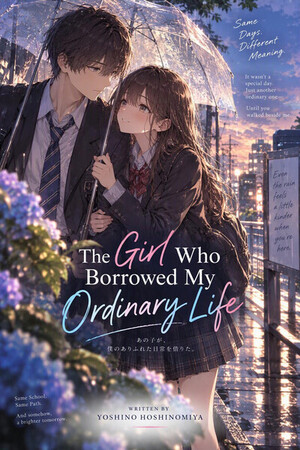
The Girl Who Borrowed My Ordinary Life
Friday arrived with five meatballs.
I knew this before Mizuki even entered the classroom.
At seven fourteen that morning, my phone vibrated while I was walking to school.
[Five completed successfully.]
Beneath the message was a photograph.
Five meatballs sat in a silver tray, arranged in a perfect circle around a small piece of broccoli. The lighting was unnecessarily dramatic, as though they were finalists in a cooking competition.
I stopped walking.
A bicycle passed close enough for the rider to ring his bell at me.
I moved to the side of the sidewalk and typed:
[Why is there photographic evidence?]
Her response arrived before I could put my phone away.
[Research requires documentation.]
I wrote:
[This stopped being research on Wednesday.]
Three dots appeared.
[Then consider it a progress report.]
I looked at the photograph again.
The meatballs seemed slightly larger than the ones she had brought before.
[Did you change the recipe?]
There was a longer pause this time.
[You’ll find out at lunch.]
That answer should not have made lunch feel farther away.
It did.
I continued toward school, trying not to look at the photograph again.
I failed twice.
------------<>------------
Daichi was standing by the shoe lockers when I arrived.
He had one arm braced against the wall and was speaking to a first-year student with unusual seriousness.
“The most important thing,” he said, “is that you never panic.”
The first-year nodded.
“What if I forget everything?”
“Then you improvise.”
“I’m bad at improvising.”
“Everyone is bad until they become good.”
“That doesn’t help.”
“It will later.”
I changed into my indoor shoes and tried to pass them unnoticed.
Daichi saw me immediately.
“Ren.”
“No.”
“You don’t know what I’m going to ask.”
“I know enough.”
The first-year turned toward me.
He was a small boy with round glasses and a nervous expression. I recognized him as the student who had asked about my romantic writing rates earlier in the week.
His face brightened.
“It’s you.”
I closed my shoe locker.
“Unfortunately.”
Daichi placed a hand on the boy’s shoulder.
“This is Kota Nishimura. He requires assistance.”
“He has you.”
“That’s why he requires assistance.”
At least Daichi was self-aware.
Kota bowed so deeply that his glasses nearly fell off.
“Asakura, please help me.”
“No.”
“I haven’t explained yet.”
“That isn’t necessary.”
Daichi stepped in front of me before I could leave.
“He wants to invite someone to the cultural festival.”
“That happens every year.”
“And he doesn’t know how to ask.”
“I don’t either.”
“You have private lunches with Hanamori.”
“That doesn’t qualify me for anything.”
Kota looked between us.
“You eat lunch with Mizuki Hanamori?”
“We attend the same school. Many people eat lunch at the same time.”
“That wasn’t an answer,” Daichi said.
“It was the only one he’s getting.”
Kota adjusted his glasses.
“I only want to know what to say.”
“Say, ‘Would you like to attend the festival with me?’”
He stared at me.
Then at Daichi.
“That’s all?”
“Yes.”
Daichi shook his head.
“You need atmosphere.”
“No, he doesn’t.”
“A carefully selected moment.”
“No.”
“Perhaps beneath the autumn trees.”
“It’s eight in the morning.”
“Later, obviously.”
Kota looked worried again.
“What if she says no?”
Daichi opened his mouth.
For once, he didn’t have an immediate answer.
I looked at Kota.
“Then she says no.”
His shoulders fell.
“That’s not very encouraging.”
“It’s the truth.”
“Couldn’t I make her more likely to say yes?”
“Maybe. But you can’t control her answer.”
Daichi glanced at me.
I continued before he could comment.
“If you wait until you’re certain, you’ll never ask. Just don’t make it into a public performance. Speak to her normally. Give her room to refuse without feeling guilty.”
Kota listened closely.
“So I shouldn’t bring flowers?”
“Where would you get flowers before class?”
“I already bought one.”
He opened his school bag and revealed a single yellow flower wrapped in clear plastic.
Of course he had.
Daichi inspected it.
“That’s charming.”
“That’s too much,” I said.
Kota looked devastated.
“Should I throw it away?”
“No. You already bought it.”
“So I should give it to her?”
“I don’t know.”
“You’re supposed to be the expert.”
“I have never claimed that.”
“You have a love-letter notebook.”
“I have no such thing.”
Daichi nodded solemnly.
“It’s more of a secret observation journal.”
“That sounds worse.”
Kota’s eyes widened.
“You observe girls?”
“I observe everyone.”
“That sounds even worse.”
The first warning bell rang.
Students began moving through the hallways.
I stepped around Daichi.
“Ask her privately. Use simple words. Don’t demand an immediate answer.”
Kota hurried after me.
“And the flower?”
I looked at it.
It was small and slightly bent near the stem.
“Give it to her after you ask,” I said. “Not before.”
“Why?”
“So she doesn’t feel like she owes you an answer.”
He thought about that.
Then he bowed again.
“Thank you.”
“It wasn’t advice.”
“It sounded like advice.”
“That was accidental.”
Kota ran toward the first-year classrooms.
Daichi walked beside me.
For several steps, he said nothing.
That was more suspicious than anything he could have said.
“What?” I asked.
“Nothing.”
“You’re looking at me.”
“I’m observing.”
“Stop.”
“I’m learning from a master.”
“I gave him obvious advice.”
“You told him not to turn his feelings into someone else’s obligation.”
I looked at Daichi.
His expression was unusually thoughtful.
“That wasn’t what I said.”
“It was close.”
“You’re making it sound deeper than it was.”
“You should write it down.”
“I won’t.”
“Then I will.”
“You don’t have a notebook.”
Daichi took out his phone.
I pushed it back into his pocket.
We reached the classroom door.
Before entering, he leaned closer.
“Does Hanamori know you’re secretly wise?”
“No.”
“Should I tell her?”
“No.”
“Maybe at lunch.”
“You won’t be there.”
He sighed.
“I’ve been officially banned.”
“You followed us.”
“I apologized.”
“That removed your guilt, not the consequences.”
“That sounds like another wise statement.”
I entered the classroom before he could record it.
------------<>------------
Mizuki sat at her desk near the windows, speaking with Emi.
Several festival proposal sheets covered both their desks. Mizuki held a pencil in one hand and a carton of strawberry milk in the other.
One straw.
I stopped.
Only one.
She took a drink, unaware of my arrival.
Something about the sight felt incorrect.
I approached their desks.
“Good morning.”
Emi looked up.
“Morning, Asakura.”
Mizuki turned.
“Good morning.”
I looked at the carton.
Then at her.
She followed my gaze.
“What?”
“You’re using one straw.”
Emi looked at the carton too.
Mizuki lowered it.
“I was busy.”
“That doesn’t explain it.”
“I forgot to take out the second one.”
“It’s attached to the carton.”
“I know.”
“You forgot to remove something you were holding.”
“I was discussing the festival.”
Emi adjusted her glasses.
“She has been distracted.”
“I’m not distracted,” Mizuki said.
“You wrote ‘beverage menu’ under decoration costs.”
“That could be relevant.”
“You estimated the price of paper stars by the liter.”
Mizuki looked down at the proposal sheet.
Had anyone else pointed out a mistake, she would probably have laughed politely and corrected it.
With Emi, she frowned.
A real frown.
“You were asking questions while I calculated.”
“That’s how committee work usually happens.”
“It shouldn’t.”
Emi smiled.
Mizuki noticed me watching.
“What?”
“Nothing.”
“You’re observing again.”
“You’re behaving differently.”
Her frown disappeared.
“Differently from what?”
“The first time I saw you working on festival documents, you looked completely calm.”
“I am calm.”
“You’re arguing with Emi about paper stars.”
“I’m correcting a misunderstanding.”
“You measured them by the liter.”
“That doesn’t mean anything.”
Emi placed her hand over the sheet.
“Mizuki stayed up working on the proposal.”
“I didn’t stay up.”
“What time did you finish?”
“Not late.”
“What time?”
Mizuki looked away.
Emi answered for her.
“One thirty.”
I stared at Mizuki.
She gave Emi a betrayed look.
“You weren’t supposed to tell him.”
“You didn’t say that.”
“It was implied.”
“Why were you awake until one thirty?” I asked.
Mizuki collected the scattered sheets.
“The committee requested a detailed budget estimate.”
“When?”
“Yesterday afternoon.”
“And when is it due?”
“Monday.”
I waited.
She pretended not to understand.
“You had three days,” I said.
“I wanted to finish early.”
“You finished four days early.”
“That’s generally considered responsible.”
“You measured stars by volume.”
“That was one mistake.”
Emi held up another sheet.
“She also listed twenty-seven tables.”
“Our classroom holds fifteen,” I said.
“I know that.”
“You wrote twenty-seven.”
“I may have counted chairs.”
“Do chairs usually become tables when you’re tired?”
“In certain circumstances.”
Emi handed me the proposal sheets.
Mizuki reached for them.
I raised them out of range.
“Give those back.”
“Not until I finish checking them.”
“You aren’t on the festival committee.”
“This is a safety inspection.”
“For paper?”
“For your judgment.”
Mizuki stood.
I raised the documents higher.
She stopped herself before attempting to climb across the desk.
That represented growth.
“You promised not to involve yourself,” she said.
“I promised not to write a story.”
“You also said you were only preventing disaster.”
“This qualifies.”
“There’s no disaster.”
“You budgeted enough tea for three hundred seventy people.”
“We expect many visitors.”
“In the first hour?”
Mizuki became quiet.
I handed the papers to Emi.
“Don’t submit these.”
“I wasn’t going to,” Emi said.
“You two are treating me like a child,” Mizuki complained.
Emi and I looked at each other.
Then back at her.
“You stayed awake until one thirty doing work that wasn’t due until Monday,” I said.
“I lost track of time.”
“You sent me a photograph of meatballs at seven fourteen.”
Emi’s eyebrows rose.
Mizuki froze.
Daichi arrived at exactly the wrong moment.
“Meatball photograph?”
“No,” Mizuki and I said together.
Daichi placed his bag on his desk.
“How many?”
“That isn’t important,” I said.
“Five,” Mizuki answered.
I looked at her.
She looked mildly apologetic.
Daichi leaned against the nearest desk.
“Five meatballs were important enough to photograph?”
“They’re part of an ongoing study,” Mizuki said.
I closed my eyes.
“You told me the study was over.”
“The original experiment is over.”
“So this is a new experiment?”
“An informal one.”
Daichi nodded as if this made perfect sense.
“What are you testing?”
“Whether the improved recipe is better than Wednesday’s.”
“And Ren is the test subject?”
“The primary evaluator.”
Emi rested her chin on one hand.
“You two have a routine now.”
“It isn’t a routine,” I said.
“Monday, Wednesday, and Friday,” Emi replied. “Same location. Shared food.”
“That could be coincidence.”
“It’s scheduled.”
“Scheduled coincidences exist.”
Mizuki smiled.
Daichi grinned.
Emi looked unconvinced.
The final warning bell rang.
Emi gathered the budget sheets.
“We’ll recalculate after school.”
Mizuki started to object.
Emi raised one hand.
“You are going home at a normal time today.”
“I have a committee meeting.”
“It ends at four thirty.”
“There may be additional work.”
“Then someone else will do it.”
Mizuki’s expression changed.
Not dramatically.
But I saw her shoulders tighten.
“What if they don’t?”
Emi’s reply came gently.
“Then it waits until Monday.”
Mizuki looked down at the desk.
The statement seemed more difficult for her to accept than it should have been.
I thought about saying something.
Before I could, our teacher entered.
The conversation ended.
For the first two periods, Mizuki behaved normally.
She answered questions.
Took notes.
Lent someone an eraser.
During the first break, she reviewed vocabulary cards instead of opening the committee budget.
During the second, she helped one of our classmates understand a mathematics problem.
No one watching her would have guessed she had slept too little.
I knew only because I had begun noticing the spaces between her actions.
When the teacher turned toward the board, Mizuki sometimes closed her eyes for several seconds.
She drank more water than usual.
Twice, she began writing before realizing her pen had no ink.
At the end of history, she rested her forehead against one hand and remained there after the bell.
Everyone around her stood.
Mizuki did not.
I approached her desk.
“Mizuki.”
No response.
Emi, who had been packing her books, stopped.
I tried again.
“Mizuki.”
She opened her eyes.
For one second, she looked completely lost.
Then she recognized me and immediately straightened.
“I wasn’t asleep.”
“I believe you.”
“I was thinking.”
“With your eyes closed.”
“That removes distractions.”
“Such as consciousness?”
Emi covered a smile.
Mizuki rubbed one eye.
“I’m fine.”
“You say that often.”
“Because people ask often.”
“Perhaps those things are related.”
“I only slept a little later than usual.”
“What time do you usually sleep?”
“Eleven.”
“And last night?”
“One thirty.”
“That isn’t a little.”
“It’s two and a half hours.”
“That is exactly how time works.”
The next teacher entered before I could continue.
I returned to my seat.
Behind me, Daichi leaned forward.
“Should we be worried?”
“Probably not.”
“She looked tired.”
“She stayed awake working.”
“That’s normal for her, isn’t it?”
I looked toward Mizuki.
She was already sitting perfectly straight again.
“Maybe,” I said. “That doesn’t make it good.”
Daichi followed my gaze.
Then, quietly enough that only I could hear, he said, “You really do watch her.”
I opened my textbook.
“I watch everyone.”
“Sure.”
He didn’t sound convinced.
Neither was I.
------------<>------------
By lunchtime, Mizuki claimed she had recovered.
This was clearly false.
She forgot her lunch bag beneath her desk and had to return for it.
Then she walked toward the wrong staircase.
I followed her for ten steps before speaking.
“The music wing is the other direction.”
She stopped.
Looked ahead.
Then slowly turned.
“I knew that.”
“You’ve eaten there twice.”
“I was thinking about the budget.”
“You aren’t supposed to be working on the budget.”
“I wasn’t working on it.”
“You were thinking about it.”
“That isn’t the same.”
“It’s unpaid work.”
“All school work is unpaid.”
“That explains the quality.”
Mizuki walked back toward me.
Her face was slightly red with embarrassment.
“Don’t tell Emi.”
“She already knows you’re tired.”
“She doesn’t need additional evidence.”
“We may need to collect it for the committee.”
“You’re enjoying this.”
“A little.”
Her eyes narrowed.
“You admitted it.”
“I’m trying honesty.”
“It doesn’t suit you.”
We reached the correct stairwell.
Before climbing, Mizuki reached into her bag.
“Wait.”
“What?”
She took out the white cloth with strawberries and handed it to me.
“The bench.”
“I brought something.”
From my bag, I removed the handkerchief she had lent me in the rain.
It had been washed, folded, and placed inside a small clear bag by my mother, who had insisted that returning it “properly” mattered.
The blue border showed through the plastic.
Mizuki looked at it.
“You washed it?”
“My mother did.”
Her eyes lifted to mine.
“You told her?”
“I left it near the laundry basket.”
“And she didn’t ask questions?”
“She asked several.”
“What did you say?”
“That it belonged to a classmate.”
“Was that enough?”
“No.”
Mizuki smiled.
“What else did she ask?”
“Nothing important.”
“Was it a girl?”
“I refused to answer.”
“So she knows.”
“She believes she knows.”
“Is she wrong?”
I looked at her.
Mizuki seemed to realize the question could be interpreted in more than one way.
“I mean, it does belong to a girl,” she added.
“I’m aware.”
She took the bag.
“Thank you.”
“You’re welcome.”
She examined the handkerchief as though searching for damage.
“What did your mother say?”
I sighed.
“She said the blue suited you.”
Mizuki blinked.
“She’s never seen me.”
“I know.”
“How could she know?”
“She also thinks I secretly enjoy helping with gardening because I watered one plant eight years ago.”
“That’s a long commitment.”
“She has no respect for evidence.”
Mizuki held the handkerchief against the front of her uniform.
“Does it?”
“Does what?”
“Suit me?”
I looked at the blue border.
Then at her.
She waited.
Daichi’s advice returned from an unwanted corner of my memory.
Compliment something she chose.
“She gave it to you?”
“No. I bought it.”
That made the situation worse.
“It looks fine,” I said.
“Fine?”
“It matches your ribbon.”
Her uniform ribbon was dark blue.
Mizuki looked down at it.
Then smiled.
“A practical observation.”
“Those are the most reliable kind.”
“You’ve improved since ‘efficient.’”
“I knew efficient was a compliment.”
“You didn’t.”
“I suspected.”
She placed both handkerchiefs inside her bag.
We climbed the stairs.
At the top, I noticed something taped beneath the window.
A handwritten sign said:
RESERVED: FESTIVAL PLANNING
Below that, in smaller writing:
WEDNESDAY AND FRIDAY LUNCH PERIODS
I stared at it.
Mizuki stared too.
“Did you make this?” I asked.
“No.”
The handwriting was too sharp and orderly to be Daichi’s.
“Emi,” we said together.
Beneath the message was a second note.
The reservation is unofficial. Remove this before a teacher sees it.
Mizuki laughed and carefully peeled the sign from the wall.
“She gave us the stairwell.”
“She gave us two days.”
“Monday isn’t included.”
“It must be available for public use.”
“Should we ask?”
“No. That may encourage Daichi.”
We sat on the bench.
The strawberry cloth went between us again.
This time there was no unnecessary open space. We each occupied one end of the cloth, leaving only a few centimeters between our lunch bags.
Our shoulders did not touch.
They were close enough to make me aware that they could.
Mizuki opened her lunch.
Five meatballs.
They were larger than Wednesday’s.
I opened mine.
Extra chicken, separated into a small container.
Mizuki looked at it.
I looked at the fifth meatball.
Neither of us spoke.
Then she placed one in my lunch box.
I transferred a piece of chicken into hers.
“So,” she said, “what did your mother ask?”
“We’re returning to that?”
“You avoided answering.”
“I answered.”
“You said it wasn’t important.”
“That was the answer.”
“No, it was defensive movement.”
“That isn’t a conversational term.”
“It is now.”
I took a bite of the meatball.
Mizuki watched closely.
The flavor was different from Wednesday’s. Slightly sweeter, with more ginger and something I couldn’t identify.
She waited.
I continued chewing.
“Well?” she asked.
I considered delaying the answer.
Then I saw the tiredness behind her expression.
She had stayed awake too late, worked all morning, and still cared whether the recipe had improved.
I decided not to make her wait.
“It’s the best one so far.”
Her left foot moved.
Only once.
But it did.
Mizuki’s smile appeared.
Not large.
Just relieved.
“What changed?” I asked.
“I added grated onion and used less soy sauce.”
“You asked Akari?”
Her smile became sheepish.
“I sent her the recipe.”
“At what time?”
“Nine thirty.”
“That’s reasonable.”
“She answered at eleven.”
“You should have waited until morning.”
“She said less soy sauce would help.”
“So you cooked another test batch?”
Mizuki looked at her lunch.
“At eleven fifteen.”
I put down my chopsticks.
“You cooked meatballs after eleven?”
“I wanted to make sure.”
“Mizuki.”
“What?”
“You stayed awake until one thirty because of the budget.”
“Not entirely.”
“The meatballs contributed?”
“Only a little.”
“A little measured by the liter?”
She tried to look annoyed.
A yawn interrupted her.
She turned away and covered her mouth.
I waited.
When she faced me again, her expression had returned to normal.
“That didn’t happen.”
“It visibly happened.”
“You didn’t observe it.”
“I observe everyone.”
“Then choose not to.”
“I can’t choose what I see.”
“You choose what you write.”
“That’s different.”
“Will you write that I yawned?”
“No.”
“Why?”
“Because it isn’t important.”
Her smile faded slightly.
“Oh.”
That wasn’t the reaction I expected.
“You wanted it to be important?”
“No.”
“You sound disappointed.”
“I’m tired.”
“I noticed.”
She ate a piece of chicken while refusing to look at me.
I considered the problem.
Somehow, I had insulted her by saying her yawn wasn’t worth recording.
That should have been impossible.
Then again, Mizuki had carried my notebook home. She knew the things inside it were the ones that remained in my mind.
“You being tired is important,” I said.
She glanced at me.
“The yawn isn’t.”
“What’s the difference?”
“The yawn is evidence.”
“Of me being tired.”
“Yes.”
“And that matters?”
“Yes.”
“Why?”
“Because you’re making mistakes.”
“That sounds like criticism.”
“It is.”
Mizuki frowned.
I continued before she could argue.
“And because you stayed awake cooking something for me.”
Her frown disappeared.
I looked down at my lunch.
“That was unnecessary.”
“I know.”
“You could have brought the same recipe.”
“I know.”
“I would have eaten it.”
“I know.”
“Then why change it?”
Mizuki turned her chopsticks between her fingers.
She had an answer.
I could see it gathering behind her expression.
But for once, she didn’t seem to know whether she should let it out.
“Because you said the sample size was too small,” she finally said.
“That was a joke.”
“I know.”
“That isn’t the real reason.”
She looked toward the window.
The sky was clearer than it had been on Wednesday. Sunlight stretched across the track, where several students were eating lunch on the grass.
“I wanted you to look forward to it,” she said.
Her voice was quiet.
I didn’t answer immediately.
Perhaps because any answer I gave would reveal that she had succeeded.
I had looked forward to Friday.
I had looked at the photograph more times than necessary.
I had checked the clock during the final morning lesson.
Mizuki watched the athletic field.
“I know it’s only lunch,” she continued. “But I liked knowing that I could make something you’d enjoy.”
The safe response was obvious.
Thank you.
Simple.
Appropriate.
Not revealing.
I took another meatball.
My second.
Three remained in her container.
“I did look forward to it,” I said.
Mizuki turned.
The sunlight from the window caught the edge of her hair.
Her expression was unguarded.
“You did?”
“Yes.”
“To the meatballs?”
“Mostly.”
“Mostly?”
“The chicken was also important.”
She stared at me.
Then laughed.
The moment became manageable again.
But it didn’t disappear.
“Your mother made the chicken,” she said.
“She gave me cooking instructions.”
“Did you listen?”
“Not closely.”
“So you still can’t cook.”
“I made the egg flower.”
“That barely survived.”
“It improved.”
I showed her the egg.
Today it had six somewhat symmetrical cuts around the center.
Mizuki leaned closer.
“That looks more like a flower.”
“I practiced.”
The words escaped.
Her eyes lifted to mine.
“You practiced?”
“Once.”
“At home?”
“There are limited locations available for egg preparation.”
“You practiced making an egg flower for lunch?”
“I had an extra egg.”
“Of course.”
“And time.”
“Naturally.”
“It would have been wasteful not to.”
“That sounds exactly like my paper star.”
I looked at the charm hanging from her bag.
Perhaps it did.
Mizuki smiled and returned her attention to the lunch.
“Can I have it?”
“The egg?”
“Yes.”
“You already have one.”
Hers was cut neatly into a recognizable flower.
“I want yours.”
“Why?”
“To compare them.”
“You will lose faith in symmetry.”
“That’s a risk I’m willing to take.”
I picked up the egg and placed it in her lunch box.
She put hers into mine.
“That wasn’t necessary,” I said.
“It’s an exchange.”
“You’re giving me the better one.”
“I disagree.”
“Yours is objectively better.”
“Mine is ordinary.”
“So is mine.”
“No,” Mizuki said. “Yours practiced.”
I looked at her.
“That sentence doesn’t make sense.”
“It does to me.”
She ate one of the uneven petals.
Her left foot moved.
I decided not to mention it.
------------<>------------
After we finished eating, Mizuki leaned back against the wall.
“We have eight minutes,” she said.
“You’re checking the time?”
“I’m trying to improve my sleeping habits.”
“Eight minutes won’t repair them.”
“It’s a beginning.”
She closed her eyes.
At first, I thought she was joking.
Then her breathing slowed.
“Mizuki?”
No response.
She had fallen asleep.
Sitting upright.
In less than twenty seconds.
That seemed unhealthy.
I remained still.
Her head tilted slightly toward the wall.
Stopped.
Then tilted the other way.
Toward me.
I recognized the direction of the problem and moved several centimeters aside.
Her head followed.
It lowered until it rested against my shoulder.
Every thought in my mind disappeared.
Mizuki continued sleeping.
Apparently unaware that she had just created the most complicated eight minutes of my life.
I looked toward the stairs.
No one was there.
The rooftop door remained locked.
The athletic field continued below us as though nothing significant had occurred.
Her hair brushed against the side of my neck.
It smelled faintly of something clean and floral.
I immediately stopped thinking about that.
I considered waking her.
That would be the sensible thing.
She had asked for eight minutes, not accidental physical contact.
I lifted one hand.
Then paused.
There were shadows beneath her eyes.
Her shoulders, usually held in careful posture, had finally relaxed.
She had stayed awake working on the festival.
She had cooked two batches of meatballs.
She had spent the morning pretending none of it affected her.
I lowered my hand.
Eight minutes.
I could remain still for eight minutes.
I checked the time.
Seven minutes and forty-two seconds remained.
The next three minutes lasted longer than Wednesday and Thursday combined.
Every sound became suspicious.
Footsteps in the distant hallway.
Voices from the courtyard.
A classroom door closing somewhere below.
If anyone came upstairs, the love-letter rumor would return with reinforcements.
I told myself that only made practical sense.
That was why my heart was beating too quickly.
Practical concern.
Nothing else.
Mizuki moved slightly.
Her head settled more comfortably against my shoulder.
My entire body became rigid.
“Wonderful,” I whispered.
She didn’t hear me.
I looked down at the strawberry cloth between us.
One corner had folded over itself.
Her lunch bag rested beside mine.
The blue-bordered handkerchief was visible through the opening of her bag.
Ordinary things.
That helped.
Five minutes remained.
Then four.
Then three.
I became aware that I didn’t want the time to end.
This was inconvenient.
At one minute, I reached for my phone.
Mizuki had given me a strict deadline, even if she was asleep.
I set a silent alarm.
The screen lit up.
A new message from Daichi waited.
[Kota asked the girl. She said yes.]
A second message followed.
[Your advice worked. Are you taking clients?]
I typed with one hand.
[No.]
Daichi responded immediately.
[How’s lunch?]
I looked at Mizuki sleeping against me.
[Quiet.]
Three dots appeared.
[Suspicious.]
I locked the phone.
The alarm vibrated in my hand thirty seconds later.
“Mizuki.”
She didn’t move.
I tried again.
“Mizuki.”
Her eyes slowly opened.
For several seconds, she remained exactly where she was.
Then she noticed my shoulder.
Her entire body went still.
I felt the moment consciousness returned completely.
She sat upright so quickly that she nearly dropped her phone.
“I’m sorry.”
“It’s fine.”
“I fell asleep.”
“I noticed.”
“On you.”
“That also became apparent.”
Her face turned bright red.
I looked toward the window to give her time.
Mizuki touched the side of her hair, attempting to smooth it.
“Why didn’t you wake me?”
“You said eight minutes.”
“I didn’t mean…”
“I know.”
“You could have moved.”
“I tried.”
That was a lie.
Or at least an exaggeration.
Mizuki looked at the space beside me.
“You didn’t move very far.”
“There was a wall.”
“The other direction was open.”
“I didn’t want to wake you.”
“You just said you tried to move.”
“I changed my mind.”
Her embarrassment paused long enough for suspicion to appear.
“Asakura.”
“What?”
“You’re bad at lying.”
“That continues to be debated.”
“No, it doesn’t.”
The warning bell rang.
We both stood.
Mizuki gathered her lunch containers rapidly.
One slipped from her hand.
I caught it before it hit the floor.
“Thank you,” she murmured.
“You’re welcome.”
She folded the strawberry cloth.
Her movements were less precise than usual.
When she placed it inside her bag, her fingers brushed mine.
We both moved away.
The air had become difficult again.
At the top of the stairs, Mizuki stopped.
“Did anyone see?”
“No.”
“You’re sure?”
“I would have noticed.”
“What if someone was below us?”
“They would have needed to climb the stairs.”
“What about through the window?”
“We’re on the third floor.”
“A drone?”
I stared at her.
She covered her face with both hands.
“I’m tired.”
“That one may be worth writing down.”
She lowered her hands.
“You said the yawn wasn’t important.”
“The concern about aerial surveillance is more unusual.”
“Please don’t write it.”
“I’ll consider your request.”
She frowned.
The familiar expression helped.
We descended the stairs.
Halfway down, she spoke again.
“Asakura?”
“Yes?”
“Thank you for not waking me.”
The embarrassment remained in her voice, but something softer had joined it.
“You needed sleep.”
“I’m not doing it again.”
“Good.”
“That was too quick.”
“You stayed awake until one thirty.”
“I meant falling asleep on your shoulder.”
“I understood.”
“Oh.”
We continued walking.
Two floors passed in silence.
Then I said, “It wasn’t uncomfortable.”
Mizuki missed a step.
I caught her arm before she slipped.
For the second time that day, we froze.
Her hand held my sleeve.
Mine was around her forearm.
Mizuki stared at me.
“You can’t say things like that on stairs.”
“I didn’t know there were location restrictions.”
“It surprised me.”
“That wasn’t my intention.”
“It never is.”
I released her once she had regained her balance.
Mizuki continued down the stairs more carefully.
Her face was still red.
Mine felt warmer than it should have.
When we reached the classroom corridor, she slowed.
“Next Friday,” she said.
“What about it?”
“If I’m tired…”
“You should sleep earlier.”
“I know.”
She adjusted the strap of her bag.
“But if I accidentally fall asleep…”
She stopped.
Several students passed us.
I waited.
Mizuki looked toward the classroom door.
“Never mind.”
She entered before I could ask.
I followed.
Daichi watched us return.
His eyes moved to Mizuki’s slightly untidy hair.
Then to my shoulder.
Then to my face.
I sat down.
He leaned forward.
“Quiet?”
“Yes.”
“What happened?”
“Nothing.”
“You look like something happened.”
“That’s only my face.”
“No. I know your normal face.”
Apparently, everyone did now.
I took out my textbook.
Daichi sniffed the air.
“Do you smell like flowers?”
I turned around.
For several seconds, I considered whether friendship was worth preserving.
Daichi saw my expression and raised both hands.
“I withdraw the question.”
“Good.”
“But I’ve learned enough.”
“You’ve learned nothing.”
“You’re blushing.”
“I walked up three flights of stairs.”
“We’re on the second floor.”
“I walked farther than necessary.”
“You hate unnecessary movement.”
I opened the textbook and held it upright between us.
Daichi leaned sideways.
“Did she fall asleep?”
My hand stopped.
His eyes widened.
“Oh.”
“Be quiet.”
“She did.”
“Lower your voice.”
“On your shoulder?”
I closed the book slowly.
Daichi covered his mouth with both hands.
His visible expression contained enough excitement to power the entire school.
“Not one word,” I said.
He nodded rapidly.
“To anyone.”
Another nod.
“Especially Mizuki.”
A third nod.
I lowered the textbook.
Daichi leaned close and whispered, “You called her Mizuki again.”
I raised the book.
He retreated.
------------<>------------
After school, festival preparations officially began.
Our classroom was divided into groups.
The decoration group claimed the old night-sky backdrop.
The food group began selecting drinks and small snacks.
The layout group measured the classroom and immediately discovered that Mizuki’s accidental twenty-seven-table estimate was physically impossible.
Daichi volunteered for the performance group.
No one had created a performance group.
He created one anyway.
“I could read stories aloud,” he explained.
“You pronounce ‘library’ incorrectly,” Emi said.
“That isn’t relevant.”
“It may become relevant in a story café.”
“I pronounce it creatively.”
“You say ‘lie-berry.’”
“Both things exist.”
I had intended to join the layout group, where I could move tables and avoid opinions.
Mizuki ruined that plan.
“Asakura should help choose the stories,” she announced.
The room turned toward me.
I stood beside a stack of chairs.
“No.”
“You read regularly.”
“That doesn’t mean I can select entertainment for strangers.”
“You created the original concept.”
“I made one exhausted suggestion in a storage room.”
Emi checked her list.
“We do need someone to coordinate story submissions.”
“Choose Mizuki.”
“She’s managing the budget and committee requirements.”
“Choose Daichi.”
Daichi placed a hand against his chest.
“I accept.”
“No,” Emi and I said together.
His hand lowered.
Emi looked around the room.
“What about a small editorial team? Mizuki can handle the festival requirements, Asakura can review the stories, and I’ll organize submissions.”
“I didn’t agree,” I said.
Mizuki raised her hand.
“I agree.”
“Your agreement doesn’t include me.”
“It includes your objections.”
“That isn’t consent.”
“Would you prefer to write one story instead?”
I stared at her.
She held my gaze with suspicious innocence.
It was a trap.
If I refused the editorial team, she would continue pushing me toward writing.
If I accepted, I would spend festival preparations reading stories with her and Emi.
Possibly Daichi, if he forced his way in.
“I’ll review submissions,” I said.
Mizuki smiled.
“But I’m not writing.”
“Of course.”
She said it too easily.
I pointed at her.
“Don’t.”
“I didn’t say anything.”
“You were thinking something.”
“You can’t prove that.”
She had stolen my defense.
I regretted teaching her.
Our small group moved to the old western classroom, where the finished stories would eventually be stored. Emi brought proposal sheets, submission forms, and a list of categories.
Mizuki carried a box of paper stars.
I brought nothing.
This accurately represented our different levels of enthusiasm.
The room looked the same as when I first found Mizuki hiding there, but it no longer felt abandoned.
Three desks had been moved together.
The night-sky backdrop rested against one wall.
Sunlight entered through the windows instead of rain.
Emi placed the category list on the table.
“Mystery, fantasy, comedy, everyday life, horror, and romance.”
“We don’t need romance,” I said.
“The class voted for it,” Mizuki replied.
“People have poor judgment.”
“It received the most votes.”
“That proves my point.”
Emi ignored us.
“Stories should be between five hundred and fifteen hundred words. We need at least three per category.”
“That’s eighteen stories,” I said.
“Yes.”
“Our class will not write eighteen.”
“Then we’ll use public-domain stories to fill the gaps.”
“Most of those are longer.”
“We can create adapted summaries.”
“That’s more work.”
Mizuki sat across from me.
“You’re good at shortening things.”
“How do you know?”
“Your text messages are extremely short.”
“That isn’t literary skill.”
“You replied ‘Yes’ to an entire paragraph yesterday.”
“It was a yes-or-no question.”
“I included three separate points.”
“They all required the same answer.”
Emi handed each of us a submission sheet.
“Write one sample prompt so the class understands what we’re requesting.”
Mizuki began immediately.
Emi wrote after a few seconds.
I stared at the empty sheet.
At the top, it read:
MIDNIGHT STORY CAFÉ: STORY PROMPT
Below it were spaces for a genre, central idea, approximate length, and suggested mood.
“What am I supposed to write?” I asked.
“Anything,” Emi said.
“That isn’t helpful.”
“A premise for a story,” Mizuki added.
“I understand the form.”
“Then fill it out.”
“I don’t have a premise.”
“You have a notebook full of observations.”
“That isn’t fiction.”
Mizuki stopped writing.
“Use one.”
“No.”
“Not the private details. Only an idea.”
“They aren’t ideas.”
“What did you write today?”
I thought about the entry I had not yet written.
Mizuki returning my notebook.
Five meatballs.
Her tired mistakes.
Her head on my shoulder.
I looked at the empty form.
“Nothing yet,” I said.
“Then write something you noticed.”
Emi finished her prompt and placed it in the center of the table.
Genre: Mystery
Central idea: Every day, one chair in a classroom moves closer to the window. No one admits to touching it.
Suggested mood: Quiet and unsettling.
“That’s good,” Mizuki said.
“It actually happened in middle school,” Emi replied.
“What caused it?”
“A slanted floor.”
The mystery became less impressive.
Mizuki placed hers beside it.
Genre: Fantasy
Central idea: A girl collects fallen stars and repairs them, but each repaired star reveals one forgotten wish.
Suggested mood: Hopeful with a bittersweet ending.
I read it twice.
“The paper stars,” I said.
Mizuki touched the charm on her bag.
“Partly.”
“What’s the other part?”
She smiled.
“That would be part of the story.”
Emi looked at me.
“Your turn.”
I held the pencil above the page.
Nothing came.
The room remained quiet.
Outside, a club shouted across the athletic field.
Mizuki did not rush me.
She didn’t offer another suggestion or make a joke.
She simply waited.
That somehow made writing harder.
Then I looked at the window.
A week earlier, rain had covered the glass.
Mizuki had been sitting on the floor behind the desks, holding a carton of strawberry milk with two straws.
She had asked whether I ever became tired of being myself.
I began writing.
Genre: Everyday life
Central idea: A boy finds someone hiding in an empty classroom. He agrees not to ask why she is there. Each time they meet, she borrows one small part of his ordinary routine until neither of them remembers whose routine it was first.
Suggested mood: Quiet.
My pencil stopped.
I read the words.
It was too close.
Not exactly to what had happened, but close enough that Mizuki might recognize it.
I moved my hand over the page.
“I’ll write another one.”
Mizuki reached across the desk.
She didn’t take the paper.
She only rested her fingers on one corner.
“Why?”
“It isn’t suitable.”
“I haven’t read it.”
“It’s too vague.”
“Let me decide.”
“That isn’t your decision.”
“We’re an editorial team.”
“That authority was forced on me.”
Emi looked up from the category list.
“You can submit it anonymously.”
“I’m not submitting it at all.”
Mizuki’s fingers remained on the corner.
“Asakura.”
I looked at her.
She wasn’t trying to steal the page.
She waited for me to choose.
That mattered.
I removed my hand.
Mizuki pulled the page toward herself.
Her eyes moved across the lines.
At first, her expression didn’t change.
Then she reached the phrase borrows one small part of his ordinary routine.
Her gaze slowed.
I looked at the table.
Emi, possessing excellent judgment, pretended to review her notes.
When Mizuki finished, she didn’t speak immediately.
I regretted everything.
“It’s incomplete,” I said.
“It’s a prompt.”
“The idea is incomplete.”
“Most ideas are.”
“It doesn’t have a plot.”
“It doesn’t need one yet.”
“The mood only says quiet.”
“It is quiet.”
I looked at her.
She was smiling.
Not playfully.
Not because she had won an argument.
The smile was gentler than that.
“Is the girl unhappy?” she asked.
“I don’t know.”
“Why is she hiding?”
“I don’t know.”
“What does she borrow?”
“Small things.”
“Such as?”
“A place to sit. A conversation. A lunch.”
Mizuki’s eyes remained on the page.
“An umbrella?”
“Possibly.”
“A shoulder?”
The word brought the entire lunch back at once.
Emi’s pencil stopped moving.
I stared at Mizuki.
Her face became pink, but she did not look away.
“That would be unusually specific,” I said.
“It’s only an example.”
“An unlikely one.”
“It might happen.”
“Only if the girl refuses to sleep at a reasonable time.”
“Perhaps the boy doesn’t mind.”
“That would need to be established.”
“So establish it.”
The room became very still.
Emi quietly stood.
“I need more submission forms.”
“There are forms in your bag,” I said.
“I need different forms.”
“They’re all blank.”
“Special forms.”
She took her bag and left the room.
Coward.
Mizuki watched the door close.
Then she looked at the prompt again.
“Will you write it?”
“No.”
“Why?”
“I said I wouldn’t write a story.”
“You said you wouldn’t write a romance story.”
“I also said I might write mystery or fantasy.”
“This could be fantasy.”
“How?”
“The girl could actually borrow parts of his life.”
“That sounds disturbing.”
“Only if she doesn’t return them.”
“What would she return?”
“Parts of hers.”
I stopped.
Mizuki tapped the page lightly.
“The boy gives her somewhere ordinary to be,” she continued. “And she gives him…”
Her voice faded.
“What?” I asked.
“I don’t know yet.”
“That’s allowed.”
She looked up.
The words had come from our conversation in the rain.
Is that allowed? Not knowing?
Mizuki smiled.
“Then perhaps you’ll discover it while writing.”
I took the page back.
Not to destroy it.
I folded it once.
Then placed it inside my notebook beside her sticky note.
“I’ll think about it.”
“That means you might.”
“It means I’ll think.”
“Those are closer than no.”
“Don’t become optimistic.”
“Too late.”
The classroom door opened.
Emi returned carrying the same forms she already had.
“I found them.”
“You didn’t leave the room,” I said.
“I went into the hallway.”
“We noticed.”
She sat down.
“Did you resolve the editorial disagreement?”
Mizuki looked at me.
“For now.”
Emi nodded as though that answered everything.
We continued working until nearly five.
Nothing else dramatic happened.
We created submission deadlines.
Selected possible public-domain stories.
Argued about whether horror should be kept separate from mystery.
Mizuki made fewer errors now that she wasn’t working alone.
Whenever she began taking on too much, Emi moved a sheet to her own pile.
Whenever Emi added an unnecessary rule, Mizuki crossed it out.
Whenever both of them became too serious, I objected to something until the conversation changed.
By the end, our work covered three desks.
It wasn’t finished.
That seemed to bother Mizuki at first.
Then she looked around at the three of us and closed her notebook.
“We can continue Monday,” she said.
Emi smiled.
“That’s what I’ve been telling you.”
“I’ve reconsidered.”
“You were ordered to reconsider,” I said.
“That may have influenced me.”
We left the western building together.
At the entrance, Emi’s brother was waiting to pick her up.
She waved goodbye and hurried toward his car.
That left Mizuki and me beneath the covered walkway.
The sky was clear.
No shared umbrella was necessary.
For some reason, I found that slightly disappointing.
Mizuki adjusted her bag.
“Are you going to the station?”
“Yes.”
“Can I walk with you?”
“We usually walk in the same direction.”
“That wasn’t my question.”
I looked at her.
“Yes.”
We started toward the gate.
For a few minutes, neither of us spoke.
The evening air had turned cooler. Shadows from trees stretched across the pavement, and students moved around us in groups.
Mizuki touched the paper star on her bag.
“Did you mean it?”
“What?”
“The story prompt.”
“It was only an idea.”
“That wasn’t my question.”
She had learned my worst habit.
I looked ahead.
“What part?”
“That the girl borrows his ordinary routine.”
“I suppose.”
“Does he want it back?”
“I haven’t written the story.”
“But you created him.”
“That doesn’t mean I know everything about him.”
“You said you become someone else when you write.”
“Sometimes.”
“Become him.”
“That sounds dangerous in public.”
Mizuki waited.
She had spent years answering everyone else’s questions.
Apparently, she had decided to make up for lost time.
“No,” I said. “I don’t think he wants it back.”
“Why not?”
“Because it was too quiet before.”
The answer left me before I could examine it.
Mizuki slowed.
I continued for one step, then stopped beside her.
Students passed around us.
She looked down at the pavement.
“Does he still like quiet?”
“Yes.”
“But not all the time?”
“Not all the time.”
Mizuki nodded.
We resumed walking.
At the station entrance, she reached into her bag and took out a small container.
Three meatballs remained inside.
“You didn’t finish them,” I said.
“I was saving them.”
“For what?”
She held out the container.
“For increasing the sample size.”
I accepted it.
“You need the container tomorrow?”
“Monday is fine.”
“That’s three days.”
“I trust you with it.”
“You barely trusted me with the schedule.”
“That was private.”
“And this isn’t?”
“They’re meatballs.”
“You photographed them.”
“For documentation.”
“That makes them evidence.”
Mizuki laughed.
Then she turned toward the ticket gates.
“Good night, Ren.”
“Good night, Mizuki.”
She took three steps.
Then looked back.
“Write the story.”
“I said I’d think about it.”
“Think productively.”
“That sounds like committee language.”
“It is.”
She disappeared into the station.
I looked down at the container.
Three remaining meatballs.
Five minus two.
An incomplete lunch.
An incomplete story.
I carried both home.
------------<>------------
My mother was in the kitchen when I arrived.
Her eyes went immediately to the unfamiliar container in my hand.
I attempted to walk past her.
“Ren.”
“No.”
“I didn’t ask anything.”
“Whatever you’re about to ask, the answer is no.”
“Did she cook for you?”
I stopped.
That had been a mistake.
My mother smiled.
“So she did.”
“It was recipe research.”
“Of course.”
“It was.”
“Does she like chicken?”
“What?”
“The chicken I made.”
“Yes.”
My mother’s satisfaction became unbearable.
“I knew it.”
“You didn’t know anything.”
“I used less salt today.”
“She liked Wednesday’s too.”
“You told her Wednesday’s wasn’t as good?”
“No.”
“But today’s was better?”
“Why is this important?”
“Because next Friday I’ll add sesame oil.”
I stared at her.
“Next Friday?”
“You’re eating together every other day.”
“How do you know that?”
“You requested extra food on Monday, Wednesday, and today.”
“This house has become hostile.”
My mother laughed.
I carried the container to my room.
Before opening my notebook, I ate one meatball.
Still good.
Then another.
Also good.
I left the last one.
Perhaps to preserve the sample.
That sounded reasonable.
I opened the notebook.
The folded story prompt rested beside Mizuki’s sticky note.
I unfolded it.
A boy finds someone hiding in an empty classroom.
I took out a pencil.
For twenty minutes, I stared at the sentence.
Then I wrote:
He did not ask why she was hiding because he believed he didn’t care.
She did not tell him because she believed he would leave if she did.
I stopped.
Read it.
Continued.
Both of them were wrong.
My phone vibrated.
A message from Mizuki.
[Did you eat the remaining meatballs?]
I replied:
[Two.]
Her answer arrived immediately.
[Why only two?]
I looked at the last one in the container.
[Ongoing research.]
Three dots appeared.
Then:
[Are you writing?]
I looked at the page.
I could lie.
She wouldn’t know.
[Three sentences.]
Her response took longer.
[That’s a beginning.]
I wrote:
[It may remain three sentences.]
She replied:
[Then they should be very good sentences.]
I looked at what I had written.
They were not very good sentences.
But they existed.
Another message arrived.
[Thank you for today. And for letting me sleep.]
I typed:
[Sleep earlier tonight.]
[I will.]
I stared at the promise.
Then wrote:
[That was too fast. I don’t believe you.]
Her response came with an offended symbol.
[Good night, Ren.]
[Good night, Mizuki.]
I placed the phone aside.
The notebook remained open.
I read the three sentences one more time.
Then, underneath them, I began the fourth.
Outside my window, the neighborhood gradually became quiet.
For once, I didn’t mind the silence.
It no longer felt empty.
It felt like someone had only stepped away for the night.




Please sign in to leave a comment.