Chapter 9:
The Page She Wasn’t Supposed to Read - Part 1
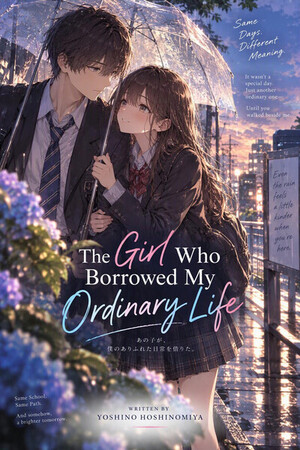
The Girl Who Borrowed My Ordinary Life
By Tuesday morning, the story had reached one thousand four hundred and eighty-three words.
It still did not have an ending.
It did, however, have names.
The boy was named Haru.
The girl was named Shiori.
I had chosen both at two in the morning, which meant neither decision could be trusted.
Haru was too obviously connected to spring, renewal, and other symbolism literature teachers enjoyed discovering even when the author had simply liked the sound.
Shiori meant bookmark.
That was worse.
A girl entering someone’s life and keeping his place?
Subtlety had apparently abandoned me.
I considered changing both names during the train ride to school.
I didn’t.
Instead, I added another sentence.
Shiori did not know when the borrowed routine became hers too. She only knew that returning it would now feel like losing something.
I read it twice.
Then deleted it.
Then restored it.
Then closed the document before I could make another decision.
The train stopped at the next station. Several students entered, filling the remaining space near the doors.
My phone vibrated.
[Good morning.]
Mizuki.
I replied:
[Good morning.]
Three dots appeared.
[You used two words.]
I looked at the message.
[That is the standard length of the phrase.]
[You usually reply with one.]
[I’m trying something new.]
[Should I be worried?]
[Probably.]
A smiling symbol appeared.
Then:
[How much did you write?]
I had expected the question.
That did not mean I had prepared an answer.
[Some.]
[How many words is “some”?]
[More than none.]
[Ren.]
Seeing my name in a message still made it more difficult to be uncooperative.
That seemed unfair.
[1,483.]
Her reply did not come immediately.
The train moved through another station.
I imagined Mizuki reading the number while standing on her own platform, perhaps with her bag held in front of her and the paper star moving in the morning wind.
Then my phone vibrated three times in quick succession.
[That’s almost a complete story.]
[You said you only wrote three sentences.]
[You lied to me.]
I replied:
[The three sentences reproduced.]
[Stories don’t reproduce.]
[This one appears unusually determined.]
She sent another smiling symbol.
[Does it have an ending?]
[No.]
[Names?]
I hesitated.
[Possibly.]
[That means yes.]
[It means possibly.]
[What are they?]
I locked my phone.
A second later, it vibrated.
Then again.
I refused to look.
The train reached my stop.
While leaving the carriage, I finally checked the screen.
[I won’t make fun of them.]
Followed by:
[Unless they’re terrible.]
I put the phone into my pocket.
Shiori was definitely terrible.
------------<>------------
The classroom was unusually loud when I arrived.
Half the desks had been pushed aside. Rolled paper, cardboard boxes, and several containers of paint occupied the front of the room.
The festival decoration group had apparently decided that ordinary school hours were an unnecessary restriction.
Emi stood near the board, attempting to restore order.
“Paint stays closed until after class.”
A boy holding a container of dark blue paint looked offended.
“I wasn’t opening it.”
“You’re holding the lid.”
“I was checking that it was secure.”
“The lid is no longer attached.”
“That’s how I discovered the problem.”
“Put it down.”
He obeyed.
Daichi stood on a chair beside the blackboard, attaching a silver paper star near the ceiling.
Emi turned.
“Why are you decorating now?”
“I’m improving morale.”
“You’re blocking the date.”
“No one needs the date.”
“We have a quiz.”
Daichi looked at the board.
“Then morale is more important than ever.”
I placed my bag beside my desk.
He noticed me and pointed upward.
“What do you think?”
The star was crooked.
“It looks unstable.”
“That wasn’t the question.”
“It’s my answer.”
Daichi pressed one side firmly against the wall.
The other side peeled away.
“Temporary setback.”
“It’s been three seconds.”
“Art requires patience.”
“You’re using tape from the nurse’s office.”
“It’s medical-grade.”
“That isn’t how tape works.”
Mizuki approached from the other side of the classroom.
She carried a folder against her chest. Her hair was loose today, and the paper-star charm hung in its usual place from her bag.
“Good morning,” she said.
I looked at her.
“Good morning.”
Her eyebrows lifted.
“You used two words in person too.”
“There are witnesses.”
“So your politeness is performative?”
“Partly.”
“That’s disappointing.”
She did not look disappointed.
Her attention moved toward my bag.
I knew what she wanted.
“No.”
“I haven’t asked.”
“You messaged me repeatedly.”
“I asked about the names.”
“And I didn’t answer.”
“You disappeared.”
“I got off the train.”
“You could have answered while walking.”
“That would be dangerous.”
“You write messages while walking all the time.”
“I’ve reconsidered the risks.”
Mizuki set the folder on my desk.
“What are their names?”
Daichi stopped adjusting the paper star.
His head turned toward us.
I lowered my voice.
“Haru and Shiori.”
Mizuki became quiet.
That was worse than laughter.
“Well?” I asked.
“I promised not to make fun of them.”
“You said unless they were terrible.”
“They aren’t terrible.”
“They’re obvious.”
“A little.”
I looked away.
“Especially Shiori,” she added.
“I know.”
“A bookmark?”
“I know.”
“A girl who becomes part of his routine, keeping his place…”
“I know what it means.”
“It’s sweet.”
“That makes it worse.”
Mizuki smiled.
“Why?”
“Because the story isn’t supposed to be sweet.”
“What is it supposed to be?”
“Quiet.”
“Those can exist together.”
Daichi climbed down from the chair.
“What can exist together?”
“Nothing,” I said.
“Haru and Shiori,” Mizuki answered.
I turned toward her.
Daichi’s eyes widened.
“The characters have names?”
“Unfortunately.”
“Which one is based on Hanamori?”
“Neither.”
“Shiori,” Mizuki said.
“No,” I replied.
Daichi looked between us.
Then he nodded thoughtfully.
“So Shiori is based on Hanamori.”
“She isn’t.”
“What is she like?”
Mizuki rested one hand on the back of the chair in front of me.
“She’s tired, surrounded by people, and borrows the boy’s ordinary routine.”
Daichi’s expression became increasingly delighted.
“That’s exactly Hanamori.”
“The similarity is superficial,” I said.
“Does she drink strawberry milk?”
“No.”
“Two straws?”
“No.”
“Does she make meatballs?”
“No.”
“Does she fall asleep on his shoulder?”
The classroom seemed to become silent.
It had not.
But the part surrounding us did.
Mizuki froze.
I slowly turned toward Daichi.
He realized his mistake one second too late.
“I meant hypothetically,” he said.
Mizuki looked at me.
Then at him.
Her face became red.
“You told him?”
“I didn’t.”
Daichi raised both hands.
“He didn’t. I guessed.”
“How could you guess that?” she asked.
Daichi’s gaze moved to my left shoulder.
Then back to her.
“I noticed…”
I stood.
Daichi stepped backward.
“…an increased level of shoulder confidence.”
“That phrase means nothing,” I said.
“It made sense before I said it.”
“You promised not to mention it.”
“I didn’t mention it to anyone else.”
“I was already there,” Mizuki said.
Daichi looked trapped.
Emi appeared beside him.
“Moriyama.”
He turned.
She offered him a roll of silver tape.
“The decoration group needs someone to hang stars in the hallway.”
Daichi accepted the tape.
Emi pointed toward the door.
“Far hallway.”
He understood the rescue.
“I’ll begin immediately.”
As he left, he glanced back at me.
His expression communicated both apology and a strong desire to continue the conversation later.
I communicated that later would be dangerous.
The classroom door closed behind him.
Mizuki sat in the chair before me.
She kept her eyes on the folder.
“You really didn’t tell him?”
“No.”
“He guessed?”
“He noticed your hair when we returned from lunch.”
“My hair?”
“It was untidy.”
Her hand moved immediately to the side of her head.
“That was Friday.”
“I know.”
“He remembered?”
“Daichi remembers anything he believes is romantic.”
“It wasn’t romantic.”
“I know.”
The answer came more quickly than I intended.
Mizuki’s hand lowered.
“Right,” she said.
Something in her voice changed.
Only slightly.
But I had spent too much time learning the small differences to miss it.
I considered correcting myself.
The problem was that I didn’t know which part needed correcting.
Her sleeping had not been romantic.
My decision not to wake her might have been something else.
I still didn’t have a word for it.
Mizuki opened the folder.
“We received four more submissions.”
The subject change was deliberate.
I allowed it.
“What genres?”
“Two fantasies, a mystery, and a romance.”
“Why does everyone write romance?”
“People enjoy it.”
“People also enjoy watching public arguments. That doesn’t make them useful.”
Mizuki placed the stories on my desk.
“The romance is about childhood friends.”
“One of them will misunderstand the other for eight years.”
“You haven’t read it.”
“It’s the law.”
“There are no laws for romance stories.”
“There should be.”
She smiled faintly.
Not the same smile as before.
The first bell rang.
Mizuki began to stand.
“Wait,” I said.
She looked at me.
I had no plan.
Only the sense that allowing the conversation to end there would leave something unnecessarily wrong between us.
“Tonight,” I said, “I’ll send you the first half.”
Her eyes widened.
“The story?”
“No, my mathematics homework.”
“You don’t do your mathematics homework digitally.”
“I know.”
The real smile returned.
Small, but recognizable.
“First half?” she asked.
“Only the first half.”
“How many words?”
“Perhaps seven hundred.”
“Does it include the names?”
“Yes.”
“I already know those.”
“You insisted.”
“I like them.”
“You called them obvious.”
“I said a little obvious.”
“That’s worse.”
“How?”
“It means you tried to be polite and failed.”
“I can give you my honest opinion after reading.”
That was more frightening.
I nodded anyway.
“Tonight.”
Mizuki returned to her desk.
The feeling in my chest loosened.
Behind me, Daichi’s empty chair remained suspiciously quiet.
Emi passed my desk on her way to the front.
“You handled that adequately,” she murmured.
“I don’t know what you mean.”
“Of course.”
She continued walking.
Apparently, I had become surrounded by observers.
------------<>------------
During lunch, Mizuki did not mention Daichi’s mistake.
She also did not lean against my shoulder.
Both outcomes were reasonable.
Still, the bench seemed slightly wider than usual.
Our lunch exchange happened normally.
One meatball for one piece of chicken.
Then a second because Mizuki claimed the recipe required another evaluation after refrigeration.
I did not question the science.
She had slept properly for three nights in a row. I knew because she now sent me a message each morning reporting the previous night’s hours.
This had begun as evidence.
It had become routine.
Today’s message had said:
[Seven hours and forty-three minutes. No midnight cooking.]
I had replied:
[Acceptable.]
She had sent:
[Only acceptable?]
I had written:
[Adequate.]
This apparently offended her more.
Now she sat beside me on the strawberry cloth, organizing printed story submissions while eating.
“You’re working during lunch,” I said.
“I’m sorting.”
“That is work.”
“It doesn’t require thought.”
“You’re reading titles.”
“Titles are short.”
“You sent me a sleep report to prove you were improving.”
“I am improving.”
“You’re holding chopsticks, three stories, and a highlighter.”
“I’m efficient.”
The word made both of us pause.
Mizuki looked at the star on her bag.
I looked at it too.
Then she smiled.
“As a compliment,” she said.
“Finally.”
She placed the submissions back into the folder.
“Better?”
“Yes.”
“You enjoy telling me what to do.”
“I enjoy preventing obviously bad decisions.”
“You didn’t object when I cooked five meatballs.”
“That decision had benefits.”
“For you.”
“Exactly.”
Mizuki laughed.
The tension from the morning disappeared.
For a while, we ate without speaking.
Below us, students crossed the courtyard carrying decorations between buildings. A group near the gym attempted to move a large cardboard castle through a doorway that was clearly too narrow.
They turned it sideways.
That did not help.
Mizuki watched them.
“Do you think our café will work?”
“No.”
She looked at me.
“You answered immediately.”
“You asked whether it will work. Something will definitely go wrong.”
“That isn’t reassuring.”
“The drinks may run out. Someone will spill something on the backdrop. Daichi will attempt an unscheduled performance.”
“He already listed himself as ‘lead dramatic reader.’”
“Why did anyone give him a form?”
“He made his own.”
“Of course.”
Mizuki picked up her strawberry milk.
Two straws.
“But the entire festival doesn’t need to be perfect,” I continued.
She stopped before taking a drink.
“That sounds unlike you.”
“I’m regularly surrounded by examples of imperfection.”
“Moriyama?”
“Mostly.”
She smiled.
“What if the café disappoints everyone?”
“It won’t.”
“How do you know?”
“Because most visitors will want somewhere to sit, something to drink, and a story that doesn’t demand much from them.”
“What if the stories aren’t good enough?”
“Some are.”
“Some aren’t.”
“Then we revise them.”
“What if we don’t have enough time?”
“We use fewer.”
“What if the decorations aren’t finished?”
“We turn off the lights.”
“What if…”
“Mizuki.”
She became quiet.
“You’re doing it again,” I said.
“Doing what?”
“Trying to discover every possible failure before it happens.”
“You said you prepare for disappointment.”
“I didn’t say it was healthy.”
She turned the milk carton between her hands.
“The committee expects this class activity to be successful.”
“The committee expects every activity to be successful.”
“I proposed it.”
“I proposed it.”
“You said it wasn’t serious.”
“It became serious when you submitted it.”
“So it’s my responsibility.”
“No.”
She looked at me.
“It belongs to the class,” I said. “If it fails, we fail together.”
“That isn’t comforting.”
“It should be. Shared failure is less embarrassing.”
“You have a strange way of supporting people.”
“It’s a specialized skill.”
Mizuki drank from both straws.
Her foot moved once.
“I don’t want it to fail,” she said.
“It probably won’t.”
“You just said it would.”
“I said something will go wrong. That isn’t the same as failure.”
“What’s the difference?”
“The part after.”
She waited.
“If something goes wrong and everyone leaves, it failed,” I said. “If something goes wrong and we fix it, then something went wrong.”
Mizuki looked toward the cardboard castle.
The students had removed one of the doors from its frame and were now carrying the castle into the gym.
“They fixed it,” she said.
“They created additional problems.”
“But the castle is inside.”
“For now.”
Her expression softened.
“I like your version.”
“Of failure?”
“Of things going wrong.”
“You don’t have to treat every mistake as the ending.”
She stared at me.
The sentence had come from somewhere I hadn’t expected.
Perhaps the story.
Perhaps myself.
Mizuki lowered her gaze toward her lunch box.
“Did you write that?”
“No.”
“You should.”
“Not everything belongs in the story.”
“But some things belong in the notebook.”
“Possibly.”
“Will you write this?”
“I haven’t decided.”
She nudged my arm lightly with her elbow.
It was an ordinary, almost careless movement.
The space between us returned to normal.
Which now meant very little space at all.
------------<>------------
After classes ended, the classroom became a construction site.
Desks were pushed toward the walls. The night-sky backdrop was carried in from the western building. Paper stars covered three tables, along with silver thread, tape, paint, and small battery-powered candles.
The cultural festival was still two weeks away.
According to Emi, that meant we were already behind schedule.
According to Daichi, it meant we had plenty of time.
Reality probably existed somewhere between them, but closer to Emi.
I was assigned to the backdrop.
The painted night sky had several damaged sections along its edges and one large tear near the moon. Mizuki knelt on the floor beside it with fabric tape and blue paint.
“You should change clothes,” I said.
“I’m wearing an apron.”
The apron was white.
“That protects the front.”
“I’ll be careful.”
“You measured stars by the liter.”
“That has nothing to do with paint.”
“It demonstrates vulnerability to mistakes.”
Mizuki opened the dark blue container.
“I know how to paint.”
She dipped the brush.
A drop landed on the floor beside her knee.
We both looked at it.
Neither spoke.
Mizuki wiped it immediately.
“That happened before I began.”
“How?”
“The brush was unstable.”
“You were holding it.”
“Exactly.”
I took another apron from the supply box.
It was dark gray and several sizes too large.
I held it out.
“Wear this one.”
“The white one is fine.”
“This one covers more.”
“It looks terrible.”
“It’s an apron.”
“People have to wear them during the festival.”
“This is why I rejected costumes.”
“Practical uniforms.”
“Put it on.”
Mizuki frowned.
Then removed the white apron and accepted the gray one.
It reached almost to her ankles.
She looked down.
“I can’t walk in this.”
“You’re repairing a backdrop.”
“What if I need something?”
“Ask.”
“What if you’re busy?”
“I’m sitting beside you.”
“What if…”
“Mizuki.”
She stopped.
Then smiled.
“Fine.”
She tied the apron around her waist.
The extra fabric gathered awkwardly around her.
I tried not to laugh.
She noticed.
“Don’t.”
“I didn’t say anything.”
“Your face did.”
“That’s only my face.”
“Your normal face is less entertained.”
I sat beside the painted moon.
Mizuki handed me a piece of fabric tape.
Together, we aligned the torn edges.
Her fingers held one side while I pressed the tape across the back.
“There,” she said.
“It’s crooked.”
“No one will see the back.”
“We’ll know.”
“Are you becoming a perfectionist?”
“No. You’ve contaminated me.”
“That isn’t how personality works.”
“You can’t prove that.”
We lifted the backdrop slightly.
From the front, the tear had nearly disappeared.
Mizuki smiled.
“It worked.”
“We still have to repaint the damaged line.”
“I’ll do that.”
“You dropped paint before beginning.”
“One drop.”
“Near your uniform.”
“The apron is protecting me.”
“You complained about it.”
“I’ve reconsidered.”
She dipped the brush carefully and began covering the repaired section.
I watched for several seconds.
Her hand was steady.
Despite my criticism, she did know how to paint.
The new color was slightly darker than the old backdrop, but the difference looked like another layer of cloud crossing the moon.
“That’s good,” I said.
Mizuki stopped.
“What?”
“The paint.”
“Oh.”
She continued, though her smile remained.
“You sound surprised.”
“I prepared for disappointment.”
“You didn’t need to.”
“Apparently.”
Across the room, Daichi stood on a ladder, tying silver thread between ceiling hooks.
Emi held the ladder steady.
“Move it left,” she said.
“My left?”
“The ladder’s left.”
“The ladder doesn’t have a left.”
“Your left.”
“You should have said that.”
“I assumed you understood directions.”
“That was your mistake.”
The silver thread slipped from his hand.
A row of paper stars descended around him and became tangled in his hair.
He froze.
Emi looked up.
I expected frustration.
Instead, she laughed.
Not the restrained smile she usually allowed herself.
An actual laugh.
Daichi stared down at her.
His expression became unexpectedly quiet.
Emi noticed.
Her laughter stopped.
“What?”
“Nothing.”
“You’re looking at me strangely.”
“I’ve never heard you laugh like that.”
“I laugh.”
“Usually when something bad happens to me.”
“That pattern continues.”
She reached up and removed one star from his hair.
Daichi remained still.
Then another student called Emi’s name from the other side of the room.
She stepped away.
The ladder wobbled.
Daichi grabbed the wall.
“Emi!”
“You said you understood balance.”
“I said no such thing!”
She returned to hold the ladder, visibly amused.
Mizuki leaned slightly toward me.
“Did you notice?”
“Yes.”
“Will you write it down?”
“No.”
“Why not?”
“Daichi might steal my notebook to destroy the evidence.”
“He would read the other pages first.”
“That’s true.”
We looked across the room again.
Daichi had begun explaining a new star arrangement to Emi using gestures large enough to threaten his balance.
She listened with open skepticism.
“Do you think they like each other?” Mizuki asked.
Her voice was quiet enough that no one else could hear.
“I don’t know.”
“You observe people.”
“That doesn’t mean I can immediately determine feelings.”
“You were supposed to determine mine.”
“That experiment was flawed.”
“Because you were included?”
I turned toward her.
Mizuki kept her eyes on the backdrop.
The question had been delivered too casually.
“Yes,” I said.
She looked at me.
It was the first time either of us had acknowledged the red line on her schedule so directly.
“Was excluding you the correct decision?” she asked.
I considered the words carefully.
“It was practical.”
“That wasn’t my question.”
“You’ve become too good at saying that.”
“I had a good teacher.”
We both remained still.
Around us, classmates painted, cut paper, argued over measurements, and played music from someone’s phone.
No one noticed the conversation happening beside the cardboard moon.
“Do you regret it?” I asked.
“Excluding you?”
“Yes.”
Mizuki’s brush rested against the edge of the container.
“I don’t know.”
“That’s allowed.”
Her smile appeared.
“I knew you would say that.”
“Then why ask?”
“Because I wanted to hear you say it.”
The answer was so simple that I had no defense against it.
She returned to painting.
I held the backdrop steady.
Neither of us continued the conversation.
It did not feel unfinished.
Only paused.
------------<>------------
Half an hour later, the paint container tipped over.
It was not Mizuki’s fault.
Technically.
A classmate carrying a stack of cardboard menus stepped backward into our work area and caught the edge of the protective sheet beneath us.
The sheet moved.
The container tilted.
Dark blue paint spilled across the floor.
Mizuki reacted first.
She grabbed the container.
I pulled the backdrop away.
The classmate dropped the menus and apologized repeatedly.
“It’s fine,” Mizuki said immediately.
Her calm public voice appeared.
“It didn’t damage anything. Please get some towels from the supply closet.”
The student ran.
Mizuki placed the half-empty container upright.
Then we looked at her apron.
Dark blue paint covered most of the lower half.
It had protected her uniform.
“See?” I said. “Practical.”
She looked at the stain.
Then at me.
“You planned this.”
“I convinced someone to spill paint to prove a point.”
“You can be very committed.”
“You weren’t supposed to discover my methods.”
We began cleaning.
The paint spread farther before it came up. Several classmates joined us with wet cloths and paper towels.
No one blamed anyone.
No one panicked.
The night-sky backdrop remained safe.
By the time the floor was clean, the dark gray apron looked like an abstract painting.
Mizuki stood and examined it.
“We could use this.”
“For what?”
“Decoration.”
“It’s a stained apron.”
“It looks like a night sky.”
“It looks like laundry failure.”
She held it against the backdrop.
The blue paint did resemble a cluster of clouds.
Daichi climbed down from the ladder.
“We could frame it.”
“No,” I said.
“Art is born from accident.”
“Then most of your homework is art.”
“That explains my grades.”
Emi approached.
“Nothing was damaged?”
“Only the apron,” Mizuki said.
“It already looked terrible,” I added.
“You chose it,” Mizuki replied.
“For protection.”
“And it succeeded.”
Daichi nodded solemnly.
“A hero’s sacrifice.”
“It’s washable,” Emi said.
“You ruined the moment,” he complained.
The classmate who had caused the spill returned with more towels.
“I’m really sorry,” she said again.
Mizuki’s perfect smile started to appear.
I could see it forming.
The one that would reassure everyone.
The one that would turn the mistake into something she carried alone.
Before she could speak, I held up the stained apron.
“The spill improved this.”
The classmate blinked.
Daichi pointed at the blue marks.
“It’s true. This could become our staff uniform.”
“No,” I said.
“That suggestion was not invited.”
Emi examined it.
“We might cut the stained section into decorative strips.”
Mizuki looked at her.
“That could work.”
The classmate’s shoulders relaxed.
Soon, the entire decoration group was discussing what to do with the fabric.
The accident became material.
The problem became an idea.
Mizuki caught my eye from across the conversation.
Something went wrong.
We fixed it.
She smiled.
Not the perfect one.
The other one.
------------<>------------
By six, most students had left.
The repaired backdrop hung across the classroom’s back wall. Battery candles rested on the desks. Paper stars were suspended from the ceiling at different heights.
The café remained incomplete.
But for the first time, it looked possible.
Daichi stood near the door, turning the lights off and on.
With the lights down, the painted backdrop softened. The oversized moon no longer looked badly proportioned. It seemed close enough to touch.
The paper stars moved gently beneath the ventilation system.
No one spoke for several seconds.
Then Daichi whispered, “Roarmund would look magnificent here.”
Emi turned the lights back on.
“No dinosaur.”
“You fear artistic greatness.”
“I fear the six-foot cardboard cutout you’ve begun making.”
Everyone looked toward a sheet covered by the teacher’s desk.
Daichi moved protectively in front of it.
“It isn’t six feet.”
Emi lifted the sheet.
A green cardboard head appeared.
“At least seven.”
“He has royal stature.”
“Destroy it.”
“Never.”
Their argument continued into the hallway.
The remaining students left in groups.
Mizuki stayed near the backdrop, checking the repaired moon.
I gathered paintbrushes from the floor.
“You have a committee meeting?” I asked.
“Not today.”
“Good.”
“You sound relieved.”
“It means I don’t have to wait forty-eight minutes.”
“You didn’t have to wait yesterday.”
“I know.”
She turned toward me.
The moon behind her made the scene look more deliberate than it was.
“Do you regret it?” she asked.
“Missing my train?”
“Waiting.”
“No.”
The answer was immediate.
Mizuki looked down.
“Neither do I.”
I placed the brushes inside the cleaning container.
“We should go before someone assigns more work.”
“That sounds responsible.”
“It’s self-preservation.”
We collected our bags.
As we approached the door, Mizuki stopped beneath one of the suspended stars.
The silver paper had been folded unevenly. One point was longer than the others.
She reached up, but it hung beyond her fingertips.
I stood beside her and adjusted the thread.
The star lowered.
“Better?” I asked.
“Yes.”
She touched one corner carefully.
“This one looks like the charm.”
“It came from the same box.”
“Maybe.”
She compared them.
“Mine has more damage.”
“You kept the worst one.”
“It was the first.”
I looked at the charm hanging from her bag.
The edges had been reinforced with clear tape. A faint crease remained through the center.
“Do you regret keeping it?” she asked.
“No.”
She looked at me.
“I meant me.”
“I know.”
Her hand remained around the paper star.
“No,” I said.
Mizuki released the charm.
“Good.”
We left the classroom.
Neither of us turned off the decorative lights.
The stars remained glowing behind us.
------------<>------------
We stopped at the school library before leaving.
I needed to source public-domain stories for the café.
Mizuki claimed she was helping.
In reality, she followed me between shelves and removed any book with an interesting cover.
“You’re judging them by appearance,” I said.
“That’s what covers are for.”
“They indicate genre, not quality.”
“This one has a silver fox.”
“That doesn’t make it suitable.”
“The fox may be important.”
“It’s a collection of folktales.”
“Exactly.”
“You haven’t read the title.”
“I read the fox.”
“That sentence means nothing.”
Mizuki added the book to the stack.
We selected several folktale collections, short mysteries, and classic fairy tales that could be adapted safely for the café.
At the final shelf, she stopped beside the romance section.
I kept walking.
“Ren.”
“No.”
“I didn’t ask anything.”
“You’re standing beside predictable misunderstandings.”
“Research.”
“For what?”
“Editorial balance.”
“We have enough romance submissions.”
“Your story might need reference material.”
“My story isn’t romance.”
Mizuki removed a thin paperback from the shelf.
The cover showed two students standing beneath an umbrella.
I stared at it.
She looked at the cover.
Then at me.
“That seems familiar.”
“It proves my point about repetition.”
“Maybe umbrellas are effective.”
“At preventing rain.”
“At creating time.”
“You already made that argument.”
“And you walked to my platform.”
“That was a train station.”
“The principle is similar.”
“It wasn’t raining.”
“So the umbrella wasn’t necessary.”
I took the book from her and returned it to the shelf.
“That makes even less sense.”
Mizuki smiled and walked onward.
At the checkout counter, the librarian examined our stack.
“Festival research?”
“Yes,” Mizuki answered.
The librarian looked at me.
“Asakura.”
I recognized her from weekly visits, though we had rarely spoken beyond borrowing books.
“You’re involved in the cultural festival?”
“Temporarily.”
Mizuki placed both hands on the counter.
“He created our class activity.”
“I suggested one sentence.”
“He’s also writing an original story.”
I turned toward her.
The librarian smiled.
“I didn’t know you wrote.”
“I usually don’t.”
“Will it be available at the café?”
“No.”
“Yes,” Mizuki said.
I looked at her.
She looked innocently at the stack of books.
The librarian stamped the checkout slip.
“I’d like to read it.”
Mizuki’s smile brightened.
“So would I.”
“You read the first page.”
“Exactly. Only the first.”
The librarian handed us the books.
“I’ll visit your café.”
“You don’t have to,” I said.
“She does,” Mizuki replied.
The librarian laughed.
“You work well together.”
“We argue constantly,” I said.
“Those aren’t always opposites.”
I had no answer.
Mizuki thanked her and carried half the books.
We left the library.
“You volunteered my unfinished story to the librarian,” I said.
“I told her you were writing.”
“You said it would be available.”
“I agreed with a possibility.”
“You said yes.”
“I was optimistic.”
“You promised not to pressure me.”
“I haven’t asked to read it.”
“You recruited an audience.”
“That’s motivation.”
“That is pressure with additional people.”
Mizuki adjusted the books in her arms.
“Are you angry?”
I looked at her.
She appeared genuinely concerned.
“No.”
“Annoyed?”
“Yes.”
“How much?”
“Moderately.”
“Will you still send the first half tonight?”
I sighed.
“Yes.”
Her concern disappeared instantly.
“You were manipulating me.”
“No.”
“That recovery was too fast.”
“I was worried you’d changed your mind.”
“You created the problem.”
“I know.”
“And you feel guilty?”
“A little.”
“Only a little?”
“The librarian looked interested.”
“That doesn’t reduce your guilt.”
“It makes the outcome beneficial.”
“You should spend less time with me.”
Mizuki smiled.
“I disagree.”
------------<End of The Page She Wasn’t Supposed to Read - Part 1>------------




Please sign in to leave a comment.