Chapter 8:
A Story Without an Ending - Part 2
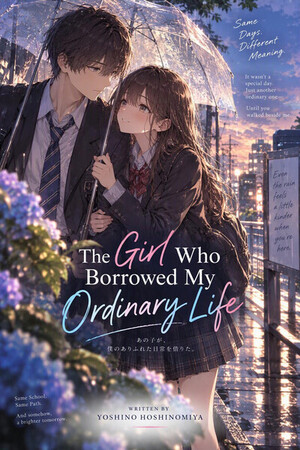
The Girl Who Borrowed My Ordinary Life
The student council meeting lasted forty-eight minutes.
I spent the first twenty in the hallway outside the library, reading one of the accepted festival submissions.
At thirty minutes, I considered leaving.
At thirty-one, I opened my notebook.
At thirty-four, I began writing.
The fictional boy had allowed the girl to borrow his quiet classroom, lunchtime, and path home.
Now she wanted to borrow his notebook.
He refused.
She didn’t argue.
That made him open it himself.
I wrote slowly.
“You may read one page,” the boy said.
“Which page?”
“Any page.”
The girl looked through the notebook without touching it.
“That isn’t fair,” she said. “If I choose the wrong one, I’ll always wonder what was written on the others.”
“Then don’t choose.”
“Is that what you want?”
The boy did not answer.
The girl closed the notebook.
“I’ll wait until you know which page you want me to see.”
My pencil stopped.
The corridor was quiet.
That conversation had not happened.
But it felt like it could.
I turned the page.
Mizuki’s sticky note remained folded inside.
Beside it was the blue-bordered handkerchief, which I had forgotten to remove even after returning the original to her.
I stared at it.
The handkerchief was not hers.
Not exactly.
It had been mine since childhood, left unused in a drawer until my mother placed it in my school bag three years ago.
The borders were almost identical.
I had accidentally returned my own handkerchief to Mizuki.
Which meant hers was still somewhere in my room.
I closed my eyes.
This created several problems.
First, I would need to explain the mistake.
Second, Mizuki had accepted the wrong handkerchief without noticing.
Third, my mother would eventually discover the white-and-blue one in my room and ask why the handkerchief she had washed was still there.
The council-room door opened.
Mizuki stepped into the hallway.
She saw me on the bench and smiled.
Then she noticed the handkerchief inside my notebook.
Her smile faded into confusion.
“You still have it.”
I looked down.
The blue border was clearly visible.
There was no reasonable escape.
“Yes.”
“But you returned it.”
“Yes.”
Mizuki approached.
She sat beside me and examined the cloth without touching it.
“They look the same.”
“Nearly.”
“Which one is mine?”
“This one.”
“The one in your notebook?”
“Yes.”
She stared.
I waited.
Then she took out the handkerchief I had returned on Friday.
She unfolded it.
A small embroidered letter appeared in one corner.
R.
My initial.
Mizuki looked at it.
Then at me.
“You gave me your handkerchief.”
“Accidentally.”
“Your mother placed it in the bag?”
“She must have washed both.”
“Why didn’t you check?”
“They looked the same.”
She held the handkerchief carefully.
“You said she thought blue suited me.”
“She did.”
“But this wasn’t yours to return.”
“Correct.”
“And mine is inside your notebook.”
“Temporarily.”
Mizuki looked down at the open pages.
She could see the handwritten story above the handkerchief.
Not the beginning.
Only the newest page.
Her eyes moved toward the words.
Then stopped.
She turned her face away.
“I’m not reading.”
The gesture was so immediate that something tightened in my chest.
“You can,” I said.
Mizuki looked back.
“What?”
“One page.”
The fictional conversation stared up at me.
You may read one page.
I hadn’t planned this.
Perhaps that was why it felt honest.
“You said you’d show me after finishing,” she said.
“I changed my mind.”
“Why?”
Because you turned away.
Because you could have read it and chose not to.
Because the page was already about you without using your name.
I moved the notebook toward her.
“Any page.”
Mizuki didn’t touch it.
“If I choose the wrong one, I’ll wonder about the others.”
I stared at her.
She had not read the sentence.
She couldn’t have.
“Why are you looking at me like that?” she asked.
“No reason.”
“That’s never true.”
I turned to the beginning.
“The first page.”
“Are you sure?”
“No.”
“That isn’t reassuring.”
“It’s the most logical place.”
Mizuki accepted the notebook with both hands.
She had wanted to read it for over a week.
Now that she could, she looked nervous.
“You can change your mind,” she said.
“Read.”
She lowered her eyes.
I watched the corridor instead of her.
The light through the library windows had dimmed. Club activities echoed from outside. Somewhere in the building, a teacher called for students to stop running.
Mizuki read silently.
The process took less than two minutes.
It felt much longer.
When she reached the final line of the first page, she didn’t turn it.
She closed the notebook carefully.
“That’s all?” I asked.
“You said one page.”
“You could have continued.”
“That would have been stealing.”
I accepted the notebook.
Mizuki folded my handkerchief and placed it in my palm.
“Trade.”
I removed hers from between the pages and gave it to her.
For some reason, returning the correct handkerchief felt like losing something.
Mizuki seemed reluctant too.
But perhaps I was imagining that.
We sat beside each other in the quiet corridor.
“Well?” I asked.
“The beginning is good.”
“You promised not to laugh.”
“I didn’t.”
“That doesn’t mean it’s good.”
“No.”
She looked at her handkerchief.
“But it is.”
“That’s a weak review.”
“You didn’t ask for notes.”
“I’m asking now.”
Mizuki thought for a moment.
“The girl seems lonely.”
“She’s surrounded by people.”
“That doesn’t mean she isn’t lonely.”
I looked at her.
She continued before I could respond.
“The boy also seems lonely.”
“He prefers being alone.”
“Those aren’t the same thing.”
“He says they are.”
“Does he believe it?”
“At the beginning.”
“And later?”
“I haven’t written that part.”
“You have six hundred and twelve words.”
“I wrote more during your meeting.”
Mizuki turned.
“How much more?”
“I don’t know.”
“Ren.”
“About three hundred.”
Her eyes widened.
“You wrote three hundred words while waiting?”
“The council talked for forty-eight minutes.”
“You were counting?”
“You said thirty.”
“You stayed.”
“I said I would.”
“Only for thirty minutes.”
“That was an estimate.”
Mizuki looked down at the handkerchief again.
“Thank you.”
“It gave me time to write.”
“That isn’t why you stayed.”
“You can’t prove that.”
“I don’t need to.”
She stood.
I put away the notebook and joined her.
We started toward the stairs.
After several steps, Mizuki said, “I know what the girl borrows last.”
“You’ve read one page.”
“It’s still obvious.”
“What?”
“The ending.”
“I don’t want your ending.”
“You should still hear it.”
“No.”
“She borrows his loneliness.”
I stopped.
Mizuki took two more steps before turning.
She stood below me on the staircase, one hand resting on the railing.
“That doesn’t make sense,” I said.
“It does.”
“You can’t borrow loneliness.”
“Why not?”
“It isn’t an object.”
“Neither is silence. Or a routine.”
“What would she do with it?”
“Share it.”
“That defeats the definition.”
“Exactly.”
I looked at her.
The stairwell suddenly seemed similar to the one in the music wing.
Quieter, perhaps.
But not empty.
“And what does she return?” I asked.
Mizuki’s expression softened.
“Whatever the boy needs.”
“That’s vague.”
“You haven’t finished writing her.”
“So I don’t know what she has.”
“Yes.”
“What would you return?”
The question escaped before I could separate Mizuki from the fictional girl.
She understood that.
Her fingers tightened slightly around the railing.
“I don’t know yet,” she said.
“That’s allowed.”
She smiled.
We continued downstairs.
------------<>------------
The sky had turned pale violet by the time we left school.
At the gate, Mizuki checked her phone.
“My train is delayed.”
“How long?”
“Twenty minutes.”
“You could take the other line.”
“It requires two transfers.”
“That’s inefficient.”
“You said some inefficient things are worth keeping.”
“That doesn’t apply to trains.”
“Why not?”
“Trains don’t become sentimental.”
Mizuki placed the phone away.
“Do you need to go home immediately?”
“No.”
It was true.
My mother would not expect me for another hour.
Mizuki looked toward the row of shops opposite the station road.
“There’s a café near the bookstore.”
I knew the one.
Small, quiet, often nearly empty after school.
I had passed it many times.
“We just had an editorial meeting for a café.”
“A fictional café.”
“It’s a real festival plan.”
“That doesn’t serve real drinks yet.”
“We evaluated stories while drinking.”
“I had strawberry milk.”
“That qualifies.”
Mizuki tilted her head.
“Do you not want to go?”
It would be easy to say no.
The train delay gave us a reasonable excuse to separate. The day had already contained enough meaningful conversations.
But the story was inside my bag.
She had read the first page.
And twenty minutes suddenly seemed too short rather than inconvenient.
“I didn’t say that.”
“Then come with me.”
She crossed the street before I could change my mind.
I followed.
The café stood between a bakery and a stationery shop. Its windows displayed small wooden tables, potted plants, and shelves of secondhand books.
A bell rang when we entered.
Only three customers occupied the room.
An elderly man read a newspaper near the front. Two university students shared a table in the corner, speaking quietly over their laptops.
Mizuki looked around.
“You’ve been here before.”
“How do you know?”
“You didn’t examine the menu outside.”
“I’ve walked past it.”
“That wasn’t my observation.”
We chose a table beside the back window.
The chairs were close enough that our school bags touched beneath the table.
A handwritten menu listed tea, coffee, hot chocolate, sandwiches, and several cakes.
Mizuki studied it.
“What are you having?”
“Tea.”
“That’s predictable.”
“What are you having?”
She turned the menu over.
“Hot chocolate.”
“That’s predictable.”
“You didn’t know I liked hot chocolate.”
“I know now.”
She ordered first.
When the server left, Mizuki rested her hands on the table.
“It feels strange.”
“What?”
“Being here in uniform.”
“Many students visit cafés.”
“I don’t.”
“Why?”
“I’m usually doing something.”
“You’re doing something now.”
“What?”
“Waiting for a train.”
“That doesn’t feel productive.”
“Good.”
She smiled.
“You really dislike productivity.”
“I dislike treating every free moment as a failure.”
Mizuki looked through the window.
The sky had darkened further. Lights from nearby shops reflected against the glass.
“I used to come to places like this with Akari,” she said.
“In Kyoto?”
“Before she moved. We would say we were studying, but she spent most of the time sketching buildings.”
“And you?”
“I actually studied.”
“Of course.”
“She said studying defeated the purpose of going out.”
“She sounds reasonable.”
“She would like you.”
“I’m not sure that was a compliment.”
“It was.”
“She’s never met me.”
“She doesn’t need to.”
“That logic sounds familiar.”
Mizuki laughed.
The drinks arrived.
My tea came in a white cup.
Her hot chocolate was topped with whipped cream and a small dusting of cocoa.
She took a careful sip.
A bit of cream remained above her upper lip.
I noticed.
Then I looked away.
“Why did you do that?” she asked.
“Do what?”
“Look at me, then immediately look at the table.”
“You have something on your face.”
Mizuki wiped her cheek.
“Not there.”
She wiped the other cheek.
“That happened last time.”
“Where?”
I pointed to my own upper lip.
She wiped beneath her nose.
“Did I get it?”
“No.”
“Now?”
“No.”
“You’re pointing vaguely again.”
“I’m being precise.”
“You’re moving your entire hand.”
“There’s a limited vocabulary for facial directions.”
Mizuki took out her phone and opened the front camera.
She saw the whipped cream.
Her face turned pink.
“You could have said it was here.”
“I tried.”
“You made me wipe both cheeks.”
“That was your strategy.”
She cleaned it with her handkerchief.
The correct one.
Then she narrowed her eyes at me.
“Were you going to laugh?”
“No.”
“You looked like you were.”
“I was trying to be polite.”
“You enjoy watching me struggle.”
“Only with minor problems.”
“That isn’t kind.”
“It’s honest.”
Mizuki stirred the hot chocolate.
“Now I understand why you noticed the dust on my face.”
“That was larger.”
“How large?”
“Noticeable.”
“You could have let me walk around like that.”
“I told you.”
“And almost removed it yourself.”
The memory returned.
The storage room.
My hand a few centimeters from her cheek.
The same hesitation.
I took a drink of tea.
Mizuki watched me.
“You remember,” she said.
“It was last week.”
“You use that argument often.”
“Because last week was recent.”
Her left foot moved beneath the table after another sip of chocolate.
I noticed.
She noticed me noticing.
Neither spoke.
The silence felt comfortable.
Not empty.
The story had used the phrase the girl first borrowed the silence.
Perhaps that was wrong.
She hadn’t taken it.
She had changed what it meant.
Mizuki placed her cup down.
“Can I ask you something?”
“You usually do.”
“Why did you start the notebook?”
The question felt different from asking what was inside.
I looked at my tea.
“In middle school, one of my classmates moved away.”
“Were you close?”
“Not particularly.”
“Then why?”
“He sat beside me for almost a year. He talked constantly. Mostly about things I didn’t care about.”
“That sounds like Daichi.”
“Less athletic.”
“What happened?”
“One day he said his family was moving. The next week, his desk was empty.”
Mizuki listened without interrupting.
“I realized I could barely remember anything he had said,” I continued. “I remembered that he talked. I remembered his voice. But not the actual things he told me.”
“So you started writing them down?”
“At first, things people said. Then things they did.”
“Do you remember him now?”
“Some of him.”
“What was his name?”
“Yuta.”
It had been a long time since I’d said it aloud.
Mizuki traced one finger around the rim of her cup.
“Did you ever contact him?”
“No.”
“Why not?”
“We weren’t close.”
“That isn’t always a reason.”
“At the time, it seemed like one.”
“And now?”
I thought about the question.
“Now it would be strange.”
“Maybe.”
She looked at me.
“But maybe he remembers you.”
“He probably remembers the person sitting on his other side. She shared her snacks.”
“You didn’t share yours?”
“I didn’t bring snacks.”
“That was your mistake.”
“Apparently.”
Mizuki smiled faintly.
“So the notebook is to keep people from disappearing?”
The accuracy of the question unsettled me.
“That sounds dramatic.”
“Is it wrong?”
“Partly.”
“What’s the other part?”
“I like noticing things.”
“Even when people stay?”
“Especially then.”
Her gaze lowered toward the table.
“Have you written a lot about me?”
I should have expected the question.
Still, my grip tightened slightly around the cup.
“Some.”
“How much is some?”
“I don’t count entries.”
“You counted the story.”
“The document counted it.”
“Would I be surprised?”
“Probably.”
“Should I be worried?”
“No.”
“Embarrassed?”
“Yes.”
Mizuki laughed softly.
“That means you wrote about my foot.”
“Possibly.”
“And the two straws.”
“Possibly.”
“And the schedule.”
“Definitely.”
She covered her face briefly.
“I knew it.”
“You made seven categories.”
“I was confused.”
“You color-coded them.”
“The colors were helpful.”
“You excluded me in red.”
“That was a procedural decision.”
“You nearly tore the paper when I tried to read it.”
Mizuki lowered her hands.
“You remember everything.”
“Not everything.”
“Enough to be dangerous.”
“You asked whether you should be worried.”
“Now I’ve changed my answer.”
I smiled.
Mizuki noticed.
Her expression softened.
“I don’t mind,” she said.
“Being written about?”
“Not if it’s you.”
The café sounds seemed to recede.
A spoon touched a plate somewhere behind us.
The elderly man turned a newspaper page.
Outside, headlights moved across the window.
Mizuki looked down at her hot chocolate, perhaps realizing what she had said.
I could have made a joke.
That was usually how we rescued each other from sentences that became too honest.
This time, I didn’t.
“Then I’ll keep writing,” I said.
She looked up.
Her smile was small enough that I might have missed it a week earlier.
I didn’t miss it now.
“Good,” she said.
------------<>------------
Mizuki’s train resumed service thirty-four minutes later.
We learned this because Emi messaged the class group chat.
Neither of us had checked.
At the station gates, Mizuki stopped.
“My train left six minutes ago.”
“Another arrives in twelve.”
“You checked?”
“I check schedules.”
“You’re becoming organized.”
“I’ve always been organized.”
“You ate four curry buns because you arrived too late for lunch.”
“That was an efficient purchase.”
She smiled.
We stood near the split between our platforms.
People moved around us, hurrying toward trains.
Mizuki held the strap of her bag in both hands.
“Thank you for waiting.”
“You had a delayed train.”
“You waited before that.”
“The student council meeting?”
She nodded.
“That gave me time to write.”
“And the café?”
“I drank tea.”
“You keep turning everything into something practical.”
“Practical things are reliable.”
She looked toward the departure board.
“What if something isn’t practical?”
“Then it needs another reason.”
“Such as?”
“I don’t know.”
The display above us changed.
Her train would arrive in eleven minutes.
Mine in four.
If I left now, I would reach my platform comfortably.
If I stayed, I would miss it.
Mizuki noticed the board.
“Your train is soon.”
“Yes.”
“You should go.”
“I know.”
Neither of us moved.
A station announcement played overhead.
My train would arrive on platform three.
Three minutes.
Mizuki shifted her weight.
“You’ll miss it.”
“Another arrives in thirteen minutes.”
She looked at me.
“That’s inefficient.”
“Apparently.”
The word felt different after the café.
Mizuki’s expression slowly brightened.
We walked together toward her platform.
Not mine.
The wrong direction.
Or perhaps only a longer route.
At the stairs, Mizuki glanced sideways at me.
“You know, the umbrella characters could have checked the train schedule.”
“That would ruin the story.”
“Sometimes practicality is the obstacle.”
“That sounds like something Daichi would say.”
“Don’t insult me.”
We reached her platform.
A few passengers waited along the painted line.
Mizuki and I stood behind them.
“You don’t have to wait until the train arrives,” she said.
“I already missed mine.”
“Because of me.”
“Because I chose the wrong platform.”
“The correct platform is over there.”
She pointed across the tracks.
“I know.”
“You’re here anyway.”
“Yes.”
Her train’s headlights appeared in the distance.
Mizuki touched the star on her bag.
“Ren?”
“Yes?”
“Will the boy ever tell the girl why he lets her borrow things?”
“I don’t know.”
“You’re the writer.”
“He may not know either.”
“What if she already does?”
The train approached.
Wind moved through the station.
Mizuki’s hair shifted across her face, and she tucked it behind one ear.
“Then she should be patient,” I said.
“How patient?”
“I haven’t planned the ending.”
“That’s allowed.”
The train stopped.
Doors opened.
Mizuki stepped inside, then turned to face me.
Passengers moved around her.
Before the doors closed, she said, “I like it so far.”
“The story?”
She smiled.
“You can decide.”
The doors closed.
The train carried her away.
I remained on the platform until its rear lights disappeared.
Then I walked toward the stairs and changed platforms.
My next train arrived eleven minutes later.
I didn’t regret missing the first one.
That was becoming a problem.
Or maybe it wasn’t.
------------<>------------
That evening, I opened the notebook.
The first page of the story now felt different because Mizuki had read it.
It no longer belonged only to me.
I wrote another paragraph.
The boy believed giving things away would leave him with less.
He was wrong.
Every silence the girl borrowed came back warmer. Every routine she borrowed returned with another person inside it. Every path she borrowed became somewhere he looked forward to walking.
By the time he noticed, his ordinary life no longer fit only one person.
I read the lines.
Too obvious.
I nearly crossed them out.
My phone vibrated.
A message from Mizuki.
[Did you get home safely?]
[Yes.]
[Did you have to wait long for the next train?]
[Eleven minutes.]
A pause.
[I’m sorry.]
[I decided to wait.]
Three dots appeared.
Disappeared.
Returned.
[That was inefficient.]
I smiled.
[Some inefficient things are worth keeping.]
Her response took almost a minute.
[I like that answer too.]
I looked back at the story.
Then I wrote:
The girl did not borrow his loneliness.
She sat beside it until it stopped being lonely.
I stopped.
The sentence felt like an ending.
But it wasn’t one.
Not yet.
I turned to a fresh line and continued writing.



Please sign in to leave a comment.