Chapter 7:
Chapter 7
The Forsaken Legacy: Weight of Every World
The morning air quivered with the eerie chorus of creaking wheels, shuffling feet-and cawing crows that sounded like a thousand rattling harmonicas. From the mist stumbled Old Marwen, village elder and local madman, piloting a ramshackle wooden cart piled high with every oddity he'd scavenged since sunrise: cracked teapots, rusted lanterns, lengths of broken pike, and a handful of children's toys he'd sworn were enchanted. His eyes, milky with age yet sharp as a hawk's, darted across the battlefield's scarred canvas, searching for the vision that had roused him from his usual nap nestled among the town's laundry lines.
"I saw him!" Marwen muttered to nobody in particular, jabbing a gnarled finger at the gloom.
"A lad, bleeding like my Sunday supper-lying unconscious in the muck. He's in trouble, and I don't like leaving problems unsolved. Well, except for the village taxes, but that's another story."
Flanked by Mirrin, the wiry young healer with determination carved into her brow, and Tomas, the bandaged blacksmith's son who trailed after them like a reluctant ghost, Marwen lurched into the pale sunlight. He took a moment to dust off invisible dust from his patched robes.
"Stay close," he croaked, brow lifting. "If he's an Imperial, I shan't hesitate to lecture him on manners-right after I run away screaming, of course."
Mirrin shot him a look that was half exasperation, half affection. "What if he really is one of them?"
Marwen clicked his tongue theatrically. "Poppycock! I'd know the stench of traitor blood if it slapped me in the face. Besides"-he leaned conspiratorially toward Tomas-"madness heightens my senses. I can smell fear, spot a lie, even tell which chicken lays the biggest egg."
Tomas coughed. "Thrilling, Elder Marwen."
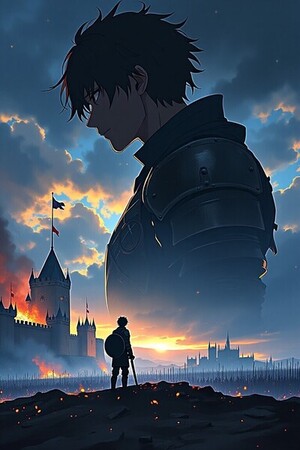
They pressed onward across the churned mud and shredded grass, past shattered pikes that jutted like broken teeth and lone boots protruding from the earth. The crows darted between corpses, fearless of the living.
Marwen raised a crooked hand. "Quiet, you blasted birds! I'm on sacred business here."
At once, the cawing stilled. The crows clustered tight around a lone spot, beaks tilted as if awaiting a punchline.
Marwen's face split into a grin. "Aha! I knew it! Treasure-or at least a shiny bauble."
He parted the circle with surprising nimbleness for a man of his age, and there-half-submerged in mud-lay the young man. His body was torn and caked with muck, his skin was ashen, blood seeping into the soil.
Marwen knelt beside him, peering into the man's face.
"Arise, lad-you're hogging all the fun down here!" He glanced at Mirrin and grinned. "Reckon he prefers mud baths to medicine." Then, more softly: "Stay with us, boy. We could use another stubborn soul around here."
Mirrin unfurled a clean cloth; Tomas cradled the wounded head. "He's alive," Marwen whispered triumphantly, lifting the soldier's wrist to check his pulse.
"And not snoring! That's two strikes against me-still the lucky one, eh?"
With practiced care, they slid the youth onto a makeshift sling. Marwen barked orders in a rapid-fire half-whisper: position the straps, tie a knot like Granny Potter taught me, and for heaven's sake, mind the blanket!
As the cart creaked toward the village, Old Marwen perched on its edge, humming a tune only he remembered. He glanced at the wounded boy, then at the battlefield disappearing into the mist. A fool's errand, some would call it. But a problem left unsolved was like an itchy spot you couldn't reach. Better to try and fail than let it fester. Besides, he reckoned, even a madman knew a life was worth more than a cracked teapot.
The first thing he felt was the sterile heat of lamps and machines, not the electric bite of restraints against his wrists. This was different. Heavy wool against his skin. The smell of woodsmoke and dried herbs. A weight across his chest that he slowly recognized as a blanket, hand-stitched, slightly rough.
Riven opened his eyes to a ceiling of dark wooden beams. Gray light filtered through a single window. Somewhere nearby, a fire crackled.
He tried to sit up. Pain lanced through his stomach and he gasped, falling back. The wound. The knight. He remembered the sword going in, the shock of cold metal through flesh, then nothing. He heard murmurs approaching the door, which creaked open to spill thin daylight into the cramped room. Marwen led the way, his silhouette casting a lopsided shadow against the wall. Mirrin followed, wiping her hands on her apron, her eyes immediately searching the young man's face.
"Well, look who's joined the land of the breathing," Marwen crowed, leaning on his cane and peering with unabashed curiosity.
"Took you long enough, lad. Mirrin was about to start reading you last rites-or worse, my poetry."
Mirrin snorted, but relief softened her features. She crossed to the bedside, gentle yet efficient as she checked the young man's bandages, her fingers cool against his skin.
"Don't mind Marwen," she said. "He scares off most fevers with his voice alone."
"Where..." he rasped.
"Brindleford. Edge of Dunmorrow territory." She helped him drink from a clay cup. The water tasted of iron and something sweet.
"We found you on the field after the battle. Marwen kept having some dream, insisted you weren't dead like the rest."
Marwen perched with owl-like precision onto a stool, eyes still sharp.
"Don't suppose you remember how you got there, eh? Not that it's any of my business-but if you're an Imperial, best say so now. We're fresh out of patience for traitors, but always have room for a fool."
He winked, tone light, but Mirrin shot him a warning look. "Ignore him. What's your name?" she asked the young man, voice gentle, but watchful.
Before he could utter the words Marwen interjected, pointing at the bandaged wounds over his body.
"It's Riven! Like stone split by frost."
The name felt strange on his tongue, yet true. Torn apart. He let out a dry, rasping laugh that startled even himself. It had been a long time.
"Yes," he said, his voice raw. "It's Riven."
Mirrin gave them both a confused look, but she shrugged and turned her attention to the bandages, beginning to unwind them.
Riven gagged at the stench. A thick, brownish paste oozed beneath the linen, clinging to his wound.
Marwen shuffled closer, humming some half-remembered tune and beamed, oblivious to Riven's horror.
"Old village cure," he announced proudly. "Nothing draws out rot like a bit of Elder's poultice-secret's in the fermentation. Saved the blacksmith's leg last winter, didn't it, Mirrin?"
Mirrin pinched the bridge of her nose, exasperated. "That was honey and yarrow, Marwen. Not… this."
Marwen waved her off. "Bah! Today's youth and their fussy nostrils. You'll see-he'll be right as rain."
Riven, still weak, eyed Mirrin desperately.
She sighed. "I'll clean it properly now. Try not to breathe in."
Mirrin set her jaw and began carefully wiping away Marwen's "poultice." Riven winced, bracing for pain. But as the foul-smelling smear lifted, Mirrin's hands froze.
She leaned closer, frowning. "That's… impossible."
Riven risked a glance. Where he expected torn flesh, there was nothing-just smooth, unbroken skin, faintly pink but whole. No gash, no scar, as if the sword had never touched him.
Marwen peered over her shoulder, eyes wide. "Well, I'll be-my remedy's better than I thought!"
Mirrin shot him a look. "Don't flatter yourself, Marwen. This isn't your doing." Her gaze flicked to Riven, wary and awed." "This is something else entirely."
Riven said nothing. He ran his fingers across the smooth skin where the wound had been, feeling the faint warmth of new flesh, the absence of pain.
"Thank you," he said to Mirrin, because it was expected. But his eyes found the window, the gray sky.
Mirrin finished tidying the bandages and stood. "Rest. You're safe here."
She left with Marwen, the old man chattering about his poultice's miraculous properties, and Riven lay alone in the firelight, listening to the sounds of a house that was not a prison. Children laughing somewhere distant. A door opening, closing. The rhythm of ordinary life going on around him, indifferent to his existence.
He didn't sleep. He was afraid if he closed his eyes, he'd see the white walls again, or the battlefield, or the moment the sword went in and the world went dark.
But morning came anyway, thin and pale, and with it the sound of an axe splitting wood.
The rhythm was steady, unhurried, the work of someone who had done this a thousand times and would do it a thousand more. He lay still, listening, letting the ordinary violence of the sound reassure him. No screams. No sirens. Just wood, surrendering to steel.
He made it to his feet before Mirrin arrived. His legs held, barely, the floor tilting like a ship's deck. He gripped the windowsill and breathed until the room steadied. Outside, a woman hung laundry on a line, three children chased a dog through the mud, and an old man-the one from the battlefield, Marwen-sat on a stump, whittling something from a stick. He looked up, caught Riven's eye, and grinned with the full, unsettling warmth of a man who had no secrets because he had no shame.
"Ghost-boy's vertical!" Marwen called out. "Mirrin owes me a copper. She said you'd sleep till harvest."
Riven didn't answer. He was watching the children. The smallest one, a boy with hair the color of straw, had fallen in the mud and sat there, surprised, before deciding whether to cry. The dog licked his face. The boy laughed, a sound like breaking glass, and Riven felt something in his chest contract with an emotion he couldn't name.
He was never around children. There had never been an opportunity or time. This boy was real. The mud was real. The dog's tongue was real.
"You're supposed to be resting," Mirrin said from the doorway. She had a bowl in her hands, steam rising from it, and a cloth over her shoulder stained with something green.
"I've rested enough."
"You've rested one day."
"I've rested years." He didn't know why he said it. It wasn't true, not literally. But some part of him had been still for so long, held in suspension between imprisonment and the battlefield, that waking felt like a kind of exhaustion in reverse.
Mirrin set the bowl on the table. "Sit, then. Eat. If you fall over, I'm not carrying you."
He sat. The bowl held porridge, thick and gray, with a dollop of something yellow that might have been butter. He ate without tasting it, without thinking. When he looked up, Mirrin was watching him with an expression he couldn't read.
"You eat like a man who's been hungry," she said.
"First time I've eaten a meal made by a woman." He paused, the words feeling too large for his mouth. "First time anyone's made me anything, actually."
Mirrin was quiet for a moment. Then she took the empty bowl, "Then it's about time,"she said.
"Marwen wants to talk to you. About staying."
"Tell him I'm not a pet."
"Tell him yourself. He's been talking about you for two days straight. The village is running out of patience for his stories."
She left, and Riven sat at the table, listening to the axe resume its rhythm, the children's laughter fading toward the square. He was supposed to be dead. The battlefield had been littered with men who looked like him, dressed like him, who had not woken up in a healer's cot with a madman watching over them. He didn't know why he'd survived. He didn't know if survival was a gift or a continuation of the experiment, the battlefield just another white room with different walls.
Marwen appeared in the doorway without knocking, leaning on his cane, his eyes bright and assessing. "Mirrin says you eat like a wolf. Good. Wolves survive. Sheep get sheared, then eaten, then forgotten. I've been all three, and wolf is best."
"I'm not staying," Riven said.
"Didn't ask you to. Asked you to talk." Marwen lowered himself onto the stool across from him, the wood creaking under his weight.
"The village lost fourteen men to that battle. Fourteen sons, fathers, fools who thought the king's coin was worth the king's wars. We need hands. We need backs. We don't need heroes-we've had enough of those, and they all died."
"And if I'm one of the ones who died? If I'm just late to it?"
Marwen's grin softened into something more honest.
"Then you'll work until you do. Same as the rest of us." He reached across the table and gripped Riven's wrist, his fingers surprisingly strong.
"You're not a ghost, boy. Ghosts don't eat porridge. Ghosts don't watch children in the mud and feel something break in their chest. I saw your face. I know what I saw."
Riven pulled his hand free, not roughly, but firmly. "You don't know what I am."
"Neither do you. That's the point." Marwen stood, his knees popping like damp wood.
"Rest today. Walk tomorrow. The day after, I'll find you something to break or build or carry. You'll hate it, and you'll do it, and eventually you'll wake up and realize you have a reason to keep waking up. That's how it works. That's how it always works."
He limped out, humming his tuneless song, and Riven sat at the table listening to the village breathing around him, indifferent and alive.
He didn't know if he deserved any of it. But he was too tired to run.



Please sign in to leave a comment.