Chapter 9:
THE KESTREL
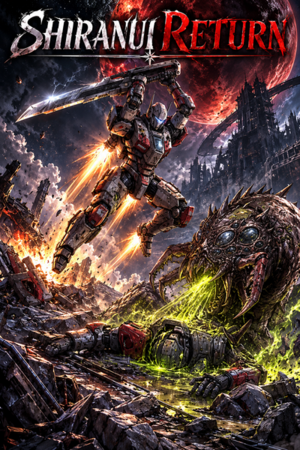
Shiranui Return
At six in the morning, snow covered the outside steps of Yamato Base. The wind swept across the training plaza and made the Terran Union flags snap against their poles. The cadets stood in three rows in front of the tactical hangar, still sleepy, their hands tucked inside thermal gloves.
Renji arrived five minutes early. He had slept little, but not because of a mysterious message. He had spent the night reviewing the simulator logs and noting the points where the Kestrel was slow to respond to movement corrections. He needed to explain to Hasegawa why some cadets compensated for the delay with too much force, creating an oscillation the automatic stabilizer could not correct in time.
Major Hiroshi Hasegawa appeared in front of the rows. His gray uniform showed wear at the elbows, and his mutilated hand held a digital clipboard.
“Today you’re done playing with simulators,” he announced. “The exercise will take place in training platforms. Each cadet will have access to a light mech from the Kestrel series. The objective is to cross the obstacle course, neutralize moving targets, and return to the hangar without exceeding structural limits.”
The hangar doors opened.
The Kestrels were eight-meter humanoid machines weighing twenty-one tons, with simplified frames. They had no armor for real combat; they were designed to teach balance, power management, and neural coordination. The compact torso housed a high-density battery, two dorsal thrusters, and a set of electromagnetic actuators. The arms ended in articulated hands capable of holding tools or training weapons. The legs, longer than the torso, had hydraulic shock absorbers and gyroscopes at the hips.
The head was narrow and contained optical, thermal, and depth sensors. Instead of a conventional cockpit, the pilot sat in an inner capsule with a low-intensity neural interface. The Kestrel had no particle cannon; it used pulse emitters and a reinforced polymer blade for close-range exercises.
Renji studied the machines. In his previous life, the Kestrels had been replaced by sturdier platforms before the opening of the Abyss. He knew how the models evolved and knew that the right ankle pivot was a weak point in the initial design. He did not need to predict a creature to justify the analysis: the joint had been designed to save weight, which made it unstable during abrupt changes of direction. A fatigue test could confirm the problem without any extraordinary hypothesis.
“Any problem, cadet?” Hasegawa asked, noticing his lingering gaze.
“The right ankle pivot has too much play.”
“The machines were inspected yesterday.”
“An inspection doesn’t replace a real load test.”
Hasegawa stepped closer.
“You want to start the day by arguing with the base engineers?”
“I want to keep someone from falling on a turn.”
“Then pilot better.”
Renji did not answer. The major pointed toward the cockpits.
The cadets were assigned machines by lottery. Renji received Kestrel 04. Reika got 07; Daichi, 02; Shun, 11. Masato Kanzaki was assigned unit 09. The arrangement seemed random, but Renji knew the exercise would be used to establish the class’s informal hierarchy.
Daichi received the news with a smile.
“Looks like we’re about to find out who really deserves a place in the elite track.”
Shun adjusted his gloves.
“Don’t turn a basic exercise into a competition, Kurosawa.”
“Are you afraid of losing?”
“I’m afraid of wasting time.”
Reika ignored them both. She checked the Kestrel’s spec sheet and asked the technician about the thrusters’ response. Renji watched the conversation. She was still disciplined, but she was already showing an ability to identify people who might be useful. He did not have to hate her to recognize the risk.
The instructor explained the course. It crossed an area of reinforced concrete, passed through an artificial wind tunnel, and ended at an elevated platform. Moving targets appeared at changing positions. Pilots had to neutralize at least eighty percent of them without damaging the mechs’ structure. The score took time, accuracy, power consumption, and stability into account.
“Don’t try to impress the evaluator,” Hasegawa concluded. “A pilot who wrecks the machine to beat a stopwatch isn’t a pilot. He’s a logistics problem.”
The first pair began. The Kestrels left the hangar in sequence, their steps heavy and movements somewhat stiff. The cadets tried to compensate for actuator delays with excessive commands. Two nearly fell at the first turn; another hit a target but lost time stabilizing the torso.
When it was Renji’s turn, he entered the capsule and connected the interface. The system recognized his neural signature.
“Welcome, Cadet Renji. Synchronization in progress.”
The cockpit lights came on. The hangar appeared in three dimensions, overlaid with power indicators. Renji adjusted the control sensitivity to keep the machine from reacting with a veteran’s precision. His young body had good reflexes, but not the years of conditioning he carried in his memory. He needed to moderate his experience.
“Begin exercise,” Hasegawa ordered.
The Kestrel moved forward.
Renji did not run. He made the machine walk in short steps, testing the delay in each joint. At the first turn, he reduced the left hip impulse and shifted part of the load to the heel. The right ankle vibrated, just as he had predicted. He corrected the angle before the system detected the fault.
The first target appeared behind a barrier. Renji fired a training pulse and hit the center. The second appeared moving laterally. Instead of turning the torso, he stepped to the right and used the rotation of the hip to line up the emitter.
The machine responded smoothly.
The third target was inside the wind tunnel. The crosswind could displace a light mech and compromise its balance. Renji shut down the left dorsal thruster and used the current itself to guide the Kestrel into the center of the corridor. The target was neutralized the instant it appeared.
On the external monitor, the evaluators exchanged glances.
The next part of the course required a short jump to the elevated platform. Renji fired the thrusters but did not try to reach the ledge in one leap. He used a smaller burst, touched the side wall with his left hand, and launched himself again, taking advantage of the structure’s reaction. The Kestrel landed with one knee bent, without exceeding the impact limits.
The exercise ended without damage.
Renji’s time was not the fastest. His accuracy, however, was far above average, and his power consumption was the lowest among the cadets who had completed the course.
Hasegawa approached the monitor.
“You reduced power halfway through the course.”
“The wind tunnel was shifting the center of mass.”
“The simulator didn’t indicate that variation.”
“The machine did.”
The major studied the result.
“What do you mean?”
“The ankle vibration changed before the sensor registered the tilt. If I’d waited for the warning, I would have lost time correcting the balance.”
Hasegawa looked at the Kestrel. Then at Renji.
“Are you saying you heard a mechanical fault?”
“I’m saying the mech gave me a warning.”
The major wrote something on his clipboard without showing whether he believed him.
Reika completed her course next. She was fast, precise, and cautious. Daichi tried to beat Renji’s time, pushing the Kestrel too hard on the first turn. The right ankle lost stability, and the machine fell onto its side. The pilot activated the emergency sequence before the cockpit hit the ground, but the impact damaged one of the thrusters.
When Daichi climbed out of the capsule, his face was red with anger.
“The pivot is defective,” he said, pointing at the machine.
Renji examined the mech.
“The pivot was defective before the exercise.”
“You knew?”
“I warned the major.”
“And you let me use it anyway?”
“You were assigned a machine that had passed inspection. I had no authority to replace it.”
Daichi took a step forward.
“You like making yourself look better than everyone else.”
“I didn’t have to do anything for that.”
Major Hiroshi Hasegawa interrupted the argument.
“Kurosawa, take the unit in for evaluation. Renji, come with me.”
The instructor led the cadet to the maintenance room. The ankle assembly of Kestrel 04 was opened, and the excess play appeared exactly where Renji had indicated. Hasegawa ran a finger over the part, assessing the wear.
“How did you notice?”
“The actuator noise has an irregular oscillation when the load changes direction.”
“Who taught you that?”
Renji did not answer immediately.
“People who repaired machines so others could make it home.”
Hasegawa seemed to consider the answer. Then he closed the casing.
“Your performance is being watched. Don’t let the attention go to your head.”
“I don’t intend to.”
“And stop treating every exercise as if it were a war.”
Renji looked at the mech. The remark struck a place the major could not have known about.
“Maybe someone should prepare before the war begins.”
Hasegawa closed his clipboard.
“This academy trains soldiers. Not prophets.”
Renji realized the conversation had reached its limit. He took his leave and returned to the dormitory.
◆
Hasegawa had been a reconnaissance pilot before becoming an instructor. He had taken part in rescue operations at orbital facilities and lost part of his hearing after a decompression failure. The scar on his chin came from a fall during an evacuation exercise. He did not like talking about his career, but he kept a small identification plate from a disbanded unit in his office.
The major had watched mechs evolve from the earliest combat models to the Kestrel trainers. He believed technology had advanced faster than pilot training. Cadets knew sophisticated systems but did not know how to improvise when a sensor failed or a teammate vanished from radar.
That was why he insisted on maintenance exercises. A pilot who understood how his own mech worked would have a better chance of surviving a failure. Hasegawa also believed the chain of command had to be questioned when an order contradicted the available data. He did not advocate disobedience out of pride; he advocated responsibility.
As he watched Renji, he saw an unusual combination of ability and distrust. The cadet recognized defects before the sensors recorded them, made quick decisions, and seemed to anticipate certain maneuvers. At the same time, he reacted to names like Kurosawa and Shun with a level of caution that did not fit his age.
Hasegawa decided to keep a close eye on the young man. He did not want to turn him into a protege, but neither did he intend to let a general’s office determine someone’s career without evidence. The academy needed pilots who could think. If Renji was simply an undisciplined talent, training would show it. If there was something more, perhaps the institution needed to learn from him.
◆
The ground-piloting exercise took place the following day, in a hangar where the Kestrels stood lined up on maintenance platforms. The training machines were eight meters tall, weighed twenty-one tons, and had simpler frames than combat mechs. The torso housed a compact plasma reactor, the arms were equipped with low-power pulse emitters, and the legs had reinforced hydraulic actuators. The head contained optical, thermal, and proximity sensors. The cockpit was not a command room; it was a narrow capsule molded to the cadet’s body.
The Kestrel had been developed to teach the fundamentals without putting a pilot inside a machine that was impossible to control. Its armor consisted of lightweight ceramic and metal-alloy plates. The dorsal thrusters allowed short jumps but could not sustain flight. The stabilization system corrected excessive movement, as long as the pilot did not try to override it. It was an honest machine: it showed immediately when the operator was doing something wrong.
Renji was assigned Kestrel 07. The technician had noted an intermittent fault in the left hip actuator, but the official inspection had declared the equipment fit for use. Renji heard the noise on the first step. The hydraulic return had a slight delay, almost imperceptible, that could turn a corner into a fall.
“Is the machine ready?” the instructor asked.
“No.”
“The report says it is.”
“The report hasn’t piloted it.”
A few cadets laughed. Shun was among them, leaning against the side of a workbench. Daichi watched from a distance, accompanied by two students who followed him like aides.
The instructor asked Renji to explain the fault. He described the noise, the delay, and the possibility that the system would compensate by increasing pressure at the ankle. Major Hiroshi Hasegawa asked the technician to check. The first reading looked normal; the second showed an oscillation. The fault was real.
“You heard that from inside the cockpit?” Hasegawa asked.
“Yes.”
“The sensors didn’t record it.”
“The sensor measures pressure. I heard the vibration.”
Hasegawa studied the graph and ordered the exercise suspended until the actuator was replaced. The decision delayed the schedule and irritated the officer in charge of the hangar. Renji noticed Daichi’s look. His rival did not need another reason to accuse him of seeking attention.
After the inspection, Hasegawa asked Renji to stay. The major was not an expansive man. He spoke only when he had something to say and rarely praised a cadet in front of others.
“You know this academy isn’t a battalion of veterans,” he said.
“I know.”
“Then stop acting as if every machine is heading into war tomorrow.”
Renji fell silent.
“A good mechanical eye doesn’t make up for poor discipline. If you want to pilot, you need to learn to work with the protocol, not just against it.”
“And what if the protocol is wrong?”
“Prove it. Don’t turn every disagreement into a confrontation.”
The remark hit Renji harder than he would have liked. It was exactly the kind of advice that could have prevented many mistakes in his first life. He nodded.
Hasegawa continued:
“Your record shows a capable but unstable cadet. There’s enough talent to justify attention. There are also signs that you don’t trust anyone above you.”
“Maybe I have my reasons.”
“Everyone has reasons. The difference is what they do with them.”
The major handed him a maintenance form and asked him to supervise the actuator replacement. Renji could have taken the assignment as punishment. Instead, he accepted. He spent the afternoon watching the technicians, noting the disassembly sequence and checking joint tolerances. The chief technician, a man named Mori, realized that he knew more than he let on.
“Have you worked in a repair shop before?” he asked.
“A little.”
“What kind?”
“Combat mechs, support units, interface systems.”
Mori raised an eyebrow.
“That’s not nothing.”
Renji smiled without replying.
By the end of the shift, the machine was ready. The actuator had been replaced with a higher-tolerance unit, and Kestrel 07 passed the load test without oscillation. Hasegawa watched the result and made a note.
“Tomorrow you’ll pilot the machine you repaired.”
“Wouldn’t another cadet be better?”
“Why? Afraid to trust your own work?”
Renji understood the provocation.
“No.”
“Then be in the hangar at six.”
The assignment changed his standing at the academy. The cadets who had considered him nothing more than an arrogant student began to see him as someone with real technical knowledge. Shun remarked that the workshop seemed to have found its new mascot. Renji replied that at least a mascot did not need a family name to fix a machine. Masato laughed. Daichi did not.
The following morning, Renji climbed into Kestrel 07 and ran the startup sequence. The reactor responded without oscillation. The machine walked across the platform, made a turn, and jumped over a training barrier. The test was simple but required coordination between the legs, hips, and thrusters. Renji completed the course precisely, without straining the frame.
Hasegawa watched the exercise with his arms crossed.
“Better,” he said when the cockpit opened.
“The machine is better.”
“So are you.”
Renji looked at the major. The praise was understated, almost involuntary, but it marked a change. Perhaps his relationship with Hasegawa could become one of the few bridges between the knowledge Renji carried and the world that still needed to learn.
◆
Hasegawa took Renji to a storage hangar where old mechs, retired for lack of spare parts, were kept. The major showed him a reconnaissance model he had piloted during orbital evacuation operations. The machine was twelve meters tall, with external sensors and minimal armor. Its left arm had a repair module; the right, a pulse emitter. It was not powerful, but it could enter places where heavy mechs could not operate.
“I lost two teammates because we insisted on using a combat platform in a rescue operation,” Hasegawa said. “The machine was strong enough to destroy the obstacle and too heavy to cross the corridor without bringing it down.”
Renji studied the frame.
“The equipment was chosen for the wrong objective.”
“Yes. And someone signed the order because they didn’t want to admit we were short on specialized units.”
The major explained that war would require more than weapons. They would have to maintain evacuation routes, repair machines under fire, and protect medical teams. The Chronians did not need to win every engagement. They only had to break the points that held human defenses together.
Renji understood that Hasegawa could help him turn his future knowledge into doctrine. The major did not have the power to change High Command, but he could prepare cadets to think in terms of systems, not just individual combat.
◆
The field exercise took the cadets to an outdoor area of Yamato Base, where concrete structures simulated streets, tunnels, and mining platforms. The objective was to recover a damaged support vehicle and escort it to an extraction zone. The scenario included vibration sensors that triggered false cave-ins and drones that imitated aerial attacks.
Renji asked the team to check the terrain before advancing. Daichi considered the precaution excessive, but Reika identified a series of unstable points. Masato set up a backup transmitter while a support cadet prepared the winch. The team completed the extraction without losing a single unit.
Hasegawa did not praise the result. He asked the cadets to repeat the exercise with less time and less information. On the second attempt, the team lost contact with the support vehicle and had to decide whether to continue or fall back. Renji ordered a ten-second pause to cross-check the vibration readings. The decision seemed slow, but it kept the group from entering an area the simulator had mistakenly marked as safe.
The major explained that speed was an advantage only when the pilot knew where he was going. The lesson did not appear in the manuals as a combat rule. It was a way to survive.
◆
The following day’s maintenance test took place in an auxiliary hangar, away from the more modern workbenches. Hasegawa wanted the cadets to work with old equipment because, as he put it, a new machine hid faults that a used model exposed immediately. At the center of the hangar stood a Warden support mech with its modular arms opened and side plates removed.
The Warden stood just over six meters tall, with a low frame and reinforced legs designed to bear the weight of its tools. It had not been designed for combat. Its two arms could switch between clamps, winches, welders, and ammunition modules. Its locomotion system was slower than a Kestrel’s, but the platform could carry components that no human operator could move without auxiliary equipment.
“The objective is to find out why the right arm loses strength when the winch is under load,” Hasegawa explained. “The machine passed the static inspection. It fails only during lateral movement.”
Daichi examined the terminal.
“The servo is undersized. We need to replace the motor.”
“Maybe,” Hasegawa replied. “Diagnose it first.”
Reika asked Masato to check the power records. Renji was responsible for the mechanical inspection. A support cadet, Nanami Fujita, would supervise the load tests. The team began disassembling the assembly.
The Warden showed signs of irregular maintenance. Two connectors had been replaced with parts from different manufacturers, and the return cable was secured with a clamp that did not appear in the manual. Renji measured the shaft play and realized the problem was not in the servo but in the load distribution. The arm shifted the winch’s weight onto a joint that was already worn.
“Don’t replace the motor,” he said.
Daichi raised his head.
“You haven’t run the test yet.”
“The play is in the mount. The motor is taking an off-axis lateral load.”
“That doesn’t explain the loss of power.”
“It explains the increased current and the thermal protection. The system reduces torque to keep the joint from burning out.”
Masato checked the data. The power curve confirmed the theory, but there was an irregularity: the position sensor recorded the arm’s movement before the winch received the load.
“The sensor is ahead of itself,” Masato said. “The controller is compensating for a position that hasn’t happened yet.”
Reika stepped closer to the assembly. The shaft had friction marks in an area where it should not have touched the housing.
“The assembly is crooked. If we correct the alignment, the sensor will measure the actual displacement again.”
Daichi crossed his arms.
“That’ll take longer than replacing the motor.”
Renji pointed to the parts list.
“The new motor isn’t available. And if we replace it without correcting the mount, the fault will come back during the first heavy job.”
Hasegawa did not intervene. He wanted to see whether the group could reach a decision without turning the diagnosis into a personal dispute.
Nanami removed the mounting assembly and found a thin crack in the aluminum base. The crack was not visible during the static inspection because the arm’s weight remained evenly distributed. During lateral movement, the base deformed and changed the shaft alignment.
“We need to reinforce the base,” she said.
“Or replace it,” Reika replied.
“The original part is out of stock,” Masato observed. “There’s a composite reinforcement in the materials workshop.”
Renji examined the drawing and suggested a retaining plate with three mounting points, so the load would be distributed without concentrating stress on the crack. Reika adjusted the model. Masato checked the hole tolerances. Nanami prepared the machine for testing.
The first movement was slow. The arm lifted the winch, turned left, and set a three-hundred-kilogram load on the platform. The current stayed within limits. In the second test, they increased the weight and speed. The Warden responded without oscillating.
Hasegawa shut down the system and watched the group.
“What would have happened if you’d replaced the motor?”
Daichi did not answer.
“The fault would have remained,” Reika said. “Possibly with an even greater overload.”
“And what did we learn?” the major asked.
Renji wiped the grease from his hands.
“The maintenance report didn’t describe how the machine was actually used. The inspection considered the equipment unloaded, but the fault depended on lateral movement. We need to test operating conditions, not just individual components.”
Hasegawa nodded.
“A support unit that fails can leave an entire team without ammunition, repairs, or an evacuation route. Combat mechs get the credit. The people who keep the machines running are usually remembered only when something goes wrong.”
The major handed Renji the completion form.
“Sign as the person responsible for the diagnosis.”
Daichi looked at the paper but did not object. Reika signed off on the validation, and Masato attached the current data. The team finished the exercise without a spectacular victory, but with a machine that could return to service.
Renji saved the report. In the war he remembered, thousands of soldiers would die because of failures that seemed too small to make it into the reports. In the new timeline, every corrected procedure was a way to change fate without having to wait for a battle.
◆
The review meeting ended close to midnight. Hasegawa asked Renji to remain in the hangar while the others returned to the dormitory. On a workbench lay a maintenance report, two Kestrel schematics, and provisional authorization to continue the signal analysis work.
“You’ve changed your mind about a few things since you arrived,” the major said.
Renji put away the terminal.
“In what way?”
“On your first day, you seemed to want to solve everything by yourself. Now you’re letting the others take part.”
“I’m not good at asking for help.”
“I noticed.”
Hasegawa pointed to the mechs lined up nearby. Most of the academy considered the Kestrel a simple machine, almost disposable. The major believed the model had value because it forced the pilot to understand his own balance and the limits of the actuators.
“A commander doesn’t have to be the fastest person on the team,” he said. “He has to know when the team already has the answer.”
Renji looked at the nearest Kestrel. In the first timeline, units of that model had been adapted for reconnaissance missions before being replaced by heavier platforms. Many were lost because of a lack of spare parts, not because of any technical limitation.
“Do you think the Chronians will arrive before we have an adequate doctrine?”
Hasegawa took a moment to answer.
“I think every new threat arrives before the doctrine. Doctrine is written afterward, often with the names of the dead.”
Renji felt the weight of the remark. Hasegawa knew nothing about the Fall of Mars, Acheron, or Tokyo. Even so, he understood the human failing that allowed history to repeat itself.
“And what do we do until then?” he asked.
“Build units that can work together. Train people to stop an order when it puts the mission at risk. Keep the equipment running. And don’t hide a fault to protect the reputation of the person responsible for it.”
The major gathered the schematics.
“You can’t stop the world from making mistakes. You can build a team that notices the mistake before it’s too late.”
Renji remained alone in the hangar after Hasegawa left. He opened the event file and deleted the phrase “prevent the war.” In its place, he wrote: “reduce the number of irreversible decisions made without evidence.”
It was not a grand promise. It was a working rule.




Please sign in to leave a comment.