Chapter 13:
Chapter 13
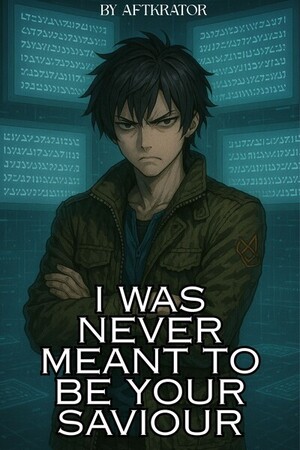
I Was Never Meant to be Your Saviour
The smoke had long since faded from the sky, but the stench of ash clung to my skin like guilt made manifest. Even within the protective embrace of the palace's ancient stone walls, I could hear the shouting outside, a relentless tide of voices that crashed against the fortress in waves of fury and despair. The city hadn't slept in three days. Neither had I.
The capital was safe. The intricate network of glyphic sabotage had been neutralized, each malicious sigil unraveled like a poisonous thread. The defensive wards held firm, their ethereal barriers shimmering with renewed strength. Victory, by any tactical measure.
But three outer villages had burned. Three communities reduced to ash and memory in the span of hours, their screams still echoing in the spaces between my thoughts.
And people wanted someone to blame. Someone with a foreign name and unfamiliar face. Someone who had made the choice to let them burn.
"Do not open the gates," Varis had ordered the guards this morning, his weathered hand gripping the battlements as he surveyed the growing crowd below. "Not yet." His voice was dry, more brittle than autumn leaves. I wasn't sure if that was age creeping through his bones or anger crystallizing into something sharp and cutting.
When he left me alone in the war room, I stared at the map spread before me like an accusation. Not just stared but glared, as if the parchment might suddenly develop teeth and bite me back for my transgressions. The cartographer's careful lines seemed to mock me, each village marked with such innocent precision, as if ink and paper could contain the weight of human lives.
Red pins still marked the locations of the towns we hadn't saved. I hadn't moved them, couldn't bring myself to touch those tiny markers of failure. Doing so felt like acknowledging something final, like closing a door I wasn't ready to seal. The pins caught the lamplight, gleaming like drops of blood against the pale vellum.
Liora hadn't spoken to me since the incident. Not a single word.
She had stood next to me in the command tent, her presence a steady warmth at my shoulder as we heard the same frantic reports, looked over the same impossible tactical options. The scrying mirrors had shown us everything in crystalline detail: the advancing corruption, the failing ward anchors, the precious seconds slipping away like water through our fingers. I hadn't expected her to agree with my decision, but I'd expected her to understand the mathematics of survival, the cold calculus that sometimes demanded sacrifice.
But when I gave the order to trigger the ward purge, knowing it would collapse the mana lines in the outer villages first, knowing it would cut them off from any hope of magical protection, she'd flinched as if I'd struck her. The sound she made was barely audible, a sharp intake of breath that might have been a gasp or might have been a sob.
When the scrying mirrors filled with flames, painting our faces orange with reflected destruction, she walked away. Simply turned on her heel and left me standing there with the weight of command and the taste of ash on my tongue.
Now, seventy-two hours later, she still hadn't returned. Her absence was a hollow ache in my chest, worse than the protesters' shouts or the nobles' whispered accusations.There was a knock at the door, sharp and purposeful.
"Enter."
It wasn't Liora. The disappointment hit me like a physical blow.
It was Varis. Again.
He stepped into the chamber with the subtle stiffness of someone for whom every joint carried too many years of faithful service, each movement a testament to battles fought and wounds endured in service to the crown. A bundle of scrolls was tucked beneath one arm like a quiver of paper arrows, each one aimed at my reputation.
"The Council is restless," he said without preamble, setting the scrolls down with deliberate care. "The nobles blame the crown for appointing you. The crown blames the mages for failing to predict the attack. The mages blame you for the collateral damage."
"That's not surprising," I said, my voice flatter than I intended. "I'm not from here. I don't have a faction to shield me or a bloodline to justify my actions."
He didn't sit, remaining standing like a sentinel delivering bad news. "You're building one, though. A faction, I mean. Whether you realize it or not."
I raised a brow, genuinely curious. "Is that meant to be reassurance?"
"No," he said, his tone carrying the weight of decades spent navigating political waters. "It's a warning. The kind of loyalty you're inspiring... it comes with a price."
He tossed the scrolls onto the table with more force than necessary. I let them unroll with slow deliberation, their contents spilling across the map like accusations made manifest. Complaints from merchant guilds. Reports from surviving villagers. Accusations from minor nobles seeking to curry favor with their superiors.
One of them was a manifesto, written in an elegant hand that spoke of education and privilege: 'Riku Aoyama is a weapon, not a guardian. He calculates lives like a merchant counts coins, weighing souls on scales of tactical advantage.'
I smirked, though there was no humor in it. "At least they're learning to spell my name correctly. That's progress, I suppose."
"They're gathering at the central square," Varis continued, ignoring my bitter jest. "Protesters, but organized ones. Led by representatives from the minor Houses: Sairen, Thorne, Maviel. They're calling for your removal."
"Are they actually angry," I asked, genuine curiosity coloring my tone, "or just using this tragedy to jockey for political position?"
Varis didn't answer immediately, and I realized that silence was answer enough. Both were true, as they always were in the labyrinthine world of court politics. Genuine grief twisted together with opportunistic ambition, creating something more dangerous than either emotion alone.
A shadow fell across the doorway, interrupting my brooding. I thought, hoped with desperate intensity, that it might be her. That Liora had finally come to argue with me, to rage at my choices, to do anything but maintain this suffocating silence.
But it was Captain Dren, his armor still bearing scorch marks from the recent battles. My shoulders sagged an inch, disappointment settling like lead in my stomach.
"Sir," he said, his voice carrying the exhaustion we all felt. "There's a disturbance at the main gates. They're pushing harder now, testing the guards' resolve."
"Hold them back," I ordered, the words coming automatically. "No casualties. These people are grieving, not truly threatening."
Dren nodded, then hesitated at the threshold. "Sir, we need a statement. From you. Something to calm the crowds, to explain..."
"I'm not a king," I said, the words sharper than intended.
"No," Varis interjected, his weathered face grave. "But you're starting to carry the weight of one. Whether you want it or not."
The truth of his words settled over me like a shroud, heavy and inescapable.
Later that day, I found Liora.
She was in the greenhouse on the upper terraces, a sanctuary of growing things suspended between earth and sky. Her hands were wrist-deep in arcane soil, coaxing delicate mana roots from dried vines with the patience of someone seeking to heal rather than harm. Her sleeves were rolled up past her elbows, her dark hair escaping its usual careful arrangement, and her cheeks were flushed with effort and concentration.
When she saw me approach, she didn't flinch, but she didn't smile either. The neutrality in her expression was somehow worse than anger would have been.
"You were right," I said without preamble, the words feeling like stones in my throat.
That got her to stop moving. Her hands stilled in the soil, and for a moment, the only sound was the gentle whisper of magical energy flowing through the growing plants around us.
"You knew it would cost too much," I continued, forcing myself to meet her eyes. "You saw what I was going to do, and you knew the price. But I made the call anyway."
"You didn't even look at me when you gave the order." Her voice was quiet, controlled, but I could hear the hurt underneath like a hidden blade.
"You looked at the map, the mirrors, the tactical displays. You calculated probabilities and weighed advantages. You never looked at me."
I didn't have a defense for that observation. "I was focused on the outcome. On preventing total catastrophe."
"And I was focused on the people," she whispered, finally pulling her hands free from the soil and wiping them on her work robes. "On the families in those villages, the children who would never grow up, the stories that would never be told."
Silence stretched between us like a chasm, fragile and dangerous. One wrong word and it would shatter completely, taking whatever remained of our partnership with it.
"I'm not angry that you chose to save the capital," she said, standing up slowly, her movements careful and deliberate. "The mathematics were clear, the choice logical. I'm angry that you didn't let yourself feel it. That you made a decision that would haunt you for the rest of your life and treated it like a chess move."
"I'm feeling it now," I said, and the admission felt like pulling a knife from my own chest."Good," she said, walking past me toward the greenhouse exit. Her shoulder brushed mine as she passed, and I felt the electric tingle of magical energy that always surrounded her. Not a parting, not yet. But not forgiveness either. "Because if you can't feel it, if you can't let it change you, then you're no better than the ones who set those traps in the first place."
I nodded once, understanding the truth in her words even as they cut deep. She paused at the doorway, her silhouette framed against the corridor beyond.
"The people need to see that their guardian bleeds," she said softly. "That their protector pays a price for protection. Otherwise, you're just another weapon pointed at their enemies."
That night, I left the palace for the first time in days.
No escort marched beside me. No herald announced my passage. Just a simple cloak pulled low over my head, the persistent smell of ash that seemed to follow me everywhere, and a desperate need to breathe air that didn't taste of sealed stone and accumulated failure.
I walked through the lower wards, where the capital's poorest made their homes in buildings that had seen better centuries. Their homes were untouched by flame, protected by the wards I had prioritized, but they were not untouched by loss. Grief hung in the air like smoke, visible in the slumped shoulders of men who had lost brothers in the outer villages, in the red-rimmed eyes of women who would never again embrace their sisters.
One girl sat by a gutter, no more than seven years old, cradling a scorched doll that someone had brought from the ruins. The toy's hair was singed away, its painted face blackened, but she held it like the most precious treasure in the world.
A man carved protective sigils into his doorframe again and again, the wood worn smooth from repetition, as if the act of creation could somehow keep the world's cruelty at bay. His fingers bled from the effort, but he didn't stop.
These people didn't know who I was, not really. Some looked at me with vague recognition, the kind that comes from seeing a face in passing or hearing a name whispered in taverns. Others looked at me with instinctive fear, perhaps sensing the magical energy that clung to me like an aura. One old woman even spat as I passed, her contempt crystal clear despite not knowing my identity.
I didn't stop her. Didn't correct her. Her hatred was honest, pure in a way that court politics never were.
Eventually, I reached the outskirts of the city, where the protective wards thinned and the natural leylines became visible as faint traceries of light in the gathering dusk. The magical energy here buzzed faintly, disturbed and corrupted by the recent attack. I knelt on the cobblestones and ran my hand over the worn stones, feeling for the lingering traces of hostile magic.
There were still echoes of sabotage embedded in the very foundations, like poison working its way through veins. But more than that, there were traces of interference that spoke of intimate knowledge, of someone who understood not just how the ward network functioned, but how I would respond to its failure.
Someone hadn't just wanted the wards to fail. They had known exactly how I would triage the crisis, how I would prioritize targets, how I would choose between competing necessities. They had counted on my pragmatism, my willingness to sacrifice the few for the many.
This wasn't random destruction or opportunistic sabotage.
This was a test. A carefully orchestrated examination of my character, my choices, my limitations.And I had performed exactly as predicted.
When I returned to the palace, Varis was waiting outside my chamber like a patient sentinel. His weathered face was thoughtful, his posture suggesting he had been standing there for some time."I was wrong," I said, brushing past him toward my door.
He followed, his footsteps echoing in the stone corridor. "About what?"
"This wasn't an attack on the kingdom or the ward network," I said, pausing at my threshold and turning to face him. "It was an attack on me. On my judgment, my methods, my willingness to make impossible choices."
He raised an eyebrow, his expression shifting from tired resignation to sharp interest."They're playing with my choices like a master manipulating pieces on a game board," I continued, feeling the truth of it settle in my bones. "Calculating my responses, predicting my decisions, forcing me into positions where any choice I make will cost lives."
Varis folded his arms across his chest, studying my face in the lamplight. "And that worries you?"
"No," I said, and for the first time in days, I felt clarity cut through the fog of guilt and self-doubt like a blade through silk.
I turned away from him, my jaw set with new determination.
"It angers me."
The capital was safe. The intricate network of glyphic sabotage had been neutralized, each malicious sigil unraveled like a poisonous thread. The defensive wards held firm, their ethereal barriers shimmering with renewed strength. Victory, by any tactical measure.
But three outer villages had burned. Three communities reduced to ash and memory in the span of hours, their screams still echoing in the spaces between my thoughts.
And people wanted someone to blame. Someone with a foreign name and unfamiliar face. Someone who had made the choice to let them burn.
"Do not open the gates," Varis had ordered the guards this morning, his weathered hand gripping the battlements as he surveyed the growing crowd below. "Not yet." His voice was dry, more brittle than autumn leaves. I wasn't sure if that was age creeping through his bones or anger crystallizing into something sharp and cutting.
When he left me alone in the war room, I stared at the map spread before me like an accusation. Not just stared but glared, as if the parchment might suddenly develop teeth and bite me back for my transgressions. The cartographer's careful lines seemed to mock me, each village marked with such innocent precision, as if ink and paper could contain the weight of human lives.
Red pins still marked the locations of the towns we hadn't saved. I hadn't moved them, couldn't bring myself to touch those tiny markers of failure. Doing so felt like acknowledging something final, like closing a door I wasn't ready to seal. The pins caught the lamplight, gleaming like drops of blood against the pale vellum.
Liora hadn't spoken to me since the incident. Not a single word.
She had stood next to me in the command tent, her presence a steady warmth at my shoulder as we heard the same frantic reports, looked over the same impossible tactical options. The scrying mirrors had shown us everything in crystalline detail: the advancing corruption, the failing ward anchors, the precious seconds slipping away like water through our fingers. I hadn't expected her to agree with my decision, but I'd expected her to understand the mathematics of survival, the cold calculus that sometimes demanded sacrifice.
But when I gave the order to trigger the ward purge, knowing it would collapse the mana lines in the outer villages first, knowing it would cut them off from any hope of magical protection, she'd flinched as if I'd struck her. The sound she made was barely audible, a sharp intake of breath that might have been a gasp or might have been a sob.
When the scrying mirrors filled with flames, painting our faces orange with reflected destruction, she walked away. Simply turned on her heel and left me standing there with the weight of command and the taste of ash on my tongue.
Now, seventy-two hours later, she still hadn't returned. Her absence was a hollow ache in my chest, worse than the protesters' shouts or the nobles' whispered accusations.There was a knock at the door, sharp and purposeful.
"Enter."
It wasn't Liora. The disappointment hit me like a physical blow.
It was Varis. Again.
He stepped into the chamber with the subtle stiffness of someone for whom every joint carried too many years of faithful service, each movement a testament to battles fought and wounds endured in service to the crown. A bundle of scrolls was tucked beneath one arm like a quiver of paper arrows, each one aimed at my reputation.
"The Council is restless," he said without preamble, setting the scrolls down with deliberate care. "The nobles blame the crown for appointing you. The crown blames the mages for failing to predict the attack. The mages blame you for the collateral damage."
"That's not surprising," I said, my voice flatter than I intended. "I'm not from here. I don't have a faction to shield me or a bloodline to justify my actions."
He didn't sit, remaining standing like a sentinel delivering bad news. "You're building one, though. A faction, I mean. Whether you realize it or not."
I raised a brow, genuinely curious. "Is that meant to be reassurance?"
"No," he said, his tone carrying the weight of decades spent navigating political waters. "It's a warning. The kind of loyalty you're inspiring... it comes with a price."
He tossed the scrolls onto the table with more force than necessary. I let them unroll with slow deliberation, their contents spilling across the map like accusations made manifest. Complaints from merchant guilds. Reports from surviving villagers. Accusations from minor nobles seeking to curry favor with their superiors.
One of them was a manifesto, written in an elegant hand that spoke of education and privilege: 'Riku Aoyama is a weapon, not a guardian. He calculates lives like a merchant counts coins, weighing souls on scales of tactical advantage.'
I smirked, though there was no humor in it. "At least they're learning to spell my name correctly. That's progress, I suppose."
"They're gathering at the central square," Varis continued, ignoring my bitter jest. "Protesters, but organized ones. Led by representatives from the minor Houses: Sairen, Thorne, Maviel. They're calling for your removal."
"Are they actually angry," I asked, genuine curiosity coloring my tone, "or just using this tragedy to jockey for political position?"
Varis didn't answer immediately, and I realized that silence was answer enough. Both were true, as they always were in the labyrinthine world of court politics. Genuine grief twisted together with opportunistic ambition, creating something more dangerous than either emotion alone.
A shadow fell across the doorway, interrupting my brooding. I thought, hoped with desperate intensity, that it might be her. That Liora had finally come to argue with me, to rage at my choices, to do anything but maintain this suffocating silence.
But it was Captain Dren, his armor still bearing scorch marks from the recent battles. My shoulders sagged an inch, disappointment settling like lead in my stomach.
"Sir," he said, his voice carrying the exhaustion we all felt. "There's a disturbance at the main gates. They're pushing harder now, testing the guards' resolve."
"Hold them back," I ordered, the words coming automatically. "No casualties. These people are grieving, not truly threatening."
Dren nodded, then hesitated at the threshold. "Sir, we need a statement. From you. Something to calm the crowds, to explain..."
"I'm not a king," I said, the words sharper than intended.
"No," Varis interjected, his weathered face grave. "But you're starting to carry the weight of one. Whether you want it or not."
The truth of his words settled over me like a shroud, heavy and inescapable.
Later that day, I found Liora.
She was in the greenhouse on the upper terraces, a sanctuary of growing things suspended between earth and sky. Her hands were wrist-deep in arcane soil, coaxing delicate mana roots from dried vines with the patience of someone seeking to heal rather than harm. Her sleeves were rolled up past her elbows, her dark hair escaping its usual careful arrangement, and her cheeks were flushed with effort and concentration.
When she saw me approach, she didn't flinch, but she didn't smile either. The neutrality in her expression was somehow worse than anger would have been.
"You were right," I said without preamble, the words feeling like stones in my throat.
That got her to stop moving. Her hands stilled in the soil, and for a moment, the only sound was the gentle whisper of magical energy flowing through the growing plants around us.
"You knew it would cost too much," I continued, forcing myself to meet her eyes. "You saw what I was going to do, and you knew the price. But I made the call anyway."
"You didn't even look at me when you gave the order." Her voice was quiet, controlled, but I could hear the hurt underneath like a hidden blade.
"You looked at the map, the mirrors, the tactical displays. You calculated probabilities and weighed advantages. You never looked at me."
I didn't have a defense for that observation. "I was focused on the outcome. On preventing total catastrophe."
"And I was focused on the people," she whispered, finally pulling her hands free from the soil and wiping them on her work robes. "On the families in those villages, the children who would never grow up, the stories that would never be told."
Silence stretched between us like a chasm, fragile and dangerous. One wrong word and it would shatter completely, taking whatever remained of our partnership with it.
"I'm not angry that you chose to save the capital," she said, standing up slowly, her movements careful and deliberate. "The mathematics were clear, the choice logical. I'm angry that you didn't let yourself feel it. That you made a decision that would haunt you for the rest of your life and treated it like a chess move."
"I'm feeling it now," I said, and the admission felt like pulling a knife from my own chest."Good," she said, walking past me toward the greenhouse exit. Her shoulder brushed mine as she passed, and I felt the electric tingle of magical energy that always surrounded her. Not a parting, not yet. But not forgiveness either. "Because if you can't feel it, if you can't let it change you, then you're no better than the ones who set those traps in the first place."
I nodded once, understanding the truth in her words even as they cut deep. She paused at the doorway, her silhouette framed against the corridor beyond.
"The people need to see that their guardian bleeds," she said softly. "That their protector pays a price for protection. Otherwise, you're just another weapon pointed at their enemies."
That night, I left the palace for the first time in days.
No escort marched beside me. No herald announced my passage. Just a simple cloak pulled low over my head, the persistent smell of ash that seemed to follow me everywhere, and a desperate need to breathe air that didn't taste of sealed stone and accumulated failure.
I walked through the lower wards, where the capital's poorest made their homes in buildings that had seen better centuries. Their homes were untouched by flame, protected by the wards I had prioritized, but they were not untouched by loss. Grief hung in the air like smoke, visible in the slumped shoulders of men who had lost brothers in the outer villages, in the red-rimmed eyes of women who would never again embrace their sisters.
One girl sat by a gutter, no more than seven years old, cradling a scorched doll that someone had brought from the ruins. The toy's hair was singed away, its painted face blackened, but she held it like the most precious treasure in the world.
A man carved protective sigils into his doorframe again and again, the wood worn smooth from repetition, as if the act of creation could somehow keep the world's cruelty at bay. His fingers bled from the effort, but he didn't stop.
These people didn't know who I was, not really. Some looked at me with vague recognition, the kind that comes from seeing a face in passing or hearing a name whispered in taverns. Others looked at me with instinctive fear, perhaps sensing the magical energy that clung to me like an aura. One old woman even spat as I passed, her contempt crystal clear despite not knowing my identity.
I didn't stop her. Didn't correct her. Her hatred was honest, pure in a way that court politics never were.
Eventually, I reached the outskirts of the city, where the protective wards thinned and the natural leylines became visible as faint traceries of light in the gathering dusk. The magical energy here buzzed faintly, disturbed and corrupted by the recent attack. I knelt on the cobblestones and ran my hand over the worn stones, feeling for the lingering traces of hostile magic.
There were still echoes of sabotage embedded in the very foundations, like poison working its way through veins. But more than that, there were traces of interference that spoke of intimate knowledge, of someone who understood not just how the ward network functioned, but how I would respond to its failure.
Someone hadn't just wanted the wards to fail. They had known exactly how I would triage the crisis, how I would prioritize targets, how I would choose between competing necessities. They had counted on my pragmatism, my willingness to sacrifice the few for the many.
This wasn't random destruction or opportunistic sabotage.
This was a test. A carefully orchestrated examination of my character, my choices, my limitations.And I had performed exactly as predicted.
When I returned to the palace, Varis was waiting outside my chamber like a patient sentinel. His weathered face was thoughtful, his posture suggesting he had been standing there for some time."I was wrong," I said, brushing past him toward my door.
He followed, his footsteps echoing in the stone corridor. "About what?"
"This wasn't an attack on the kingdom or the ward network," I said, pausing at my threshold and turning to face him. "It was an attack on me. On my judgment, my methods, my willingness to make impossible choices."
He raised an eyebrow, his expression shifting from tired resignation to sharp interest."They're playing with my choices like a master manipulating pieces on a game board," I continued, feeling the truth of it settle in my bones. "Calculating my responses, predicting my decisions, forcing me into positions where any choice I make will cost lives."
Varis folded his arms across his chest, studying my face in the lamplight. "And that worries you?"
"No," I said, and for the first time in days, I felt clarity cut through the fog of guilt and self-doubt like a blade through silk.
I turned away from him, my jaw set with new determination.
"It angers me."




Please sign in to leave a comment.