Chapter 1:
Chapter 1 Hirugawa.
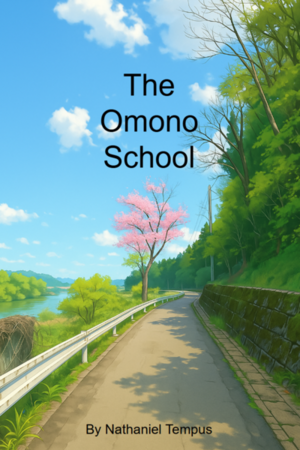
The Omono School
I awoke to a hazy silence. Not the buzzing of refrigerators, not the hum of cars, not the muffled chatter of a television in the next room. Just silence. The kind that feels unnatural, as though the world itself was holding its breath. As I became increasingly aware of my surroundings I noticed a few things. First my head felt split open like somebody had swung a pickaxe at it, On the other hand my limbs felt heavy as if they were made of lead and my mouth was dry as if I had swallowed dust. As I woke up further I took note of my surroundings.
The sheets were crisp and the air faintly smelled of antiseptic, and I was lying on a bed similar to one you would find in a hospital however. The room I was in didn't seem to be a full hospital. It felt more like a blurry memory of a place I have seen before but in the state I was in I couldn't quite come up with the word.
I sat up slowly, my heart pounding. But my mind was becoming clear. As the effect of the tranquilizer continued to wear off, a voice called from outside of the room.
“Good afternoon, Daniel Bay.”
The voice was smooth, authoritative, and kind. I turned to see a tall man walking towards me. His hair was a silvery grey and his posture impeccable. His presence filled the room like water in a glass.
“Who are you?” I managed.
“My name is Headmaster Ichirō Takeda, and you, Daniel, have been recruited.”
I blinked. “Recruited? For what?”
He took a step closer. “For the work of a lifetime. You are to be trained as a professional time traveler.”
I laughed, though it came out more like a nervous bark. “This is insane. You don’t just… ‘recruit’ someone to travel through time.”
“You still don’t believe me.”
I began to get out of bed. “Of course I don’t believe you. I woke up in some… place after being shot with a dart. For all I know, you’re just some psycho who—”
But Takeda had already turned away. Without a word, he crossed the room and drew open a pair of heavy curtains.
And what I saw left me speechless.
Outside stretched a town unlike any I’d ever seen. Slanted rooftops of weathered tile caught the midday sun, each one glinting like a shard of old glass. Beneath them, white plaster walls leaned close together, their narrow gaps forming streets that wound like quiet veins through the heart of the town. And beyond it all rose the mountains tall, silent silhouettes wrapped in pale mist. They stood like sentinels watching over the valley, their shadows stretching down into the streets, touching the rooftops as if to remind the town of their presence.
Takeda opened the window, letting in a cool draft before turning back to me. “This is Shimoyashiki, a district in what used to be the town of Hirugawa. Now it’s part of Daisen, a city you’ve never visited, in a part of the country you’ve never lived in… and yet, here you are.”
I looked out toward the rooftops and the distant line of the mountains. “This is no dream. No illusion. It's just reality.”
I pressed my hand against the window frame, half-expecting it to dissolve beneath my fingers. And for a moment, I wanted to argue, to tell him that something about this place had to be a dream, that the colors were too soft, the air too still, the silence too perfect. But the weight of the sunlight, the smell of rain still clinging to the earth, the ache in my legs from walking, the wind carrying faint laughter from the streets. Everything conspired against that thought. This was no illusion.
“Why me? Why was I chosen for this?”
Takeda only smiled. “That will become clear in time.”
The Streets of Hirugawa & ShimoyashikiLater that afternoon, I was handed a small allowance of ¥1000 and a set of compact devices: an earpiece, a microphone, and a pair of sleek smart glasses.
“It will translate for you,” Takeda explained. “Any language. Instantly. Consider it your first tool.”
I tested it with the secretary. Her Japanese poured out in rapid bursts, but in my ear, her words flowed in perfect English. When I replied, my speech transformed seamlessly into Japanese through the small microphone.
Then, with the equipment tucked neatly into place, I stepped out into Shimoyashiki.
The streets of Shimoyashiki were imbued with a calm and relaxed aura: shopkeepers offloading the next day's goods from trucks, a stray cat grooming himself in the setting sun, and the Omono River glistened beautifully in the afternoon light.
But what struck me most wasn’t the city itself, it was the people.
There were too many young faces. Teenagers and twenty-somethings crowded the streets, far more than would be expected in a rural town that couldn’t have held more than a few hundred residents. And many of them, about a quarter, weren't Japanese. I saw pale skin and dark skin, hair in every shade, a group of girls speaking German, Two boys laughing in French and a trio of Africans chatting in Swahili.
The translation device kept up, filtering the noise into English, but the strangeness of it all pressed into my mind. For a moment I wondered what if this wasn't Japan? What if they built a stage? In search of answers I approached a boy standing beside a vending machine. His hairstyle gave him away instantly, He was unmistakably a Banchō, defiant even when relaxed.
“Are you a local?”
The Banchō looked at me with a confused expression before muttering. “No, I just got here from Tokyo. But I've got a question for you: have you seen my friend?”
“I don't know. I've seen quite a lot of people today. What does he look like?”
“Well he is a bit shorter than me but has a similar hairstyle.”
“I'm sorry to say but I'm afraid I haven't seen him. I'll tell you if I find him.”
He nodded curtly and moved on, vanishing into the crowd.
As I continued walking, the world felt increasingly unreal, like a dream that stubbornly insisted on following the rules, right up until it didn’t. So when I stumbled over a cinder block abandoned in the middle of the road and watched my wallet burst open across the pavement, it somehow felt inevitable. Just one more absurdity in a day full of them.
A woman nearby hurried over to help me gather my things. She looked slightly older than me somewhere in her early twenties, and carried the calm, steady presence of that teacher everyone trusts instantly. But when she picked up my ID, her expression shifted. Her brow creased. “You look a bit young for someone seven years older than me,” she said, confusion twisting into concern.
It took me a second to understand. Then I remembered the fake ID. “Oh, that one? Yeah, not real. Someone at my old job gave it to me.”
Her brows furrowed. “Who gave you this? And… how old are you, actually?”
“Sixteen,” I said, pulling out my real one. “I was born on the 12th of March 2007”
She examined it. “You’re still older than me….. by about two years,”
She looked at it, then at me, incredulous. “That doesn’t make sense. I’m twenty-one, born May third, 2009.”
I stared at her. “Then you should be fourteen.”
She looked me dead in the eye. “I was. Back in 2023.”
We stood there, staring at each other as the wind rustled through the trees.
“Check your phone,” she said quickly.
We both pulled them out. Mine still ran on my North American network — Friday, November 10th, 2023, 19:33. Hers connected to the local network. The screen showed something else entirely: May 4th, 2022, 17:49.
We exchanged no more words. None were needed.
As I continued down to the quiet streets of Hirugawa, I decided it was best to try and get to know as many people as possible. After all, anyone here could be a future classmate or someone who might know more than they let on.
I was passing an abandoned bookstore, its windows dusty and cracked, when I noticed someone moving inside. She had blonde hair that caught the sunlight in soft streaks and stood around 165 centimeters tall. Her clothes were old and worn, fraying at the cuffs and hem, but she carried herself with an ease that made the tattered fabric seem intentional.
Before I could speak, she muttered without turning.
“Didn’t expect to see another English title here.”
Then she turned toward me, eyes sharp and curious.
“The name is Alice… Alice Taylor.”
I nodded, brushing a stray lock of hair from my face. “I’m Daniel Bay. I’m not from around here, either. But it seems like anyone under the age of twenty-nine doesn’t really belong in this town.”
She gave a small, almost wry smile, tilting her head to glance at the bookstore’s faded sign. “Funny, I was thinking the same thing about the people who do belong here.”
I shifted my weight, glancing at the cracked windows and faded titles stacked haphazardly inside. The building had a quiet melancholy to it, a stillness that seemed to press against the air around us. It was the kind of silence that made conversation feel both necessary and awkward.
Then she adjusted the strap of her bag and nodded toward the direction of the school. “You’re one of the students, aren’t you? Omono School.”
I nodded.
“Then we’ll probably see each other again,” she said, stepping past me toward the road. “People like us always do.”
“Probably.” As she walked away, I watched her silhouette shrink down the narrow lane. steady, unhurried.
After that encounter I became curious about how the locals were reacting to the sudden influx of foreigners and students. I stopped at a small convenience store — a weathered 8/11, its sign flickering in the evening light. An elderly man stood behind the counter, humming softly as he restocked shelves. I bought a tuna sandwich and, after a moment’s hesitation, asked him in Japanese, “What do you think of all these new people?”
He chuckled, deep and dry. “At first, I thought it was nonsense. Then I saw how polite most of them were. Not like those kids on the internet. They don’t cause trouble; they’re just confused.”
That word stuck with me: confusion.
It described everything I was feeling.
As the sun set, the Headmaster met me at a quiet street corner and led me to a modest building with narrow hallways and clean floors.
“This will be your apartment during training,” Takeda said. “You will find it simple but sufficient. Remember, you are responsible for maintaining the apartment and we expect to receive it from you in the same condition we gave it to you. Also, your orientation begins tomorrow.”
I stepped inside. The apartment was small — a single room, thin mattress, wooden desk, narrow balcony. It was spartan but peaceful. My suitcase was already waiting for me.
Just before leaving, the headmaster turned back to me.
“Due to a logistical delay, the school uniforms won’t be arriving until Friday,” he said. “In the meantime, we ask that you wear formal clothing. For you specifically, I’d recommend your grey suit and tie.”
When the door closed behind him, the silence that followed felt almost deliberate. I sat there for a moment, trying to process everything. I began to replay the events of the past week in my mind, the wallet, the phone, the interview, the dart. Now this. Japan. A “time travel organization.” A headmaster who spoke as if reality itself bent to his will.
It felt like a dream but it had to be real. The mountains outside the window were real. The cherry trees were real. The voices on the street were real.
But time travel?
I sat upright and looked across the room before saying to myself “Finally, I'm out of that dumpster fire sitcom my parents call Paradise.” I was free from what had been forced on me and I felt I finally got out of that prison.
As I turned off the light, I caught my reflection in the dark window, and for the first time, the person staring back at me didn’t wish not to be seen. Then I walked back across my room, crashed onto my bed, and slowly drifted off to sleep.




Please sign in to leave a comment.