Chapter 9:
Epi.2-Note: Ghosts in Japan, Joint guarantors
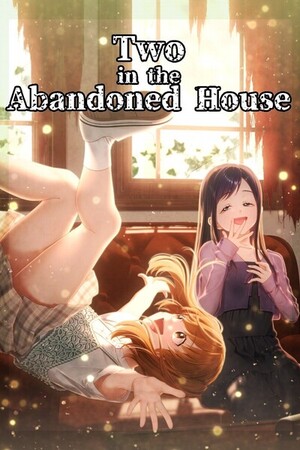
Two in the Abandoned House
・Ghosts in Japan
In this story, the main characters Sayuri and Shinobu are ghosts—but they look and talk just like ordinary people.
You might be wondering, “Are all Japanese ghosts like this?” The answer is no.
This is a creative interpretation unique to this work.
Ghosts began appearing widely in Japanese art and stories during the Edo period (1603–1868).
One especially influential image came from the 18th-century artist Maruyama Ōkyo, whose painting Ghost Figure (Yūrei-zu) depicted a woman with no legs—a spectral figure that has since become the iconic look of a Japanese ghost.
The idea of a "legless ghost" has remained a staple in Japanese horror ever since, deeply ingrained in pop culture and media.
That said, modern creators often move beyond traditional depictions.
Many freely reimagine ghosts in ways that fit their own artistic style—including me.
Ghosts in Japanese folklore come in many forms.
In this story, Sayuri is a wandering ghost (fuyūrei) who can travel wherever she likes, while Shinobu is a bound ghost (jibakurei), tied to a specific location.
For her, that’s the abandoned house where the story takes place.
And these are just two of many kinds of spirits in Japanese lore.
For example, there’s the shikijōrei—the ghost of someone who died with unresolved sexual desires.
These spirits are said to appear in dreams or tempt the living into inappropriate behavior.
Believe it or not, stories like these go all the way back to the Heian period (794–1185), where they appeared in erotic literature and folklore.
You’ve got to hand it to our ancestors—they were committed.
Then there are onryō, vengeful ghosts who died harboring deep resentment and return to curse the living.
On the opposite side, there are shugorei, guardian spirits who protect their descendants.
And let’s not forget the creepy concept of the ikiryō—a “living ghost” formed from someone’s overwhelming emotions like jealousy or hate, which can manifest and act independently of their body.
Famous Japanese horror films like Ring and Dark Water draw heavily on these traditional ghost types and themes.
In the story, Sayuri and Shinobu also strike the classic “ghost pose”—arms held out front, elbows bent, and wrists dangling.
This familiar image in Japan is often accompanied by the sound effect “hyuu-doro-doro...” and the phrase “urameshiya~” (a spooky, drawn-out “I curse you~”).
This theatrical version of a ghost became widely recognized between the Meiji era (1868–1912) and the Showa era (1926–1989), and it’s still used today in children’s media and ghost-themed comedy.
It’s not meant to be truly frightening—just a fun, exaggerated nod to traditional ghost imagery.
・Joint Guarantors
In the story, there’s a moment where Misaki says she can’t rent an apartment because she doesn’t have a guarantor.
This reflects a real and uniquely Japanese system known as the joint guarantor (rentai hoshōnin).
A joint guarantor isn’t just someone who steps in after the renter fails to pay.
In Japan, they are equally liable from the very start.
Legally, the landlord can go after the guarantor before even trying to collect from the renter.
This system isn’t just used for rent—it also appears in loans, credit cards, and business deals.
And here’s the real kicker: the risk is massive.
Here’s a classic plot setup in Japanese fiction:
A character agrees to become a guarantor for a friend or relative.
“Don’t worry—I’ll pay it all,” the borrower promises.
Then the borrower vanishes without a trace.
Suddenly, the guarantor is on the hook for the entire debt—which has ballooned to several times its original amount thanks to compound interest and shady lenders.
The guarantor loses everything: job, home, future.
It’s a well-worn storyline in Japanese manga and dramas, especially in genres dealing with crime, debt, or social downfall.
Series like Minami no Teiō, Yamikin Ushijima-kun, and Naniwa Kin’yūdō have all explored this theme.
In short, the joint guarantor system is perfect for setting up a character’s tragic fall.
Just mentioning it is enough for a Japanese audience to feel a chill.
When I was a kid, I saw TV dramas where a character’s life was destroyed after becoming a guarantor.
Every time, my parents would say the same thing:
“Whatever you do, never agree to be a guarantor.”
Even without legal knowledge, most people in Japan know this system is dangerous.
Of course, in real life, guarantors are usually close family—like a parent or spouse.
And those predatory lenders charging outrageous interest? They’re mostly fiction.
Probably.
Still… even if there were zero interest, I’d never agree to be a guarantor.




![Parallel in Two [Saga Cover]](https://honeyfeed-novel-images.s3.amazonaws.com/uploads/novel_image/file/19959/cover_thumb_b4b8f013-ea32-4c39-83f9-8361adc49b89.jpeg)

Please sign in to leave a comment.