Chapter 33:
Epi.7-Note: Isshōbin - Japanese Counting Units
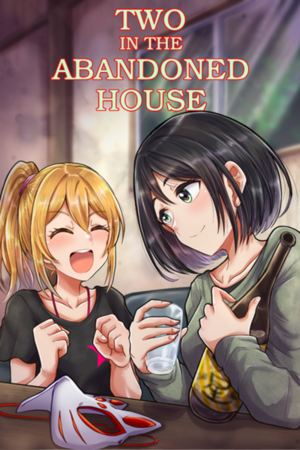
Two in the Abandoned House
In the story, the word isshōbin appears.
This refers to a large glass bottle used for sake.
Ichi means “one,” shō is a unit of measurement, and bin means “bottle.”
In other words, it’s “a bottle that holds one shō of liquid,” and most often that liquid is sake.
There are a few cases where a number, a unit, and an object fuse into a single word like this, but they’re extremely rare.
In modern Japanese, the ones you’ll commonly hear are isshōbin (1.8L bottle), yongōbin (720ml bottle), and ittokan (18L can).
Incidentally, the first two are containers for sake.
Now, some of you may be thinking:
“Wait— isn’t the unit for sake shō?”
You’re absolutely right, but there’s also gō.
One shō equals 1.8 liters, and one gō equals 180 milliliters.
In other words, one shō = ten gō.
When the sake is poured into a cup, though, the unit changes.
At that point, it’s counted as hai (cupfuls).
So today, let’s dive into the world of Japanese counting units— a subject guaranteed to throw Japanese learners into utter confusion.
First, animals.
The standard unit is hiki.
That works for all animals, but when the animal is large, the unit switches to tō (head).
Fish are counted with hiki while they’re alive, but once they become food, the unit changes to bi (tail).
And in the case of giant tuna, they can even be counted with hon (long objects).
Birds, on the other hand, are counted with wa (literally “feathers”).
And yes— rabbits are also counted with wa.
The most widely accepted theory is that this comes from the practice of disguising rabbit meat as poultry in order to get around dietary restrictions.
In creative works, you sometimes see psychopathic characters who view humans as prey.
Ordinarily, people are counted with nin (“one person, two people”).
But these characters deliberately use hiki instead, to dehumanize them— a quick linguistic way to show they’re unhinged.
Next, vehicles.
The general unit is dai.
Airplanes and helicopters are counted with ki.
Ships are traditionally sō for small vessels and seki for large vessels or warships, though in recent times seki has become the standard.
Japan also has tatami mats.
When you count tatami mats themselves, the unit is mai.
But when you describe the size of a room, the unit becomes jō.
Conveniently, both are written with the same character, 畳, though the reading changes.
In fact, Japanese rooms are measured in jō even if no tatami mats are actually laid down.
But here’s the catch: the size of a tatami mat varies by region and building type.
You might be wondering, “Why?”
Well— so are the Japanese.
Other units are based on shape.
Long, thin objects use hon (like pencils or bottles).
Flat, thin objects use mai (like paper or plates).
And while it’s not exactly a unit, in Japan you’ll often hear area described as “X times the size of Tokyo Dome,” the country’s first domed baseball stadium.
But don’t worry if you can’t picture it— most Japanese people can’t either.
After all, very few actually go out of their way to visit the stadium, and even fewer have bothered to memorize its floor area.
Changing the subject, let’s talk about ramen— increasingly popular worldwide.
Ramen is counted in hai (bowls), just like sake in cups.
A clump of noodles is counted as tama (balls).
Of course, sometimes you’ll also see grams used instead.
And the noodles themselves, as strands, can be counted with hon (long objects).
Of course, there are many more: shoes, kimono, and so on, each with their own special unit.
But as long as you get the unit for “person” (nin) right, you won’t offend anyone too badly.
Just remember— never count people with hiki. Not even as a joke.
So, was there any particular unit or counting word here that caught your attention?
If you’re unsure about how to count something in Japanese, feel free to ask!





Please sign in to leave a comment.