Chapter 24:
Alignment Without Agreement
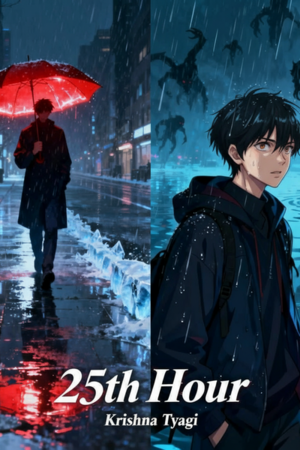
25th Hour
The street behind the café sloped downward, narrow and half-forgotten. It wasn’t a main road. Too uneven for buses, too inconvenient for shortcuts. The kind of place people ended up only if they already knew where they were going — or if they were trying not to be seen. The buildings leaned in close, brick and concrete stained by years of rain that never quite washed anything clean. Old posters peeled from the walls in layers, advertising events that had already happened, bands that had already broken up, promises that had already expired.
Someone had tried to scrape one down recently. The paper was torn halfway, glue exposed beneath like a scab picked too early. The date printed on it was last year. Maybe older. It was hard to tell which parts had faded naturally and which had been rubbed away by hands that kept coming back.
Two figures walked there in opposite directions. They didn’t look at each other at first.
One wore a light jacket despite the lingering warmth of the afternoon, hands buried deep in the pockets like he was cold or like he didn’t trust himself to leave them free. His steps were measured but not stiff. He moved the way someone does when they’re counting things without realizing it. Not numbers. Beats. Gaps. The distance between footsteps.
The other carried a canvas tote slung low on one shoulder. The fabric sagged under too much weight, seams stressed in places that had been repaired once already. Whoever owned it had stitched it themselves. The thread didn’t match. Someone who reused things longer than they should. Someone who hated throwing things away, even when it would’ve been easier.
Their footsteps fell out of sync. Not dramatically. Just enough that the echo changed. Then without comment they matched pace. Neither acknowledged the adjustment. Neither looked relieved or surprised. It wasn’t a decision. It was muscle memory. This was how it always started. Not with recognition, not with surprise. With alignment. With bodies deciding before minds caught up. They passed a narrow side door with a rusted handle. Someone had wedged a receipt into the frame like a bookmark. It fluttered when they walked past.
“Feels noisier lately,” the one in the jacket said.
The tote carrier didn’t answer right away. He adjusted the strap on his shoulder. “Cities do that. They echo when people stop pretending they didn’t hear something.” The jacket man exhaled. “They weren’t supposed to hear this.”
“Nothing ever stays where it’s supposed to.”
The jacket man exhaled through his nose. “That’s what I was afraid of.”
“You’re always afraid of something,” the other said, not unkindly. They passed beneath a broken streetlight. It flickered once, twice, then settled into a weak, uneven glow that made their shadows stretch too long across the pavement. The shadows didn’t quite match their movements. There was a delay. Just a fraction of a second. Not enough for most people to notice — unless they were already looking for it.
The tote carrier glanced down without moving his head. Just a flick of the eyes. Then he looked forward again. “You think that’s smart?” the jacket man asked. The tote carrier shrugged, shifting the weight on his shoulder. “No.”
A beat.
“I think it’s inevitable.”
They walked another half block before either of them spoke again. Somewhere nearby, a metal shop shutter rattled in the breeze, sharp and hollow. A stray cat darted between trash bags, paused, then disappeared under a parked car as if it had never been there. The jacket man flinched — not at the cat, but at the sudden silence after it vanished.
The jacket man slowed a fraction. “Everyone still breathing?” The question didn’t sound morbid. It sounded administrative. Like checking inventory at the end of a shift.
“For now.” The answer came too quickly. Too smooth.
The jacket man slowed by half a step. Not enough to break alignment, but enough to test it. The tote carrier noticed immediately. He always did. “That won’t last.” The tote carrier didn’t disagree.
Another pause. Longer this time.
“You sound hopeful.”
“I sound realistic.”
The jacket man snorted quietly. “Those aren’t the same thing.”
“They are when you’ve seen enough,” the tote carrier said.
They reached the corner. Traffic cut between them, scooters weaving through cars, a delivery truck coughing exhaust as it lurched forward, horns blaring without urgency or direction. The alignment broke naturally, like it had never existed in the first place. Before turning away, the tote carrier stopped. “Careful.” The jacket glanced sideways, just enough to acknowledge him. “About what?”
“Hunters are getting impatient.”
A faint smile tugged at the jacket’ man's mouth. It didn’t reach his eyes. “I’m not afraid of hunters.” The tote carrier didn’t answer immediately. He watched a cyclist struggle up the incline, wobble, then steady. “You should be.” They turned in opposite directions and disappeared into different parts of the city, swallowed by motion, noise, and people who had no idea how close they were to something they’d never see coming.
Later — much later, or maybe just later enough that it felt like a different day. The convenience store near the station hummed under fluorescent lights. It smelled faintly of disinfectant and burnt coffee.
A middle-aged man stood near the drink fridge, staring too long at the same row of bottles. Not confused. Not indecisive. Just waiting. His hand hovered near the door handle, opening it slightly, letting cold air spill out, then closing it again like he’d forgotten why he’d opened it in the first place. Every time the door shut, he rubbed his palm against his jeans. At the counter, a college boy leaned back against the glass display, scrolling through messages with one thumb. He laughed once, quietly, then stopped himself and glanced around like laughter might’ve been inappropriate here.
The cashier sat on a stool behind the register, half-watching a drama on her phone. She glanced up every few seconds, more out of habit than concern. The automatic doors slid open. Another customer entered.
Late twenties. Neat hair. Clean shoes. The kind of person who looked like they belonged anywhere and nowhere in particular. His posture was relaxed, casual in a way that felt practiced rather than natural. He hesitated just inside the door, long enough for the sensor to threaten to close again, then stepped forward. He picked up a basket. Wandered the aisles. Paused where people usually paused. Didn’t rush. Didn’t pretend to browse either. Stopped beside the man at the fridge.
“Strange weather,” he said casually.
The man blinked, like he’d been pulled back into his body. “Huh? Oh. Yeah. Guess so.”
The newcomer nodded, like that answered something. He reached for a bottle, studied the label, then put it back exactly where it had been. “Feels like it lingers,” he said.
“That’s the humidity.”
“Is it?”
The man hesitated. Just long enough. His fingers tightened on the fridge handle. The door fogged faintly. “You were out late,” the newcomer said. Same tone. Same volume. No accusation. The man swallowed. His shoulders stiffened — not visibly, not dramatically. Just enough. “…You too.”
“I work nights.”
“That so?”
“Someone has to.”
They moved toward the counter together, baskets light. The cashier scanned items without looking up. The beep of the scanner felt too loud.
“You move like someone who didn’t sleep,” the newcomer said. Voice lowered now, buried beneath the hum of the fridge and the soft buzz of the lights overhead. The man closed the fridge door harder than necessary. “It’s a station store. Nobody sleeps near stations.”
“Some people sleep fine,” the newcomer said. “They just don’t remember where.” The man stared at the glass for a second too long. “You buying something, or just talking?” The receipt printed with a shrill whine. “After that,” the newcomer said, “people start lying. Mostly to themselves.”
“And if they’re bad at it?”
The newcomer smiled. “They don’t last.”
The man risked a glance. “And you?” The newcomer met his eyes calmly. Unflinching. “I prefer not to rush decisions.” Outside, they parted without goodbye. The man stood there for a long moment after, staring at the automatic doors as they slid shut. His reflection warped in the glass stretching, compressing — before settling back into something recognizable. He left his drink unopened.
Near the river, the lantern hunter waited.
He didn’t call himself that. None of them did. Labels made things solid. Solid things could be traced, named, dismantled. He leaned against the railing, arms resting comfortably, posture loose. Anyone watching would have assumed he was killing time. Waiting for someone. Killing a few minutes before heading home.
He wasn’t waiting for a person.
Residual always behaved strangely near water. He’d learned that early. Learned it the hard way. Learned it the night someone didn’t come back and nobody asked why. A couple passed behind him, laughing softly, shoulders brushing. He didn’t turn. He felt them anyway — the echo, the afterimage. They hadn’t been there. Not really. Not in the way that mattered.
He checked his watch. Late. Or early. Footsteps approached. Slow. Unhurried. Someone stopped beside him. “You checked?”
The hunter nodded once.
“That’s how mistakes start.”
“Mistakes start earlier than that.”
The other leaned forward, elbows on the railing. Younger. Quieter. Still undecided in the way people were before they committed to a side. “You didn’t intervene.”
“I didn’t need to.”
“That’s not what you said before.”
The hunter shrugged. “Before was before.” They stood in silence, watching the river pull the city apart and put it back together wrong. “You think they’ll organize?” the younger one asked.
“They already are.”
“Against us?”
The hunter turned his head slowly. “There is no ‘us.’ That’s the mistake you’re making.” The younger one frowned. “Then what are we?” The hunter looked back at the water. “Temporary.” The word sat heavy. “Observers say we shouldn’t interfere,” the younger said after a while. “That it changes outcomes.”
“Observers say a lot of things.”
“They think watching keeps them clean.”
The hunter snorted softly. “Nothing about this is clean.”
A pause.
“Someone’s going to get clever,” the younger one said. The hunter didn’t look at him. “They always do.”
“And?”
“And we clean it up.”
By evening, the university steps were empty. By night, the café had closed. But conversations lingered. They lingered in half-sent messages never sent, in glances held too long, in people waking at 3 a.m. with the sense that they were late for something they couldn’t name.
Observers noticed patterns. Hunters noticed opportunities.
The 25th Hour didn’t announce itself. It never had. It slipped between routines. Between certainty and doubt. Between people who wanted answers and people who were already choosing sides. Some would watch. Some would act. And some — without realizing it yet, had already crossed lines they wouldn’t be allowed to step back over.













Please sign in to leave a comment.