Chapter 25:
The Line You Cross Twice
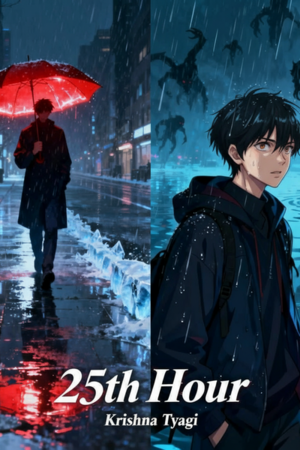
25th Hour
Evening settled without ceremony.
The city didn’t announce it. There were no sirens, no dramatic shift in the sky, no moment people could point to later and say that was when it started. Light simply thinned, the way it did when someone stopped paying attention to a room and forgot to turn the lamp back on. Shadows stretched without intention, pulling longer than they should have. Colors dulled a half-shade too early, like the world had quietly lowered its saturation.
Shop signs flickered on one by one, not because darkness demanded it yet, but because routine said they should. Habit was faster than instinct. A ramen place near the university pulled its shutters down an hour early. Inside, chairs were stacked with more care than usual, metal legs scraping softly against tile. The owner wiped the counter twice, then a third time, slowing between motions, cloth hovering just above the surface as if he were listening for something he couldn’t hear.
He felt watched. So did everyone else. No one lingered. Regulars drained their cups without savoring the last sip. Conversations ended mid-sentence, trailing off instead of resolving. A laugh started and then died halfway through, embarrassed to exist. People left without looking back, shoulders slightly hunched, steps quicker than necessary.
Something had shifted after the street emptied. Not dramatically. Not enough to point at. Enough to feel.
The parking structure behind the medical complex held onto the heat of the day like a grudge. Concrete walls trapped it, releasing it slowly, turning the air thick and stale. Old rain mixed with oil and rust clung to the ground. Fluorescent lights buzzed overhead, spaced unevenly, leaving long pockets of shadow between parked cars.
The structure seemed to breathe— not rhythmically, but irregularly, like lungs that had forgotten the pattern. No one used the lower levels unless they had to. He slowed halfway down the ramp. Not because someone called his name. Not because he heard footsteps. Because the signal didn’t line up. His phone vibrated once in his hand. The sound felt too loud in the enclosed space. The timestamp read 7:12 p.m. He didn’t need to check the second display cause he already knew what it would show. Still, he did, thumb hovering for half a second before tapping.
The residual marker lagged behind. Fifty-six seconds.
He stared at it longer than necessary, as if concentration alone might force it to behave. Last week, that difference would’ve meant nothing. A glitch. A calibration error. A quirk of the system that someone would log and forget. Tonight, it felt deliberate. Like a fingerprint left somewhere it didn’t belong.
He checked again. Still wrong.
“Still off?” a voice asked from behind him.
He didn’t turn. His shoulders tightened first, then relaxed. “Worse.”
The other man came into view only after that, walking close to the wall, steps light and measured. He moved like someone accustomed to being ignored, like someone who had learned the exact speed required to pass through crowds without being noticed. Mid-thirties. Clean shirt. Work bag slung over one shoulder. A face you’d struggle to describe five minutes later, even if you tried.
“That makes three,” the second man said quietly. “Same variance.”
The first man nodded once and swiped through a list on his phone no labels, no icons, just names and timestamps stacked too neatly. The absence of information was intentional. Less to leak. Less to remember.
Three mismatches. Two repeated entries. One name appearing in places it shouldn’t.
“The problem isn’t that he talked,” the first man said. His voice wasn’t angry. It wasn’t disappointed either. It was precise, like a diagnosis. “It’s that he talked twice.”
“Once could’ve been panic.”
“Twice is intent.”
They stood there longer than necessary, letting the structure breathe around them distant engines passing overhead, tires humming against concrete, electricity straining through old wiring. Somewhere, a car alarm chirped once and then died, as if reconsidering.
“What level?” the second man asked.
“Internal.”
The word settled between them.
A pause.
“That’s inconvenient.”
“Yes.”
Inconvenient was the word they used when something crossed from unfortunate to unavoidable.
Across the river, in a library that stayed open late because no one remembered to change the hours, an Observer sat alone at a long table. The building smelled faintly of dust and old paper, the kind of smell that clung to clothes long after you left. The overhead lights cast a pale, even glow over rows of books no one touched anymore.
She wasn’t reading. She was listening.
The recorder on the table wasn’t obvious. It didn’t need to be. Residual bled through walls more easily when people were tired, when the day loosened its grip and vigilance slipped. Her fingers moved steadily across the tablet, cataloguing the bleed like weather data — detached, thorough, necessary.
Timestamp. Location. Deviation. A soft chime marked the entry complete. “You’ve seen it too,” someone said, pulling out the chair opposite her without asking. She didn’t look up. “Everyone has.”
“Hunters won’t wait.”
“They never do.”
The other Observer leaned back, folding his arms. The chair creaked softly beneath him. “If we intervene—”
“We become part of the outcome,” she said, flatly, without looking up.
“And if we don’t?”
She paused then, fingers hovering over the screen. Finally, she looked up. Her expression wasn’t cold. It was exhausted. “Then we record what happens.”
“That’s still a choice.”
“Everything is.”
He studied her face, searching for hesitation. “You’re comfortable with this?”
“No.” She looked back down at her screen. “Comfort has never been the metric.”
Outside, the river caught the city lights and broke them into trembling lines, pulling them apart and stitching them back together wrong.
He noticed the change first in people’s eyes. Not hostility. Not suspicion. Absence. The convenience store clerk didn’t meet his gaze when he paid, fingers trembling just slightly as she handed back the change. Her smile was automatic, detached from her eyes. At the bus stop, a man shifted away from him by half a step, as if avoiding a draft. Conversations dipped as he passed, laughter cutting off like someone had pressed pause and forgotten to resume.
He told himself it was paranoia.
He checked his phone again. Fifth time in ten minutes. No new messages. The thread he’d started earlier sat untouched. Delivered. Read. No reply. “You’re fine,” he muttered, adjusting his jacket, tugging the zipper higher than it needed to be. “You’re fine.” He’d survived the Hour. More than once. That had to mean something. The streetlights flickered on as he crossed the plaza, their glow too harsh, bleaching color from the stone beneath his feet.
He counted exits without meaning to. Alley. Stairwell. Station entrance. Too many. Too open. He slowed near the edge of the square, pretending to check directions. His reflection stared back at him from a darkened storefront window. It lagged. Half a second. He stepped back. The reflection followed late. His heart didn’t slow down. It thudded harder, louder, filling his ears.
He thought about the things he’d said. Who he’d said them to. He’d been careful. Strategic. Knowledge was currency, wasn’t it? Everyone wanted answers. Everyone was desperate. Information moved faster when people were afraid.
He hadn’t betrayed anyone. He’d just… diversified.
The storage room beneath the closed gym smelled like dust and rubber mats. The walls were bare concrete, scarred where old equipment had scraped against them. The fluorescent lights hummed overhead, steady and unforgiving, casting shadows that didn’t soften no matter where you stood.
Two figures waited inside. No pacing. No whispering. They didn’t rehearse. They never needed to. When the door creaked open, they looked up at the same time. He froze in the doorway, breath catching sharply in his throat.
“I—I didn’t think—” His voice cracked immediately, betraying him before he could steady it.
“You crossed twice,” one of them said. That was all. No accusation. No anger. The sentence didn’t need embellishment.
“I was trying to help,” he said too quickly, words tumbling over each other. “I thought if I understood both sides—”
“Understanding isn’t the issue,” the second Hunter said, stepping forward.
The first raised a hand. The second stopped. Silence settled, thick and absolute. The fluorescent light flickered once, then steadied, as if the room itself had decided to behave. “This is internal,” the first Hunter said. “You know the rule.”
His mouth opened. Closed.
Slowly, he nodded. They moved with efficiency that bordered on mercy. One Hunter checked his wrist device, confirming identity and alignment. The other positioned him beneath the light, hands firm but not rough.
The lantern activated with a low click. Residual snapped into alignment.
He gasped. It wasn’t pain — not at first. It was pressure. Like every thought he’d ever had was being forced into the same second, compressed until there was no room to breathe. His knees buckled. One Hunter caught him before he hit the floor, lowering him carefully, almost respectfully. Cold.
That was the first real sensation. Cold spreading from his chest outward, sinking into bone, into places warmth had never reached. His breath came sharp and uneven. “Wait—”
The lantern flared. Residual peeled away. His scream cut off halfway through, throat locking as if the sound itself had been confiscated. His eyes rolled back, body jerking once. Twice. Then going horrifyingly still.
The Hunters didn’t look away. They watched until the last tremor faded. No pulse. Clean. The lantern shut off. For a moment, no one spoke. Then one Hunter exhaled. “Confirmed.” The other nodded and began resetting the device.
Later, much later, the plaza looked the same.
A janitor hosed down a patch of concrete near the gym entrance, humming softly to himself. Water pooled, reflecting the streetlight for a second, then drained away. A faint dark stain lingered, then disappeared under the spray.
People passed without slowing. In the library, an Observer marked the entry complete. In the parking structure, a Hunter deleted a file. Somewhere between worlds, the 25th Hour waited. Not hungry. Not patient. Just there. And in the quiet space between evening and night, people lay awake wondering why their thoughts felt heavier, why survival suddenly felt conditional.
The rules hadn’t changed. They had only become visible.












Please sign in to leave a comment.