Chapter 2:
Before the City Wakes
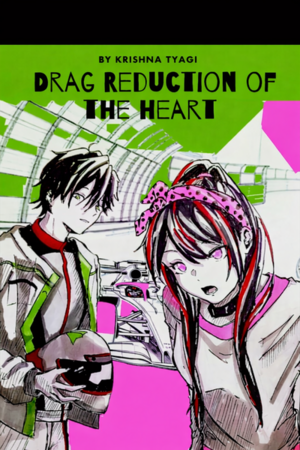
Drag Reduction of the Heart
Tokyo was still half-asleep when Clara Neumann opened her eyes. Not the deep kind of sleep — Tokyo never truly slept — but the softer layer before trains began to argue with the morning and crosswalks filled with intent. The hour where streetlights hummed to themselves and convenience stores felt like quiet islands of light. Her alarm hadn’t gone off yet. It never needed to.
Clara reached for her phone, thumb moving without looking, and silenced an alarm that still had six minutes left. The screen lit up her face briefly — pale blue glow, familiar notifications, the same routine every morning.
Three clocks sat at the top of her screen. Tokyo. Berlin. Silver Coast Circuit Time. She stared at the last one for a second longer than necessary. Then she got up. Her apartment was small, efficient, and tidy in the way that came from habit rather than effort. Nothing was out of place because nothing ever stayed unused. A jacket hung over the back of a chair. A notebook lay open on the kitchen counter, a pen resting exactly where she’d left it the night before.
The kettle clicked on. Clara leaned against the counter while it heated, tying her hair back into a low ponytail. One crimson streak slipped free at first, stubborn as ever. She tucked it in, then let it be when it fell loose again.
Some things weren’t worth fighting.
She poured coffee into a mug she’d owned since university, white, chipped at the rim, and took one distracted sip before setting it down. Steam rose. She forgot about it almost immediately. Her laptop was already open on the table. Graphs filled the screen. Sector deltas. Tire degradation curves. A timeline scrubbed with annotations only she seemed to understand at a glance. She scrolled, eyes sharp despite the early hour, fingers already moving to make small adjustments.
Weather probability had shifted overnight. She made a note. Clara had learned to wake before the city because races never waited for anyone. By the time she stepped into the team headquarters, the building was alive. Not loud, not yet but alert. Screens glowed along the walls, looping telemetry from simulations run through the night. Engineers stood in small clusters, coffees in hand, voices low but purposeful. Someone laughed softly at a joke she didn’t catch.
“Morning, Neumann.”
“Morning.”
She nodded to people as she passed, receiving the same in return. No one rushed to her. No one hovered. They didn’t need to. They trusted her. Clara slid into her chair in the strategy room and set her bag down, pulling out her notebook. It was old-fashioned compared to the tech around her — thick paper, dog-eared corners, margins filled with tiny arrows and shorthand. She flipped to a blank page and, without looking at any screen, drew a rough outline of the circuit they’d be racing that weekend.
Long straight. Heavy braking zone. Tricky exit. She shaded the corners lightly, then added arrows for wind direction. Only then did she look up. “All right,” she said calmly. “Let’s start with tire behavior from the long runs.”
A screen shifted at her request.
An engineer pulled up the data. “Degradation’s worse than predicted on the medium compound. Front-left’s dropping off a cliff after lap sixteen.” Clara nodded. “Expected. Track temp’s climbing faster than forecast.”
Someone else leaned forward. “We thinking early stop?”
“Not yet,” Clara replied. “If we box too early, we’ll be vulnerable in the middle stint.” She tapped her pen against the notebook once. Twice.
“What if we extend?” someone asked.
“We can,” she said. “But only if we manage traffic cleanly. Otherwise we burn the tires fighting.”
Silence followed — not awkward, just thoughtful. She watched their faces, reading understanding as it settled. “Let’s simulate both,” Clara continued. “Primary plan stays conservative. Alternate if there’s a safety car between laps ten and fourteen.”
A pause.
Then a quiet chorus of agreement. “Got it.”
“I’ll run it.”
“No problem.”
Clara leaned back slightly, eyes on the screens as new data populated. She didn’t smile. She didn’t frown. Her focus was complete, contained. This was where she belonged. When she was younger, she used to watch races on a small television, legs folded beneath her, asking too many questions at once. Why did he pit now? Why not later? Why did that car lose time even though it looked faster?
Now, those questions were her job. And the answers mattered.
The feed switched to highlights from last weekend’s race while the next simulation loaded. Clara hadn’t asked for it. She almost ignored it.
Almost.
The car on screen dove aggressively into a corner, braking late, too late, some would argue — correcting mid-turn with a sharp flick that shouldn’t have worked. But it did. The commentator’s voice cut in, animated.
“—another bold move from the German driver. He’s known for pushing the limits early—”
Clara’s eyes narrowed. She leaned forward slightly. The replay ran again from a different angle. The same moment. The same decision. The car twitched under braking, caught itself, and shot out of the corner faster than expected. Instinctive. Risky. Effective. She watched without blinking.
“Thoughts?” someone asked, glancing at her.
Clara didn’t answer immediately.
“Who’s that?” she asked instead.
“Kingston,” the engineer replied. “Jonas Kingston. Germany’s golden boy, according to the media.”
Clara nodded once. Her gaze stayed on the screen. Golden boy. The replay ended. The screen shifted back to data. Conversation moved on. But something in her chest tightened, not painfully, not sharply — just enough to make her aware of it. She wrote nothing down.
The day passed in structured fragments.
Meetings. Adjustments. Revisions. Clara spoke when needed, listened when it mattered, and corrected mistakes without raising her voice. When someone challenged her call, she explained it calmly. When someone agreed too quickly, she asked them why. Lunch happened somewhere in the middle, though she barely remembered eating. Her coffee from the morning sat cold and forgotten back at her desk. By evening, the building had thinned out. Clara packed her bag and left with the last of the daylight, stepping into a city that had fully woken without her noticing.
Tokyo at night felt different from the morning — louder, brighter, heavier. Neon reflected off glass and wet pavement. Crowds moved with purpose, weaving past one another like practiced choreography. She walked home instead of taking the train. Halfway there, she stopped at a crosswalk and pulled out her phone. The race replay thumbnail stared back at her. She hesitated. Then tapped it. The video loaded as she walked, volume low. The city blurred around her while the track came into focus. She watched the opening laps without much interest — positioning, clean driving, nothing unusual.
Then came the corner. That same one. She slowed her pace. Watched the move again. Still aggressive. Still on instinct. Still slightly reckless in a way data alone couldn’t teach. Clara stopped walking altogether. She replayed it one more time. Her mind tried to analyze it, braking pressure, steering input, tire condition, but another thought slipped in, uninvited.
A boy counting too fast. A race starting before “three.” Her fingers tightened around the phone. She closed the video before the finish. The city noise rushed back in, sudden and overwhelming. Clara stood there for a moment longer, then slipped the phone into her pocket and continued walking, heart beating just a little faster than before.
She didn’t know why. Only that something old had stirred — not a memory exactly, not a feeling she could name. Just unease. And the quiet sense that distance, no matter how carefully maintained, had a way of shortening itself.
Somewhere, a race continued without her watching.
Clara walked on, unaware that the path she and Jonas had started years ago was bending again, slowly, inevitably — toward the same stretch of the road.













Please sign in to leave a comment.