Chapter 4:
What Friday Allows
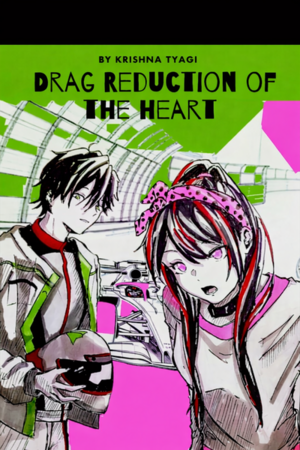
Drag Reduction of the Heart
Jonas landed in Tokyo when the city was already awake. From the airplane window, it didn’t look like a place that slept at all, just a different kind of alertness. Neon cut through the dark in clean, deliberate lines. Trains slid between buildings with a smoothness that felt practiced rather than rushed. Nothing blinked for attention. Everything simply worked. Germany had always felt heavy to him. Solid. Grounded. Tokyo felt sharper. Like it expected you to keep up.
The cabin lights came on. Seatbelts clicked. Around him, passengers stood in orderly motions, already prepared, already done with waiting. When Jonas stepped out of the terminal, that sense of precision stopped being visual and became physical. There was no shouting. No overlapping instructions. No rush that felt like panic. People moved with purpose, but never collided. Signs were clear. Lines flowed.
Credentials were checked with brief nods, scanners beeping softly before handing things back without comment. Luggage appeared exactly where it was meant to, as if the city itself had memorized everyone’s plans. Jonas adjusted the strap of his backpack and followed the team through the terminal. His headphones rested around his neck, silent. He usually played music the moment his feet touched foreign ground — something loud enough to drown out everything else. This time, he didn’t.
He didn’t need to. His thoughts were already too active, too awake. One of the mechanics walked beside him, eyes flicking around with open curiosity. “This place is… different,” he said quietly, as if speaking too loudly might break something.
Jonas nodded. “Yeah.”
They passed through sliding doors that opened without hesitation, the air outside cooler than he expected. The city greeted them without ceremony — cars moving in disciplined lanes, pedestrians crossing with quiet efficiency, not a single horn cutting through the evening.
“This place runs like a stopwatch,” the mechanic muttered, half impressed, half unsettled. Jonas glanced around again, taking it in properly this time. “Makes you feel slow just standing still.” The mechanic let out a short laugh. “Careful. That’s not something you usually admit.” Jonas smiled faintly but didn’t reply. He wasn’t sure if it was a joke or an observation.
The drive to the hotel didn’t feel long, even though it should have. Streets folded into each other seamlessly, lights reflecting off glass and metal, the city revealing itself in layers rather than noise. Jonas rested his head against the window for a moment, watching it pass. Somewhere in the distance, he knew the circuit was there — quiet now, empty, waiting. He could almost sense it, like a held breath. The hotel stood close to the track. Too close, maybe. As they stepped into the lobby, Jonas felt that familiar pull in his chest, the one he always got when a race weekend truly began. Not excitement. Something sharper. Focus, maybe. Or expectation.
“Unpack quick,” the team manager said, checking his watch. “Briefing in twenty.”
There was no big welcome dinner that night. No speeches about opportunity or pressure. No attempt to lighten the mood. Everyone gathered in a small briefing room, still in jackets, some standing, some leaning against the table. Coffee cups were already in hands. Laptops glowed quietly.
The race engineer spoke without raising his voice. “Tomorrow’s FP1 is about understanding the car. Not lap times. Not headlines. We learn. We listen.”
He paused, letting the words settle.
“FP2 will give us direction. But tomorrow morning — no hero laps.”
A few people nodded. Someone scribbled notes they already knew by heart. Jonas nodded too. He always did. He didn’t comment. His eyes drifted, just for a second, toward the far wall where the circuit map was pinned. Tokyo’s layout stared back at him —tight sections, deceptive corners, lines that punished impatience. He straightened slowly. The city outside was still moving. Quiet. Precise. And Jonas had the uneasy sense that this weekend wouldn’t allow him to be anything else.
Friday morning arrived earlier than Jonas wanted it to.
He woke before his alarm anyway. For a few seconds, he didn’t move. Just stared at the ceiling, eyes tracing a faint crack he hadn’t noticed the night before. His body already felt awake in a way that had nothing to do with rest. There was no grogginess, no hesitation — just a quiet readiness, like something inside him had flipped a switch on its own. He exhaled slowly, swung his legs off the bed, and sat there for a moment longer than necessary. Outside, the city was already moving. Somewhere beyond the buildings, the track was too.
Jonas stretched, rolled his shoulders, then pulled on his team gear piece by piece. The routine was familiar enough that he didn’t need to think about it. Shirt. Jacket. Shoes. He checked the time but didn’t check his phone. Messages could wait. This couldn’t. Downstairs, breakfast was quiet. A few team members sat scattered across the room, half-focused on food, half on screens. Jonas grabbed a coffee he barely tasted and stood near the window instead of sitting. One of the junior engineers glanced up.
“You sleep at all?” he asked. Jonas shrugged. “Enough.” The engineer smiled like he’d heard that answer a hundred times. “That’s a driver’s ‘no,’ right?” Jonas smirked but didn’t correct him.
The ride to Suzuka passed in near silence. Not an awkward one — just the kind that came when everyone knew what the day was for. Jonas watched the scenery blur past, hands folded loosely in his lap, replaying nothing and everything at once. The paddock felt different the moment he stepped into it. Not louder. Not quieter. Just… tighter. Suzuka didn’t open itself up the way European tracks did. Everything felt closer together, even the air. The walls seemed nearer, even where there were none. Paths twisted slightly instead of running straight. The morning air carried a faint mix of damp asphalt and old rubber — sharp enough to catch in the back of his throat when he breathed too deeply.
“Feels like the track’s watching you here,” one of the mechanics said as they walked.
Jonas glanced sideways. “Yeah. Like it remembers mistakes.”
The mechanic laughed softly. “You planning on making any?”
Jonas didn’t answer right away. Then, “Not today.”
FP1 didn’t begin with urgency. It began with patience. In the garage, movements were quiet and methodical. Tools were placed, not tossed. Radios crackled briefly, then went silent again. Jonas stood near the car as the engineers talked through the plan — fuel loads, run lengths, what they wanted to feel rather than see.
“This is about balance,” the race engineer said, meeting Jonas’ eyes. “Not lap time.”
Jonas nodded. “I know.”
“We’re watching steering input and tire temp. If something feels off, you say it.”
“I’ll say it,” Jonas replied, already half elsewhere.
He climbed into the car, lowering himself carefully into the seat as the mechanics guided him in. The belts tightened across his shoulders and waist, one by one, snug but familiar. Someone tapped the halo lightly before stepping back, a habit more than a necessity.
Inside the cockpit, the world narrowed.
The car did feel smaller here. Or maybe Suzuka just demanded more of it. Jonas wrapped his fingers around the steering wheel, flexing them once, then again. He took a slow breath, feeling the air move through the helmet.
“Radio check,” the engineer said. “Loud and clear,” Jonas replied. “Alright. Let’s ease into it.”
The engine came alive beneath him, vibrating through his spine. As he rolled out of the garage, Jonas kept the speed gentle, letting the tires warm gradually. Corners approached differently here — faster than they looked, sharper than expected.
“How’s the front?” the engineer asked after the first sequence.
“Neutral,” Jonas said after a moment. “Maybe a bit light through the esses.”
“Copy. We see it.”
He didn’t push. Not yet. FP1 wasn’t for proving anything. It was for listening to the car, to the track, to the way Suzuka answered back when you asked too much. And Suzuka, Jonas realized quickly, answered honestly.
The first lap was slow. Deliberately boring.
He weaved gently down the straights, warmed the tires, tapped the brakes. Suzuka unfolded ahead of him — flowing, technical, honest. No room for pretending.
“Brakes feel okay,” Jonas said. “Steering’s light in sector one.”
“Copy. Data matches.”
On lap three, he pushed. Not hard. Just enough. The car came alive through the Esses, left-right-left like a held breath. Jonas smiled inside his helmet despite himself.
“Grip’s decent,” he said. “Rear’s stable.”
“Watch the front-left,” the engineer replied. “Temps are climbing.”
“Noted.”
He ignored it a little. By the time FP1 ended, Jonas was P3. It meant nothing. He climbed out of the car as engineers swarmed in, plugging cables, removing bodywork. Jonas stepped back, helmet under his arm, listening.
“Long-run data’s messy,” someone said.
“He’s fast, but the drop-off—”
“We expected that.”
Jonas leaned against the wall, sipping water.
“You always expect that,” he said casually. A mechanic grinned. “Doesn’t mean we like it.” Jonas shrugged. “I don’t like being slow.” That earned a few laughs.
FP2 came later, under a heavier sky.
This one mattered more. Fuel loads were higher. Runs were longer. Mistakes lingered. Jonas headed out again, visor down, focus narrowing. The track felt different now, more alive, less forgiving. “Okay,” the engineer said. “We’re going long this run. Pace yourself.”
Jonas didn’t respond immediately.
Lap after lap passed. The car slid more. Not dangerously. Just enough to remind him it was there.
“Front-left’s gone,” Jonas said after lap eight.
“We see it.”
“Exit traction’s suffering.”
“Copy. Keep it clean.”
Jonas tightened his line instead. The lap times told the story clearly. Fast at first. Then not. When he returned to the garage, the mood was quieter. No shouting. No frustration. Just screens and numbers. FP2 times went up. Jonas was P5. Again, meaningless. But the long-run charts told something else. He noticed it without anyone pointing it out.
A rival car — steady. Predictable. Annoyingly consistent.
“Who’s that?” Jonas asked, nodding at the screen.
“Our main rival this weekend,” an engineer replied. “Their strategy desk is strong.”
Jonas watched the lines again. No spikes. No drama.
“They’re patient,” he said.
“Yeah.”
Jonas exhaled. “That’s dangerous.”
The engineer smiled faintly. “Only if you let it be.”
Media came next. Jonas stood under artificial lights, microphones angled up toward him. The questions were predictable. “Jonas, you looked quick but inconsistent today. Is that a concern?”
“It’s Friday.”
“Your long-run pace seemed to fall off—”
“Everyone’s learning. Some faster than others.”
“Do you think Suzuka demands more discipline than instinct?” Jonas tilted his head slightly. “Instinct is discipline. You don’t survive this long without it.”
That ended the press conference nicely. Back in his room that night, Jonas replayed FP2 onboard. The same corner caught his eye again. Entry speed fine. Exit… compromised. He paused the footage. This time, he didn’t look away immediately.
Instead, he imagined easing off. Just a little. He shook his head and shut the screen down. Saturday was coming. And with it, judgment. But for now, Friday had done its job. It hadn’t told him how fast he was. It had told him what the car was willing to forgive. And what it wasn’t.












Please sign in to leave a comment.