Chapter 1:
Kiriguchi
The Hero of the Mist Tragedy
Satoshi
I was at the window, as I had been most nights for the better part of a year, watching the mist wall. From this distance, at this hour, the mist that had taken the kingdom revealed almost nothing: a blackness the stars did not enter. The bed in my room had made its argument and lost. Some part of me had stayed on the far side of that blackness, and some nights the window was as close as the rest of me could get.
***
The next morning the mist was still visible from the inn’s upper window if you knew where to look, a pale wall standing at the head of the valley where the land folded upward and the road gave out. By daylight it looked almost gentle, a bank of morning fog that had forgotten to burn off. I had stopped telling people what it actually was. They found out soon enough on their own, usually from someone who had lost a father or a flock to it, and by then nothing I said improved the lesson.
It had been very close to a year. Close enough that the old women in the market had started saying so out loud, counting the days on their fingers as if marking a mourning period. Nobody had agreed yet on which day to call the anniversary.
The day the sky over the capital had gone wrong. The day the roads filled with everyone who could still walk. The day the mist stopped behaving like weather and started behaving like something else.
Any of the three would do. I did not keep count myself.
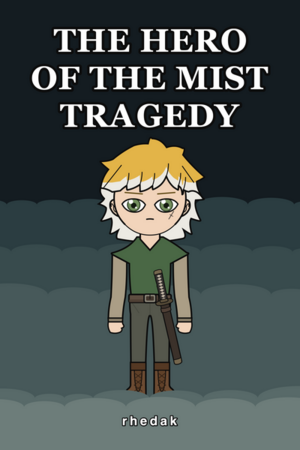
I came back to the inn later than I should have, the common room already a quarter full and the fire already burned lower than I’d left it. A gust caught the loose ends of my hair, blonde at the crown fading paler toward the tips, and pushed a strand against the old scar along my jaw. I tucked it back without thinking about it.
Kiriguchi at that hour was mostly smoke and roosters and the gray light that came off low cloud, the kind of morning that asked nothing of anyone. That made it easier to explain where I’d been than it should have been.
A few of the older households had marked Kasumizuki’s turn already, days back by my own count if not the district’s. A strip of pale paper knotted to a doorpost. A bowl of first water left out overnight and tipped away before sunrise, so no patrol would ask what it had been for. Nothing large enough to draw a second look.
The old new year did not exist on any ledger a Wodensreich clerk would recognize. The village kept it as it kept most things it still valued: quietly, mostly indoors, and never where the wrong person might ask what the fuss was about.
“There you are, Satoshi,” Chiyo said, in the tone of a woman keeping a tally and no intention of telling me the total. She stood behind the counter as always, sleeves pushed to the elbow, copper-red hair scraped back under a kerchief, amber eyes already busy with something else. She ran the inn the way some people run a small, well-loved country: firmly, and with the conviction that everyone in it was secretly grateful to be told what to do.
“Off wandering again. I had Kenzo half convinced you’d gone for water from the good well, and even he stopped believing it before you’d been gone an hour.”
“It’s barely busy this time of day anyway.” I took the tray out of her hands before she could pass it to someone slower.
“That’s not an answer, and you know it isn’t one.” She held my eye a moment longer than the question needed, the look she gave a bill she’d decided not to argue over. I was grateful for it and hated that I was grateful. “Go on, then. Kenzo’s window table wants its bread before it’s cold enough to complain about.”
I had barely set the first mug down at that table when someone stepped up behind me, one of the cart drivers waiting out the checkpoint delay. He hadn’t said a word yet.
I only felt him arrive at my shoulder, and before I had decided to do anything at all, my body had already turned to meet it. Weight dropped low. One hand moved on its own, closing on empty air at my hip. There was nothing there to find. I learned that a half-second after my hand did.
The cart driver stepped back, both hands lifting, more startled than offended. “Easy. I only wanted to know if the kitchen had anything besides bread going.” Whatever had been on my face before I caught it, I never saw, and no one who did offered to describe it to me afterward. I let my shoulders drop and my hand open.
“Sorry,” I said. “Bread’s what there is, if that suits you.”
He took it, and the moment passed like most moments in that common room did, forgotten by the time the next round wanted pouring. I went back to the kitchen still feeling that same absence at my hip, and did not stay to ask myself why. My weight stayed low through the rest of that circuit. I only caught myself at it when I reached for the flour and found my feet still set for a second approach that never came.
Inside, the fire wanted building up, and the flour wanted measuring. The Brandt boy, gap-toothed and gangly, outgrowing his shirts faster than his mother could let them out, came by for his mother’s bread and left, unsatisfied about the price of it as always.
I noticed, somewhere between the fire and the flour, that I had marked exactly where he was standing in the room the whole time without deciding to. I had learned the rhythm of the place inside of a season, who wanted to be agreed with, who wanted to be left alone; a habit like that one, I had not noticed learning.
By midmorning the common room had its usual population. Two cart drivers.
A Wodensreich clerk named Dieter, thin and perpetually damp about the collar, who came in for his watered ale at the same hour every day and complained about the posting that had brought him to a place like this.
And old Kenzo, weathered the color of the oak sill he sat at, who held the window table from breakfast until dark. He called the village by its old name in a voice pitched to carry, like a man who has decided which battles are still worth losing.
“Kiriguchi,” he said to no one, apropos of nothing, the way he said it four or five times a day. “Not that anyone official troubles to spell it that way anymore.”
Dieter never lifted his eyes from his cup. “It’s Nebelmark on the district ledgers. Has been since the reorganization. I don’t set the ledgers, old man, I only copy them.”
“I know what you copy.” Kenzo said it without heat, an old argument worn smooth from handling. “I am only telling the room what the water tastes like where I was born. A man can still say that much.”
“More ale before you’re back to Nebelmark business, Dieter?” I asked. “Wouldn’t say no,” he grunted, not looking up from his cup. When I refilled Kenzo’s cup a moment later I asked him, in the same breath, whether Kiriguchi’s baker meant to raise his prices again before winter. “Every year around this time,” Kenzo said, eyes still on the road. “He’ll tell you it’s the flour. It’s never the flour.” Neither of them seemed to notice I had used a different name for the same place to each of them inside a minute.
I was carrying a tray past the window shutters when the scar along my jaw pulled tight, a small hot flare I felt a half-breath before I understood why.
Nobody else in the room noticed anything change. Dieter went on with his ale, and Kenzo kept watching the road, same as every day, and Chiyo was somewhere in the back arguing gently with a delivery boy about the weight of a sack of flour.
Then the air coming through the gap in the shutter turned, for perhaps three seconds, into something with a mineral edge to it, cold and faintly metallic, like a coin held too long in a closed fist. Underneath that was a second smell I did not have a clean word for: sweet, the kind spoiled things are before they are anything else.
It was gone before I had set the tray down, and the scar’s small heat went with it. The ordinary woodsmoke and yeast smell of the common room closed back over both like water over a dropped stone.
I latched the shutter a little tighter than the draft strictly required, catching, for the half-second before the wood met the frame, my own reflection in the dark glass: pale jade-green eyes, a scar. Then it was gone, and I went back to the tray, one hand brushing the line of the scar without my having decided to.
***
Evening came down over Kiriguchi quick and gray. Kenzo had not moved from the window in some hours, which was not unusual. What was unusual was that he sat frowning at something on the road that was not, as far as I could tell, actually there yet.
“Someone’s posted a notice at the district board,” he said. “Dieter’s clerk friend was up putting fresh paper over the old one an hour past. Official seal on it, the round one, not the town seal.”
“People post things,” I said, and took his cup before he could ask twice for more ale he had already had enough of.
“Not usually with two soldiers standing over the man while he does it.” He turned from the window at last, and there was something in his face I did not often see there, the flat, unhopeful attention he otherwise saved for weather that meant to be bad. “They’re sending someone into the valley, lad. That’s the shape of it. First time since it happened. I’d wager the district’s whole grain allowance on it.”
By then the light outside had gone the flat pewter it turned every evening this time of year, the kind that made the whole village look like it was remembering something rather than living it. Chiyo had banked the fire and sent the cart drivers off to their delayed cargo and was counting the day’s coin at the counter with the particular satisfaction of a woman who liked her totals to come out even.
Her coin-counting did not pause, but I noticed that it did not resume at its previous pace either. “Into the mist? What in the Kami’s name would anyone want in there.”
“What anyone from the Empire ever wants,” Kenzo said, and did not finish the thought, which was its own kind of answer.
I found that I had gone on drying one cup for longer than a cup needs drying, and set it down.
Something in me had gone very quiet and very still, the way water goes still right before it decides whether to freeze or simply sit cold a while longer. The road outside the window had gone suddenly, uselessly clear to me, every rut and puddle in it.
I could not have said, standing there with the dry cloth in my hand and Chiyo’s coins clicking behind me, which of the two it was. I only knew that some part of me that had been asleep for the better part of a year had just opened one eye, and was waiting.
I want back in. I let myself think it in exactly those plain words, once, then glanced at Chiyo before I buried it again with the rest of what I did not examine too closely. I felt her eyes on the back of my head, and did not turn.
“Well,” I said, and put the cup away. “I suppose we’ll know soon enough.”










Please sign in to leave a comment.