Chapter 4:
No Reason to Be Worried
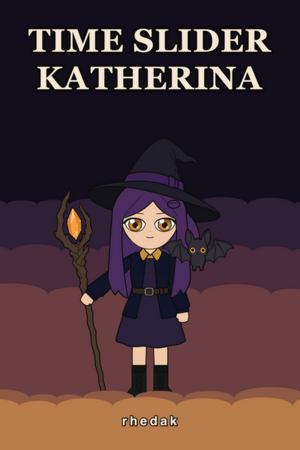
Time Slider Katherina
On a schedule older than I was, the steering committee met four times a year. It met a fifth time, six days after Professor Sikorska filed a formal request I hadn’t known she was allowed to file, over a rift the two of us had already closed ourselves.
I was seated at the end of a table long enough that I had to half-turn to see either parent arrive, and the chamber was smaller than I’d pictured. My hat sat on the table in front of me, brim toward the committee, which I’d been told was respectful and suspected was merely traditional.
My mother came in first, on time, already seated before the second hand finished its circuit. My father arrived precisely at the hour itself, which for him was its own kind of statement, dressed for court, not for a committee room, silver climbing into hair a shade of brown mine had never been, and he greeted three separate people by name and title before he so much as looked in my direction. Nobody on the committee had thought to ask whether a sitting Baron should be voting on his own daughter’s conduct. Or if they had, nobody had thought the answer mattered enough to enforce.
The director I knew only by reputation before that morning: a small, unhurried woman with a genuine talent for making a room feel like it had already been mostly decided before anyone sat down.
The committee’s chair called the session to order in a voice that kept catching on itself, an old man, white-haired, who reminded me, immediately and uncomfortably, of Master Wenzel, except he’d made no effort at all to hide the fact that he was already going bald. “We’re convened,” he said, to the room rather than to anyone in it, “regarding a rift incident reported by Professor Sikorska six days ago.” He said it stiffly, already bracing for someone to correct him.
Professor Sikorska went first, and went briefly, laying out what there was to lay out: the rift, its size, the two of us closing it together, the flickers Kou had been tracking for weeks beforehand that nobody but Kou had noticed. She did not mention that I’d nearly lost my grip on it before she’d stepped in. I noticed the omission and decided, for the length of exactly one grateful breath, not to examine why she’d made it.
“What the committee needs to understand,” she went on, “is what a rift like this actually is. Most people go their whole lives having heard of one and never seeing one. Of the ones who do, most see a blur, gone in a second or two, closed over so cleanly it’s easy to convince yourself afterward you imagined it. What Katherina and I closed together was neither of those things.”
The chair leaned forward, visibly interested for the first time since the session had opened. “How long, precisely, would you say the rift remained—”
“I don’t think the committee requires a minute-by-minute account of a seam that’s already sealed.” My father said it lightly, the tone he’d use on a waiter who’d gotten an order wrong, without glancing at the chair. The chair sat back and didn’t finish the question.
“My daughter,” he said, to the room rather than to me, “has a well-documented talent for making sure something remarkable happens exactly when people are looking.” He didn’t glance at me on “remarkable.” That was, somehow, worse than if he had. “I’d ask the committee to weigh Professor Sikorska’s account against her own history of overdramatizing student incidents before we schedule a sixth extraordinary session over a repaired seam.”
He believed, I was fairly sure, that he was doing me a favor: keeping the committee from wasting a sixth session on me.
“With respect, Baron Beaumont, I’ve taught at this Academy since before your daughter learned to walk, and I have never once filed a request like this one.”
“With respect, Professor, you’ll forgive me if that history doesn’t inspire the confidence you’re hoping it will.”
The chair cleared his throat and tried once more. “If we could return to the actual duration of the—”
“The actual point,” my mother said, without raising her voice, “is that my daughter has a habit of placing herself at the center of events, and I’d rather this committee not reward that habit by treating an unfortunate incident as a crisis.”
The director, who outranked my mother on paper, let the redirection stand without comment, and that, more than anything either parent had said, told me whose room this actually was. The chair gave up after that.
While this happened, nobody in the room looked at me, which I understood was meant as a kindness.
My mother turned to look at me now, for the first time all morning.
“I’m disappointed in you, Katherina.” She said it in the same level, precise register she used for everything, exactly loud enough to reach every seat. “This kind of unprofessional behavior reflects on everyone whose name is attached to yours. Mine included.”
Say something else.
I had a response ready. I had several, actually, each one sharper than the last. I didn’t use any of them. The room had already moved on to deciding whether I deserved one.
The director let the silence run its course before she spoke, hands folded on the table in front of her, a gesture that looked more rehearsed than anything she was about to say.
“I’ve heard Professor Sikorska’s account, and Baron and Baroness Beaumont’s concerns, and I don’t see reason for undue alarm.” She said it to the room in general, the specific tone of someone closing a file rather than opening one. Baroness, not Doctor. Not here. “A single sealed rift, however large, is not yet a pattern. I’d ask the committee not to convene early again without something more substantial than one student’s word for it.”
Professor Sikorska didn’t argue. She wrote something down instead, the same unhurried motion I’d watched her make once already, and didn’t let anyone see what.
***
The room emptied slowly, everyone in it pretending not to be relieved to leave, until it was just the three of us: Sikorska, Kou, and me.
Kou landed on my shoulder and didn’t say anything for a while, which had, over the past several weeks, stopped meaning what it used to mean. When he finally spoke it wasn’t dry, or weary, or any of the registers I’d have known what to do with. “They’re wrong, Kathi,” he said. “For what that’s worth.”
“It’s worth exactly as much as it costs you to say it, which is nothing, which is why I don’t need you to.”
He didn’t answer that. He also didn’t fly off my shoulder. I counted that as an answer too.
Professor Sikorska capped her stylus and looked at me, already several steps into solving a problem she hadn’t decided yet whether to mention.
“For what it’s worth,” she said, “I don’t need the committee’s permission to keep tracking this.”
“I wasn’t asking for your help.”
“I’m aware. I’m not offering it as help.” She said it briskly, already moving past it before I’d finished hearing it. “I’m offering it as a colleague who’s noticed you’re the only student in this Academy actually capable of doing something useful about the problem the director just decided doesn’t exist.”
“I intend to deal with it myself.”
“You know,” she said, “I think I agree.”
***
We spent the next three weeks finding rifts nobody else was looking for, easier once I stopped waiting for permission and started going wherever Kou’s ears pointed.
Sikorska kept a ledger. I kept my own count in my head, which I did not tell her was, after the second week, running slightly ahead of hers. We closed nine of them together, small and medium, none longer than a held breath once we’d found the right angle to lean into.
One night, after the seventh, she passed me half a flask of something that burned going down, and told me, not quite looking at me, that she’d stopped consulting regulation as closely as she used to.
She stopped introducing herself as my professor to the people we passed and started introducing me as her colleague, a word I turned over privately more times than I’d ever admit to her directly.
I liked her, I decided. Specifically, in the backwards order where usefulness comes first and liking arrives later, uninvited.
***
The tenth rift was larger than the other nine put together, torn open behind the old astronomy tower on a night cold enough that our breath showed before the rift’s did.
Nine clean closures in three weeks, and every one of them mine.
“Let me,” I said, already moving toward it, already certain, the register I defaulted to about most things.
“Katherina.”
“I’ve closed nine of these. I can close a tenth that’s marginally larger.”
I brought the staff up and reached for the seam as I had every seam since Master Wenzel’s: leaning toward it, not forcing. My hands weren’t quite steady. The room. The table. My father’s voice, not looking at me on the word remarkable. My mother’s level, precise disappointment. All of it arriving at once, uninvited, exactly when I could least afford it.
The rift didn’t hold shut. It widened.
“Katherina, let go—”
I didn’t let go. I leaned harder instead, like pushing a door that was always going to open the other way, and the seam tore wider under my own hands.
Not this. Not now.
It kept widening.
Sikorska’s hands closed over mine on the staff before I’d finished deciding what to do about that.
“With me. Not around me.” Her voice had gone flat, and flat, I’d learned by now, meant the opposite of calm. “You’re forcing it. Stop forcing it and follow me.”
I stopped. I followed. There wasn’t room for anything except doing it.
Between the two of us the rift began, finally, to narrow.
It was still narrowing, not yet closed, when the first of them came through: black, faceless, low to the ground, more of them behind it than I could count before I gave up trying. And behind those, something else came through: smaller, paler than anything else in the dark, dropping onto the frozen grass and going still.






Please sign in to leave a comment.