Chapter 7:
A Story Without an Ending - Part 1
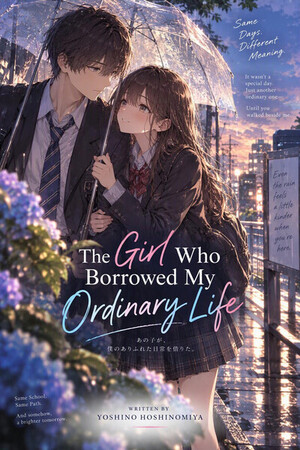
The Girl Who Borrowed My Ordinary Life
By Monday morning, I had written six hundred and twelve words.
This was a problem.
I had intended to write three sentences.
Three sentences were manageable. They could be explained as an exercise, an unfinished thought, or a temporary lapse in judgment.
Six hundred and twelve words were evidence.
Evidence of what, I wasn’t sure.
That was the second problem.
I stared at the pages inside my blue notebook while the train moved toward school. Around me, office workers checked their phones, students exchanged complaints about unfinished assignments, and a sleeping man leaned dangerously close to missing his stop.
None of them knew I had spent most of Sunday writing about a fictional boy who was becoming increasingly difficult to distinguish from me.
I read the opening again.
The girl first borrowed the silence.
She entered the empty classroom as if she had been invited, sat beside the window, and said nothing. The boy thought silence belonged to no one, so he allowed her to keep it.
The following day, she borrowed his seat.
Then his lunchtime.
Then the path he walked after school.
She never asked for anything important.
That was why he didn’t notice his ordinary life changing.
I closed the notebook.
The story had several weaknesses.
The main character was too passive.
The girl was too mysterious.
There was no clear conflict, no meaningful progression, and no ending.
Worse, every time I tried to give the characters names, I rejected them.
The boy remained the boy.
The girl remained the girl.
Naming them would make them feel real.
They were already real enough.
My phone vibrated.
A message from Mizuki.
[Good morning. Did you sleep properly?]
I looked at the time.
Seven twenty-three.
This was suspiciously early for a question about sleeping.
[Yes.]
Her response came immediately.
[How many hours?]
[Enough.]
[That isn’t a number.]
I considered ignoring her.
Then another message arrived.
[You asked me the same question on Friday.]
She had a point.
This was inconvenient.
[Six and a half.]
Three dots appeared.
[You told me two and a half hours was significant.]
[Six and a half is more than two and a half.]
[That is exactly how time works.]
I stared at the message.
She had used my own sentence.
Again.
[Why are you awake this early?]
[I’m usually awake now.]
[That doesn’t mean you should be messaging me.]
There was a short pause.
[Would you prefer that I didn’t?]
The answer should have been obvious.
It wasn’t.
Or perhaps it was, which made it more difficult.
I typed:
[That isn’t what I said.]
She responded with a smiling symbol.
Then:
[Did you write this weekend?]
I looked at the notebook in my hand.
Six hundred and twelve words.
[A little.]
[More than three sentences?]
I could lie.
Unfortunately, she would eventually see the story if it was accepted for the café. More importantly, she would recognize the lie as soon as she saw my face.
[Possibly.]
Her reply took only a second.
[Bring it.]
I put my phone away without answering.
Across the train carriage, my reflection looked faintly irritated.
That was normal.
The notebook in my hand did not feel normal at all.
------------<>------------
Daichi was asleep at his desk when I entered the classroom.
His face rested on his folded arms. One hand held a convenience-store sandwich that had been opened but not eaten, suggesting he had lost consciousness halfway through breakfast.
I placed my bag beside my chair.
His eyes opened.
“You’re late.”
“I’m twelve minutes early.”
“You’re normally earlier.”
“You’re normally barely conscious.”
“I’m growing.”
“You’re seventeen.”
“Emotionally.”
He sat up and looked at my bag.
Then at my face.
Then back at the bag.
“You wrote it.”
I paused.
“What?”
“The story.”
“How do you know?”
“You have the same expression you wore before our literature presentation.”
“What expression?”
“The one that says you’ve worked hard on something and will now pretend you didn’t.”
“I have no such expression.”
“You do.”
Daichi took a bite of his sandwich.
“At least Hanamori will appreciate it.”
“You haven’t read it.”
“I don’t need to.”
“That confidence is why your grades are unstable.”
“They’re consistently unstable.”
“That isn’t better.”
He continued chewing.
I sat down.
A few seconds later, Daichi leaned forward.
“What’s it about?”
“Nothing.”
“You wrote a story about nothing?”
“Essentially.”
“Is it romantic?”
“No.”
He swallowed.
“You answered too fast.”
“It’s an everyday-life story.”
“Romance can occur in everyday life.”
“Not in this one.”
“What happens?”
“A girl borrows things.”
He waited.
“What kind of things?”
“Ordinary things.”
“Like money?”
“No.”
“Clothes?”
“No.”
“A car?”
“They’re students.”
“Students can steal cars.”
“She doesn’t steal anything.”
“You said she borrows.”
“Not physical objects.”
Daichi lowered his sandwich.
“Does she borrow his heart?”
My hand moved toward my textbook.
He raised both arms protectively.
“I’m asking as a reader.”
“You’re not reading it.”
“Then I’m asking as a concerned friend.”
“You aren’t concerned.”
“You’ve been writing romance-adjacent fiction all weekend. That is extremely concerning.”
“It isn’t romance-adjacent.”
“Does the girl resemble Hanamori?”
“No.”
“Does she hide in an empty classroom?”
I stared at him.
Daichi slowly smiled.
“You’re a terrible liar.”
“I didn’t say she hid.”
“You didn’t need to.”
I opened my desk and placed the blue notebook inside.
Daichi’s eyes followed it.
“You wrote it in there?”
“Yes.”
“The forbidden notebook.”
“It isn’t forbidden.”
“You struck me with a ruler when I tried to open it last year.”
“That was a warning.”
“It left a mark.”
“For eight minutes.”
“I remember it emotionally.”
Before I could respond, the classroom door opened.
Mizuki entered with Emi.
The sight of her should not have made me think about the notebook.
It did.
She wore her hair partly tied back, with two loose sections framing her face. The paper star remained attached to her bag.
Daichi followed my gaze.
He leaned closer.
“Does the girl wear a star?”
“No.”
“Interesting.”
“It isn’t.”
“I didn’t say what was interesting.”
“You were going to.”
“You can’t prove that.”
Everyone had begun stealing my arguments.
Mizuki noticed us.
Her gaze moved from me to Daichi, then to the open desk containing the notebook.
She knew immediately.
Her expression brightened.
She walked toward us.
“You brought it.”
Daichi looked delighted.
“He wrote six hundred words.”
I turned toward him.
“I didn’t tell you that.”
Daichi blinked.
“Was I right?”
Mizuki looked at me.
“Six hundred?”
“No.”
Daichi pointed triumphantly.
“It’s more.”
“That logic is unreliable.”
“But accurate.”
Mizuki placed both hands on the edge of my desk.
“How much did you write?”
“Not enough.”
“That means more than six hundred.”
“It means the story is unfinished.”
“But it exists.”
“For now.”
She glanced toward the notebook again.
“Can I read it?”
“No.”
“You brought it.”
“I bring the notebook every day.”
“You told me you wrote a little.”
“A little can remain private.”
“Then why did you tell me?”
“Because you asked.”
“You could have lied.”
“I considered it.”
“Why didn’t you?”
I looked at her.
She waited with genuine curiosity.
Daichi observed us as though he had purchased front-row theater tickets.
I closed the desk.
“Because you would have found out eventually.”
Mizuki smiled.
“So I can read it eventually.”
“That wasn’t what I said.”
“It was very close.”
“No, it wasn’t.”
Emi arrived beside her carrying a folder.
“Are we discussing the story?”
“There is no story,” I said.
“There are more than six hundred words,” Daichi replied.
“That sounds like a story,” Emi said.
“It doesn’t have an ending.”
“Most student submissions won’t,” Emi replied. “That’s why we have an editorial team.”
“You’re enjoying your authority too much.”
“I rarely receive this much resistance from a volunteer.”
“I didn’t volunteer.”
Mizuki pulled the chair in front of my desk closer.
“You agreed.”
“Under pressure.”
“That still counts.”
“It doesn’t.”
Emi placed the folder on my desk.
“We received the first submissions.”
I looked at it.
The folder was much thicker than expected.
“How many?”
“Fourteen.”
“Already?”
“The winning proposal interested people.”
Daichi raised one hand.
“I submitted three.”
A sense of dread settled over me.
“Why?”
“Creative inspiration.”
“Did you write all three yourself?”
“One was a collaborative effort.”
“With whom?”
Daichi looked away.
His small plastic dinosaur sat on his desk.
I closed my eyes.
“You wrote a story with the dinosaur.”
“He provided the central concept.”
“What genre?”
“Historical tragedy.”
Mizuki picked up the dinosaur.
“What happens?”
“He is the final surviving king of an ancient civilization.”
“He’s a green plastic tyrannosaurus,” I said.
“Exactly. His people rejected him for being different.”
“He was manufactured that way.”
“Society manufactured all of us.”
Emi took the dinosaur from Mizuki and returned it to Daichi’s desk.
“We’ll evaluate every submission fairly.”
“You shouldn’t,” I said.
“That violates our editorial standards.”
“We don’t have standards.”
“I wrote them over the weekend.”
She opened the folder.
The first page was titled:
MIDNIGHT STORY CAFÉ: SUBMISSION EVALUATION GUIDE
Below it were five categories:
Clarity Originality Festival suitability Length Overall emotional effectI pointed at the final item.
“How are we measuring that?”
“On a scale from one to five.”
“That’s arbitrary.”
“All rating systems are partly arbitrary.”
Daichi nodded.
“She’s right.”
“No one asked you.”
Mizuki moved the plastic dinosaur so that it faced me.
“He asked you to keep an open mind.”
“I’m giving it a one.”
“You haven’t read his work.”
“The author has already affected my emotional response.”
The first bell rang.
Mizuki returned the chair to its place.
Before leaving, she leaned slightly closer to me.
“Lunch?”
I nodded.
“The usual place.”
“And the story?”
“No.”
“Bring it anyway.”
“It stays in my bag.”
“So it will be nearby.”
“That doesn’t help you.”
“It gives me hope.”
She returned to her seat before I could respond.
Daichi placed the dinosaur beside his pencil case.
“I think she likes your writing.”
“She hasn’t read it.”
“She likes that you wrote something.”
“That isn’t the same.”
“No,” he said. “It may be better.”
He faced forward as our teacher entered.
I looked at the back of Mizuki’s head.
Then at my closed desk.
The notebook had become heavier.
------------<>------------
By lunchtime, Mizuki had asked about the story four times.
Not directly.
During the first break, she passed my desk and said, “Six hundred words is a strong beginning.”
During mathematics, she dropped an eraser near me and quietly asked, “Did you choose names?”
During the second break, she showed me a list of story categories and tapped Everyday Life twice.
Before lunch, she sent a message despite sitting three rows away.
[I won’t pressure you.]
A second message appeared immediately.
[But I am very curious.]
I looked toward her.
She smiled innocently.
I wrote:
[That is pressure.]
[It’s honest pressure.]
[That doesn’t improve it.]
[Does it make it worse?]
I considered this.
[Slightly better.]
She read the response.
Her smile changed.
Small.
Satisfied.
At the lunch bell, Daichi stood and lifted his own lunch bag.
Then he looked at me.
“I know. I’m banned.”
“You learned.”
“Personal growth.”
“Try to maintain it.”
“I’ll eat with Emi.”
Emi, who was gathering the submission folder, looked up.
“No, you won’t.”
Daichi’s confidence faltered.
“Why?”
“I’m reviewing festival supply costs during lunch.”
“I can help.”
“You submitted ‘fog machine’ under essential materials.”
“The atmosphere requires it.”
“Our classroom has one window.”
“The fog will remain longer.”
“That’s the problem.”
Daichi looked around the room.
Most students had already formed lunch groups.
He pointed at two boys near the windows.
“They appear lonely.”
“They’re wearing headphones,” I said.
“Then they need conversation.”
“They have taken active measures against it.”
Daichi turned back to me.
“One day, you will regret abandoning me.”
“Not today.”
Mizuki passed us carrying her lunch bag.
“Five minutes,” she said.
Daichi watched her leave.
Then he sighed.
“She’s doing it again.”
“She gave me time to avoid suspicion.”
“You’re coordinating your exits.”
“We’re avoiding rumors.”
“The rumor is gone.”
“This is why.”
He considered the argument.
“I dislike when you make sense.”
“I’ll try not to overuse it.”
I waited five minutes.
Exactly five.
Then I took my bag and headed toward the music wing.
------------<>------------
The unofficial reservation sign had returned.
This time, Emi had laminated it.
RESERVED: FESTIVAL PLANNING
WEDNESDAY AND FRIDAY LUNCH PERIODS
Someone had added a handwritten line beneath it.
MONDAYS PENDING REVIEW
The handwriting was Daichi’s.
I removed that part.
Mizuki sat on the bench with the strawberry cloth already spread between us.
Her lunch box was open.
There were no meatballs.
I stopped.
She noticed my expression.
“What?”
“Nothing.”
“You’re looking at my lunch.”
“I’m aware.”
“You expected something.”
“No.”
She looked at the contents.
Rice, grilled fish, vegetables, and neatly sliced egg.
Then she looked at me.
“You expected meatballs.”
“I did not.”
“You’re disappointed.”
“I’m not.”
“You stopped in the doorway.”
“There was a sign.”
“You removed Daichi’s addition before looking at me.”
She had seen everything.
I sat down.
“My expectations were based on recent patterns.”
“That sounds like disappointment using formal language.”
“It isn’t.”
Mizuki reached into her bag.
She took out a small container.
Three meatballs.
“I thought you might have become tired of them.”
“I ate the last one from Friday on Saturday morning.”
The admission escaped before I could stop it.
Mizuki paused.
“You saved one?”
“For the sample.”
“You had already evaluated the recipe.”
“A second evaluation improves reliability.”
“You could have eaten it Friday night.”
“I wasn’t hungry.”
“I sent you a message at nine. You said you were eating crackers.”
“Crackers are different.”
She looked at me with growing amusement.
“You saved one until morning.”
“This conversation has become unnecessarily detailed.”
“Did it taste good?”
“Yes.”
“Was the texture still acceptable?”
“Yes.”
“Did you look forward to it?”
I opened my lunch box.
“Give me one of today’s meatballs.”
Mizuki laughed.
She placed one beside my rice.
I transferred chicken into the empty space in her container.
The routine had become automatic.
That should have concerned me.
Instead, it made the bench feel like ours.
Mizuki ate a piece of chicken.
Her left foot moved.
She noticed me noticing.
Neither of us said anything.
We continued eating.
For several minutes, the story remained safely inside my bag.
Then Mizuki glanced at it.
I ignored her.
She took another bite of rice.
Looked at the bag again.
I continued ignoring her.
She sighed.
“You’re making this difficult.”
“I’m eating lunch.”
“You brought the notebook.”
“I always bring it.”
“Did you bring the story?”
“It’s inside the notebook.”
“So yes.”
“Technically.”
She placed her chopsticks down.
“I promise I won’t laugh.”
“That makes me less willing to show you.”
“Why?”
“Because you’ve established laughter as a possibility.”
“I don’t think it’s bad.”
“You haven’t read it.”
“I liked the prompt.”
“A prompt is not a story.”
“It has the same characters.”
“They don’t have characters yet.”
“You said there was a boy and a girl.”
“Those are descriptions.”
“What are they like?”
I ate some rice.
Mizuki waited.
“The boy prefers quiet,” I said.
“I know.”
“You know the prompt.”
“And the girl?”
“She’s tired.”
Mizuki’s expression changed slightly.
“How tired?”
“I don’t know.”
“Why is she tired?”
“She spends too much time being someone other people can depend on.”
Her gaze lowered to her lunch.
I continued before she could think too carefully about the resemblance.
“The story version is exaggerated.”
“Of course.”
“And she doesn’t drink strawberry milk.”
“I didn’t ask.”
“She dislikes sweet drinks.”
“Why?”
“To make her different.”
“From whom?”
I stared at her.
Mizuki smiled.
“You aren’t very good at hiding inspiration.”
“You haven’t read it.”
“You just described me with different beverages.”
“The character isn’t you.”
“Then who is the boy?”
“No one.”
“He likes quiet.”
“Many people like quiet.”
“He lets the girl borrow his routine.”
“That was the prompt.”
“He doesn’t ask why she’s hiding.”
“I didn’t ask why you were hiding.”
Mizuki became quiet.
I realized I had proven her argument.
She tilted her head.
“The character isn’t you?”
“No.”
“Of course.”
Her tone said the opposite.
I took another meatball.
She watched me eat it.
“You wrote about what happened,” she said.
“Not exactly.”
“But some of it.”
“Some.”
“Why?”
That question was more difficult.
I could have said the prompt required an everyday situation.
I could have claimed our first meeting was convenient material.
Both would have been true.
Neither would have been the answer.
“I kept thinking about it,” I said.
Mizuki’s eyes lifted.
“You told me that’s what goes in the notebook.”
“Yes.”
“So you couldn’t forget our first meeting.”
“It was unusual.”
“That isn’t what I asked.”
“You didn’t ask anything.”
“You’re avoiding it.”
I looked out the stairwell window.
The courtyard below was crowded with students. From this height, their conversations became a single distant sound.
“I didn’t forget it,” I said.
Mizuki picked up her chopsticks again.
She ate one piece of rice.
Then another.
Her left foot moved, even though she hadn’t eaten anything particularly good.
“Can I read it?” she asked.
“No.”
The foot stopped.
“Why not?”
“Because it’s unfinished.”
“I won’t judge the ending.”
“There isn’t one.”
“Then I’ll stop when the words do.”
“That isn’t how reading works.”
“It’s exactly how reading works.”
“I may change everything.”
“Then I’ll read the new version too.”
“You’re assuming there will be one.”
“There are already more than six hundred words.”
“Six hundred and twelve.”
The number came out.
Mizuki froze.
Then smiled slowly.
“You counted.”
“The document counted.”
“You wrote it digitally?”
“First draft.”
“Then why bring the notebook?”
“I copied part of it.”
“All six hundred and twelve?”
“No.”
“How much?”
I realized too late that the conversation had moved from whether she would read the story to which version she would read.
Mizuki leaned slightly closer.
“What are you afraid of?”
The question was gentle.
That made it worse.
“I’m not afraid.”
“You let me return your notebook without reading it.”
“That’s different.”
“You said you trusted me.”
“I didn’t use that word.”
“But you believed me.”
“Yes.”
“Then why won’t you let me read something you might submit to the entire school?”
I had no answer.
At least, none I wanted to say.
The school would read it as a story.
Mizuki might read it as an explanation.
An explanation I didn’t understand myself.
“I’ll show you when it has an ending,” I said.
Her shoulders lowered slightly.
It wasn’t a refusal.
That seemed to be enough.
“All right.”
“You agree?”
“Yes.”
“No additional pressure?”
“I won’t ask again.”
“That sounds suspicious.”
“You’ll show me when it’s finished.”
“If it’s finished.”
“When.”
“If.”
“When.”
I sighed.
Mizuki smiled and resumed eating.
After a moment, she said, “What’s stopping you?”
“The ending.”
“What happens before it?”
“The girl keeps borrowing things.”
“And the boy keeps giving them?”
“He doesn’t realize he’s giving them.”
“What does she borrow last?”
“I haven’t decided.”
“What is the most important thing he has?”
“That sounds philosophical.”
“It’s a story question.”
“He doesn’t have anything important.”
“Everyone does.”
“Very optimistic.”
“What about the notebook?”
My chopsticks stopped.
“The fictional boy doesn’t have one.”
“He should.”
“No.”
“Why?”
“That creates too many similarities.”
“So there are similarities.”
“I admitted that already.”
“Then let him have the notebook.”
“What would the girl do with it?”
Mizuki thought for a moment.
“She wouldn’t read it.”
I looked at her.
“She’d be curious,” Mizuki continued. “But if it matters to him, she’d return it.”
“That already happened.”
“Then change it.”
“How?”
“She could leave something inside.”
“A note?”
“Perhaps.”
“She already did that too.”
Mizuki’s eyes shifted.
The tips of her ears became faintly red.
I had not told her that I kept the sticky note inside the notebook.
She understood anyway.
“You still have it,” she said.
“It may be needed as evidence.”
“Of my personal growth?”
“Or future violations.”
“You put the story prompt beside it, didn’t you?”
I didn’t answer.
Mizuki’s smile became softer.
“For evidence?”
“Organization.”
“Of course.”
We finished lunch.
When the containers had been packed away, Mizuki rested her hands on the strawberry cloth.
“We have eleven minutes,” she said.
“You aren’t sleeping.”
“I slept eight hours.”
“You promised that on Friday.”
“And I kept my promise.”
“How do I know?”
“I sent Akari a message before sleeping.”
“That doesn’t prove you slept.”
“I sent another when I woke up.”
“You could have remained awake between them.”
“For eight hours?”
“You once made two batches of meatballs after eleven.”
“That was one time.”
“It was three days ago.”
She laughed.
Then she leaned back against the wall.
“I’m not tired.”
“Good.”
“But…”
“No.”
“I haven’t asked anything.”
“You’re looking at my shoulder.”
Mizuki straightened immediately.
“I was looking at the window.”
“I’m between you and the window.”
She stared at me.
I smiled.
Her own argument had returned to her.
“That’s unfair,” she said.
“It’s accurate.”
“I wasn’t going to sleep.”
“Good.”
“And even if I did, I wouldn’t…”
She stopped.
“You wouldn’t what?”
“Nothing.”
“You created the sentence.”
“I withdrew it.”
“That isn’t fair.”
“You said that last time.”
“Because you did the same thing.”
Mizuki folded the lunch cloth with unnecessary concentration.
“I wouldn’t assume your shoulder was available.”
The safe answer was to agree.
Instead, I said, “It usually is.”
She stopped folding.
The cloth remained half-finished between her hands.
I looked toward the window.
Below us, someone shouted after losing a ball over the fence.
I could feel Mizuki looking at me.
“Usually?” she repeated.
“I have two shoulders.”
“That doesn’t explain anything.”
“It means one may be available.”
“For anyone?”
I turned back.
Her tone was light.
Her expression wasn’t.
“No,” I said.
The word came too quickly to take back.
Mizuki’s hands tightened slightly around the cloth.
“Then who?”
A door opened somewhere below.
Voices entered the stairwell.
We both looked toward the steps.
The voices belonged to unfamiliar students, probably first-years. They stopped on the floor beneath us, speaking too quietly to understand.
The moment thinned but didn’t disappear.
Mizuki lowered her voice.
“You don’t have to answer.”
“You always do that.”
“What?”
“Ask something difficult, then withdraw it.”
“I don’t want to force you.”
“It still leaves the question.”
“Then answer when you know.”
The sentence settled between us.
Not now.
Not never.
When you know.
I nodded.
“All right.”
Mizuki finished folding the cloth.
The voices below moved away.
She placed it inside her bag and checked the time.
“We should go.”
We stood.
At the top of the stairs, she turned toward me.
“Ren?”
Her use of my name still did something strange to the air.
“Yes?”
“If you don’t know the ending, don’t force one.”
“I have to finish the story.”
“That isn’t what I mean.”
I waited.
Mizuki touched the paper-star charm hanging from her bag.
“Maybe the characters don’t know what their story is yet.”
“That would be an unsatisfying ending.”
“Then it isn’t the ending.”
She descended the stairs.
I remained on the landing for a moment.
Then followed.
------------<>------------
The first official editorial meeting began after school.
It lasted seventeen minutes before collapsing.
The cause was Daichi’s dinosaur tragedy.
All fourteen submissions had been printed, numbered, and stripped of the authors’ names. Emi insisted this would allow impartial review.
It did not help.
Daichi’s writing was identifiable within the first sentence.
The ancient king Roarmund stood atop the burning mountain, his magnificent green scales shining with the weight of a thousand regrets.
I lowered the page.
“Rejected.”
Emi looked at the evaluation guide.
“We need to discuss it.”
“We don’t.”
Mizuki continued reading.
“Roarmund is a good name.”
Daichi, seated at a desk behind us despite not being part of the editorial team, made a pleased sound.
Emi looked over her shoulder.
“You aren’t supposed to reveal which stories are yours.”
“I didn’t.”
“You reacted.”
“I appreciate excellence wherever it appears.”
I pointed to the third paragraph.
“He fights a meteor.”
“It symbolizes inevitable change,” Daichi said.
“I thought you didn’t reveal the author.”
He covered his mouth.
Emi made a note.
“The language is energetic.”
“That’s a diplomatic way to describe it,” I said.
Mizuki read aloud:
“Roarmund opened his powerful jaws and roared at the darkened sky. ‘I reject destiny!’ he proclaimed in the ancient tongue.”
She looked at Daichi.
“What does the ancient tongue sound like?”
Daichi stood.
“Raaaaah.”
Students in the corridor looked through the open doorway.
Emi closed the door.
“Sit down.”
He obeyed.
I turned to the final page.
Roarmund defeated the meteor by striking it with his tail. He then became king of the moon.
“This violates several laws of physics,” I said.
“It’s fantasy,” Mizuki replied.
“It violates fantasy physics too.”
“But does it have emotional effect?”
“Yes. Confusion.”
“That still counts,” Daichi said.
Emi scored it three for originality and two for clarity.
Mizuki gave it four for emotional effect.
I gave it one in every category.
“You aren’t being fair,” she said.
“I am the only person being fair.”
“You objected before reading.”
“And the reading proved me correct.”
Daichi leaned toward us.
“Perhaps the editorial team could request revisions.”
“No,” I said.
“Yes,” Mizuki said simultaneously.
We looked at each other.
She placed the pages neatly together.
“The central idea is fun.”
“The central idea is a dinosaur fighting weather.”
“A meteor isn’t weather.”
“That’s the part you object to?”
She smiled.
“It could be a children’s story.”
“Our visitors are teenagers.”
“Younger children may attend with their families.”
Daichi pointed at her.
“She understands the market.”
“You’re banned from using that phrase.”
Emi wrote REVISION REQUESTED at the top.
I stared in disbelief.
“What revisions?”
“Shorter length,” Emi said. “Simpler battle scene. More consistent worldbuilding.”
“And a clearer explanation of why Roarmund becomes king of the moon,” Mizuki added.
Daichi took out his phone.
“I’ll begin immediately.”
“Not during the meeting,” Emi said.
“Inspiration cannot be scheduled.”
“You scheduled indoor fishing.”
“That was logistics.”
The second submission was a romance story about a girl who exchanged umbrellas with the same boy every rainy day.
Mizuki became unusually quiet while reading it.
I became unusually interested in evaluating punctuation.
The story was simple but effective. The characters never learned each other’s names until the final paragraph.
Emi gave it high scores.
Mizuki gave it five for emotional effect.
I gave it four.
Daichi leaned over my shoulder.
“You like it.”
“It’s well structured.”
“They share an umbrella.”
“They exchange umbrellas.”
“Close enough.”
“The distinction matters.”
Mizuki glanced at me.
“Why?”
“Sharing one umbrella is less practical.”
“It gives them time together.”
“That isn’t the purpose of an umbrella.”
“What if it becomes the purpose?”
“It remains weather protection.”
“So if it weren’t raining, you wouldn’t walk with someone?”
The question had moved beyond the story.
I knew it.
She knew it.
Emi knew it, judging by the sudden attention she gave her scoring sheet.
“If we were going in the same direction, I might,” I said.
“Only if it was convenient?”
“Convenience helps.”
Mizuki looked down at the story.
“What if they weren’t going in the same direction?”
“Then one person would be walking away from their destination.”
“What if they wanted more time?”
I held her gaze.
Daichi looked between us.
Then he quietly stood.
“I need a drink.”
“No one asked you to leave,” Emi said.
He looked at her with unexpected seriousness.
“I know.”
Emi understood.
“I’ll help.”
“You don’t need two people to buy a drink,” I said.
“The machine has complicated options,” Emi replied.
“You use it every day.”
“Recent updates.”
“There haven’t been updates to a vending machine.”
They left anyway.
The door closed.
Mizuki and I remained at the three desks pushed together.
The umbrella story sat between us.
“You don’t have to answer,” she said.
“You did it again.”
“Then answer.”
“You’re becoming demanding.”
“I’m trying direct conversation.”
“That was my advice.”
“Do you regret it?”
“Occasionally.”
Mizuki waited.
I looked at the story’s final paragraph.
The two characters stood beneath different umbrellas after realizing they had been taking longer routes for weeks.
“I suppose,” I said, “if both people knew they were going in the wrong direction…”
Mizuki’s expression softened.
“…then the direction might not matter as much.”
The classroom remained quiet.
She touched the corner of the printed story.
“I like that answer.”
“It’s inefficient.”
“Some inefficient things are worth keeping.”
Her paper star moved as she shifted in her chair.
Efficient.
That terrible compliment had somehow remained between us.
I looked at the star.
“Like damaged decorations?”
“Like handmade charms.”
“Five-meatball experiments?”
“Especially those.”
“Conversations that delay editorial work?”
Mizuki smiled.
“We’re discussing a submission.”
“Of course.”
The door opened.
Daichi and Emi returned.
Daichi carried four drinks.
Emi looked irritated.
“He bought two melon sodas again.”
“They were discounted.”
“I asked for tea.”
“I remembered after paying.”
“This is why you shouldn’t assist.”
Daichi distributed the drinks.
He gave me tea and Mizuki strawberry milk.
With two straws.
Mizuki looked at him.
“You found this in the vending machine?”
“No. The cafeteria.”
“You went all the way there?”
“With purpose,” he said.
She attached both straws.
“Thank you, Moriyama.”
Daichi froze.
He looked hopeful.
Mizuki took a drink.
Then smiled.
“Daichi.”
His entire face brightened.
“I earned it.”
“You bought the correct drink.”
“I knew personal growth would be rewarded.”
“You bought Emi the wrong one,” I said.
“No one is perfect.”
Emi took one of the melon sodas.
“If you submit another dinosaur story, I’m rejecting it personally.”
“Roarmund has sequels.”
“He shouldn’t.”
“His son inherits the lunar kingdom.”
“No.”
“His daughter leads a rebellion.”
Emi paused.
“That is slightly better.”
Daichi sat down.
“I’ll send you the outline.”
“No.”
But she didn’t sound entirely opposed.
The meeting continued.
For another hour, we read stories about haunted lockers, forgotten childhood friends, magical photographs, a detective cat, and a cafeteria worker secretly defending the school from ghosts.
Some were good.
Some were unfinished.
One contained thirty-seven spelling errors in nine hundred words.
Two were clearly based on famous stories with the names changed.
We treated them all seriously.
Even Roarmund.
By the final submission, the evening sunlight had turned orange.
Emi gathered our score sheets.
“We have six accepted, five requiring revisions, and three rejected.”
“That’s more than I expected,” I said.
“You expected everything to fail,” Mizuki replied.
“I prepared for it.”
“You prepare for disappointment very thoroughly.”
“It reduces surprise.”
Daichi stretched his arms above his head.
“I think today proved that our class contains hidden talent.”
“You scored your own story five in every category,” Emi said.
“Confidence is a talent.”
“You weren’t an evaluator.”
“I found a spare sheet.”
“That doesn’t grant authority.”
“It grants opportunity.”
Emi took the sheet from him.
Mizuki packed the accepted stories into the folder.
Then she looked at my bag.
I knew what she was thinking.
“No.”
“I didn’t ask.”
“You were about to.”
“I promised I wouldn’t.”
“Then stop looking at it.”
“I’m looking at the zipper.”
“Why?”
“It’s a good zipper.”
I stared at her.
She lasted three seconds before laughing.
We cleaned the desks and returned the classroom to its previous arrangement.
At the doorway, Emi looked at Mizuki.
“Are you staying for committee work?”
“Only thirty minutes.”
“And afterward?”
“I’m going home.”
Emi looked at me.
I nodded.
Mizuki frowned.
“I don’t need supervision.”
“You measured stars by the liter,” I said.
“That was Friday.”
“Time has not erased it.”
“I’ve slept since then.”
“Still.”
Daichi placed a hand on Mizuki’s shoulder.
“Some mistakes become legends.”
She removed his hand.
“Don’t you have track practice?”
“I skipped it for editorial responsibilities.”
Emi’s expression changed.
“You skipped practice?”
Daichi’s confidence disappeared.
“Our captain approved.”
“Did you ask him?”
“I sent a message.”
“Did he reply?”
“Not yet.”
His phone vibrated.
He checked it.
Then went pale.
“I have to go.”
He ran from the classroom.
Emi sighed.
“I should make sure he doesn’t get expelled from the team.”
She followed at a much calmer pace.
That left Mizuki and me once again.
This was becoming a pattern.
She picked up the final folder.
“You don’t have to wait for me.”
“I know.”
“The meeting may take longer than thirty minutes.”
“You said thirty.”
“I don’t control how much everyone talks.”
“Then leave after thirty.”
“I can’t stand up in the middle of someone’s sentence.”
“You can.”
“That’s rude.”
“You could say you have somewhere to be.”
“Where?”
I lifted my bag.
“The station.”
“That isn’t an appointment.”
“It’s a location.”
Mizuki looked at me for a moment.
“You’re waiting?”
“I need to make sure you don’t begin calculating furniture by weight.”
“That happened once.”
“You haven’t calculated furniture by weight yet.”
She smiled.
“You’re staying.”
“For thirty minutes.”
“Of course.”
We left the classroom together.
------------<End of A Story Without an Ending - Part 1>------------



Please sign in to leave a comment.