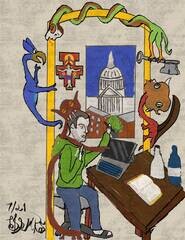
Mike Psellos
Fmr Ghostwriter and Fanfic writer struggling to gain corporeal form. I also have a deviant art, but its terrible.
Spent too much time world building, I am looking for new ways to share stories that I come up with.
I have a passion for ancient and medieval history, so that is probably going to show up in some of my works.
My favorite authors are Robert Howard, Philip K Dick, and Lucian of Samosata
registered at: Sep 04, 2025


Roles
Badge

silver
Achievement













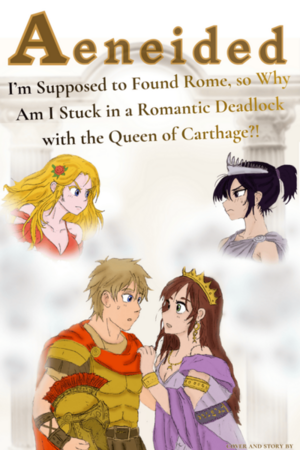
Aeneided: I’m Supposed to Found Rome, So Why Am I Stuck in a Romantic Deadlock with the Queen of Carthage?!
Chapter:14
Aeneided: I’m Supposed to Found Rome, So Why Am I Stuck in a Romantic Deadlock with the Queen of Carthage?!
Chapter:13
Aeneided: I’m Supposed to Found Rome, So Why Am I Stuck in a Romantic Deadlock with the Queen of Carthage?!
Chapter:12
Aeneided: I’m Supposed to Found Rome, So Why Am I Stuck in a Romantic Deadlock with the Queen of Carthage?!
Chapter:11
Aeneided: I’m Supposed to Found Rome, So Why Am I Stuck in a Romantic Deadlock with the Queen of Carthage?!
Chapter:10
Aeneided: I’m Supposed to Found Rome, So Why Am I Stuck in a Romantic Deadlock with the Queen of Carthage?!
Chapter:7
Aeneided: I’m Supposed to Found Rome, So Why Am I Stuck in a Romantic Deadlock with the Queen of Carthage?!
Chapter:6
Aeneided: I’m Supposed to Found Rome, So Why Am I Stuck in a Romantic Deadlock with the Queen of Carthage?!
Chapter:5
Aeneided: I’m Supposed to Found Rome, So Why Am I Stuck in a Romantic Deadlock with the Queen of Carthage?!
Chapter:4
Aeneided: I’m Supposed to Found Rome, So Why Am I Stuck in a Romantic Deadlock with the Queen of Carthage?!
Chapter:1